Your traffic is down and you don’t know why. (You do know why.)
Let’s set the scene.
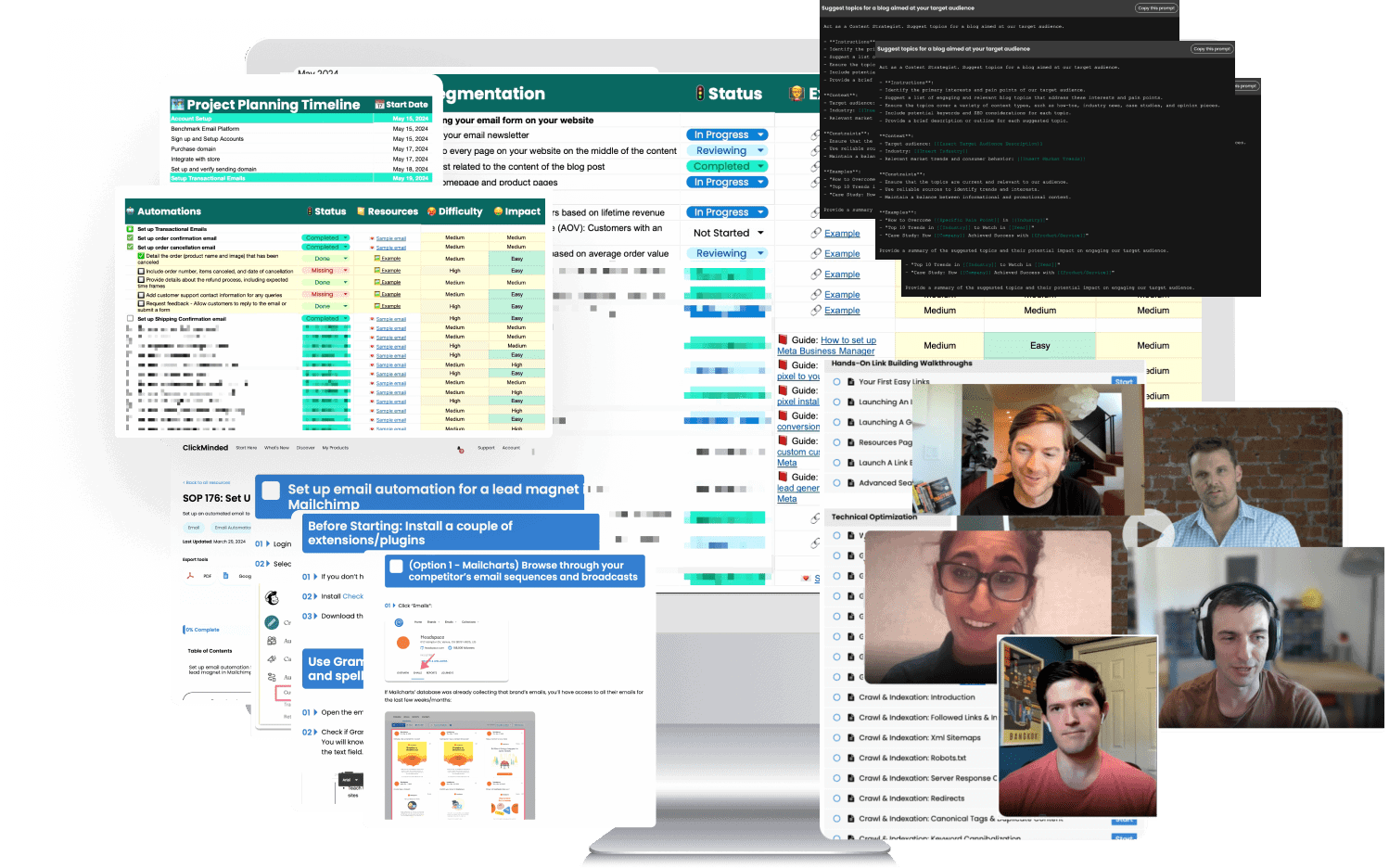
You open Google Search Console on a Tuesday morning, coffee in hand, ready to feel good about yourself. The graph is pointing down. Not dramatically, not cliff-off-a-mountain down, but the slow, steady, unmistakable decline of something that used to work and now, quietly, doesn’t as much. You refresh. Still down. You check if the site is broken. It isn’t. You google “why is my organic traffic dropping 2026” and Google serves you an AI Overview that answers the question without sending you anywhere.
The irony is not lost on you.
Here is what actually happened.
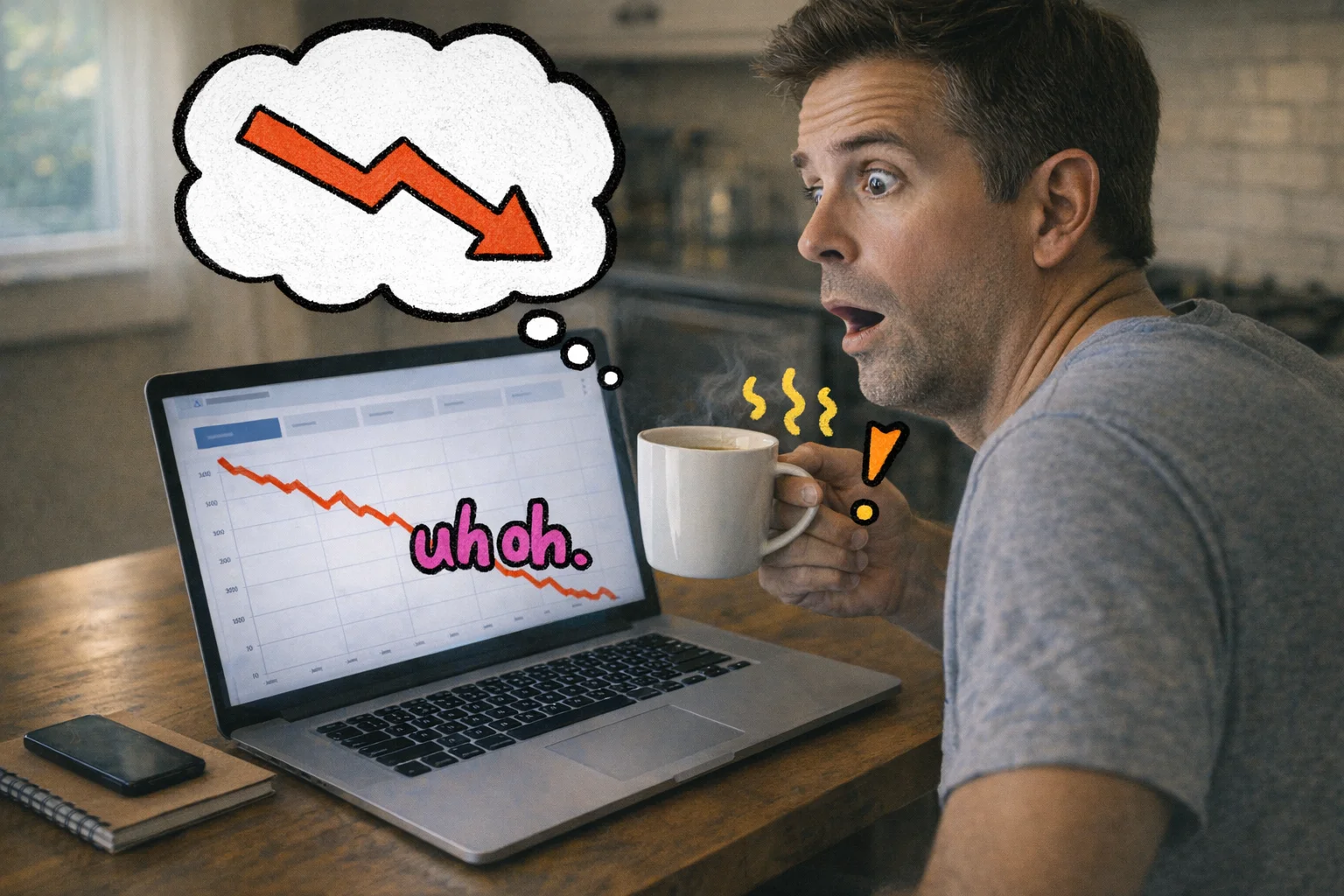
Google rolled out AI Overviews broadly in May 2024, and the search results page started answering questions directly at the top, in a big blue-tinted box, before any organic result gets a look in. [16] The effect on click-through rates was not subtle. Seer Interactive tracked an average CTR decline of roughly 61% on queries where AI Overviews appeared, dropping from 1.76% to 0.61% across their dataset. [5] Ahrefs found that position-one results were getting about 58% fewer clicks than before. [4] SparkToro measured that for every 1,000 U.S. Google searches, only 374 clicks actually reach the open web. [1] Publishers in the Digital Content Next network reported median year-over-year Google referral declines around 10%, with some seeing losses up to 25%. [6]
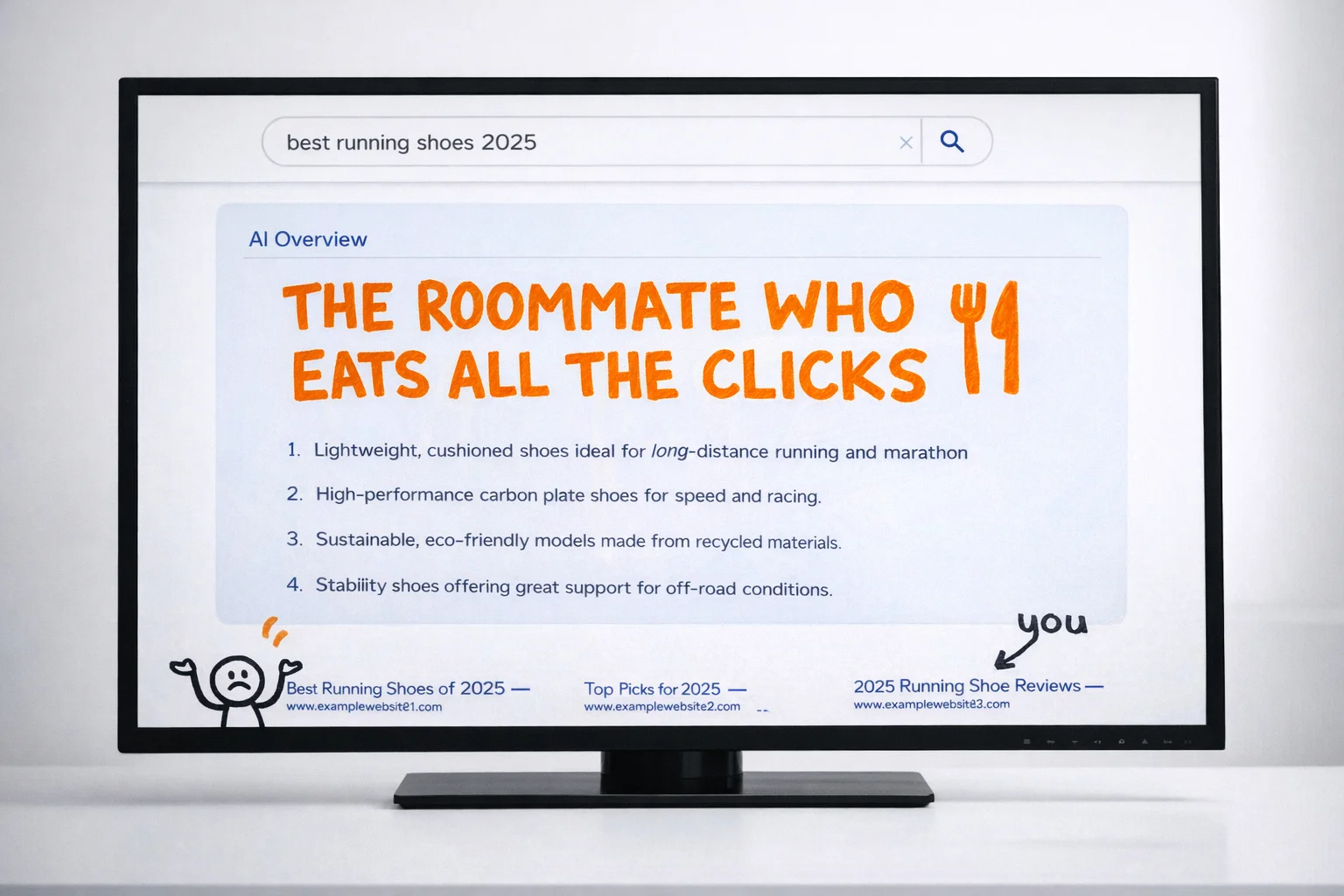
So yes. The thing you suspected is real. You are not imagining it. Your SEO strategy from 2022 is not broken exactly, it just got a new and very large roommate that eats all the clicks before you get home.
Now, before you do something drastic, like pivoting entirely to TikTok or printing flyers, a few things worth knowing.
Google search volume actually grew 20% in 2024. [15] People are still searching. The searches are just getting answered differently. And AI Overviews don’t appear on every query, Semrush tracked coverage ranging from about 6.5% of queries in January 2025 to a peak near 25% in July 2025, before settling back below 16% by November. [2] The situation is volatile, which is either reassuring or more alarming depending on your disposition.
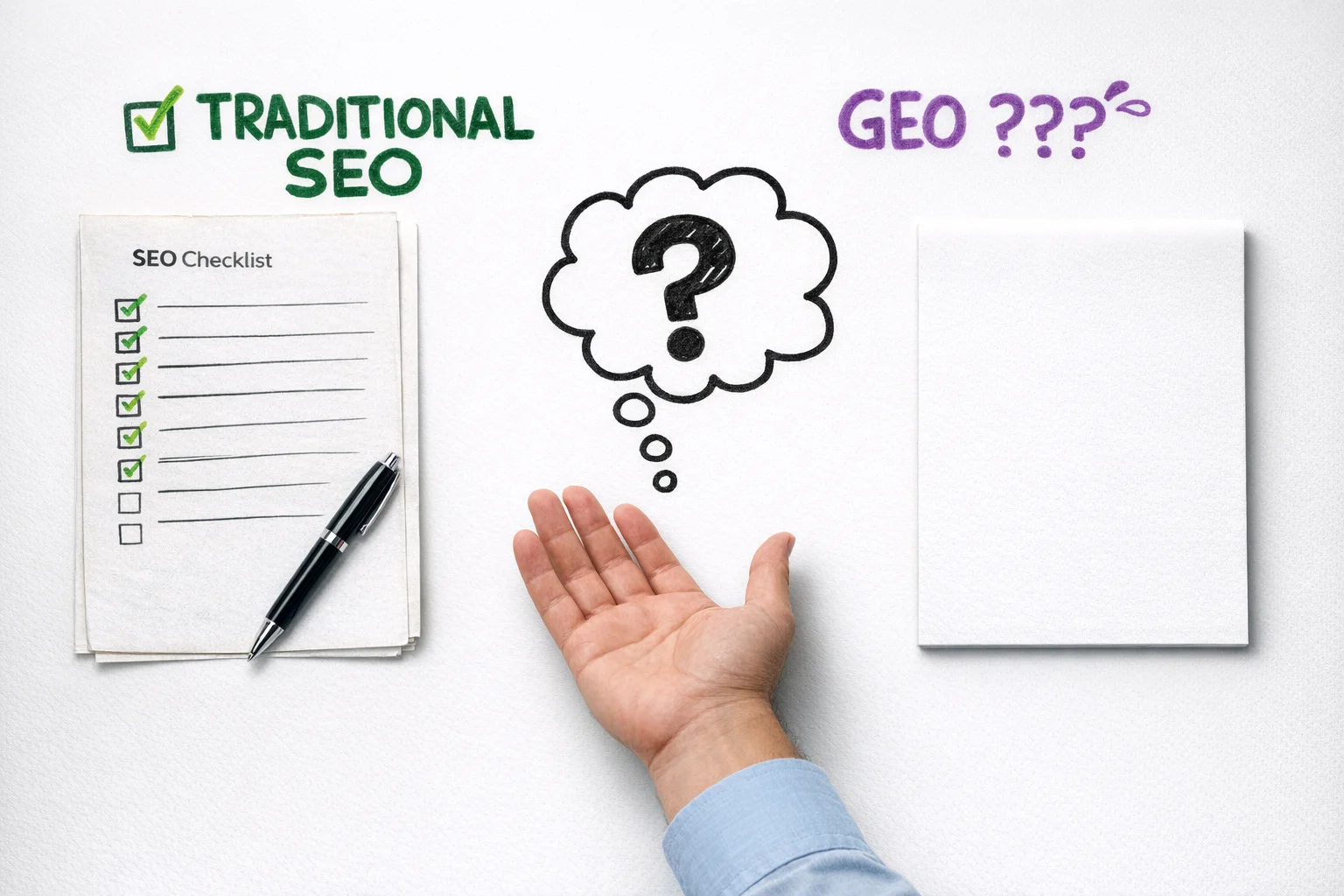
There is also a whole new discipline called Generative Engine Optimization, or GEO, which is exactly what it sounds like: optimizing your content not just for Google’s blue links but for the AI systems deciding what to summarize, cite, and recommend. [10] [11] It is newer, messier, and less understood than traditional SEO, which is saying something.
This guide covers both.
It is a full 2026 SEO checklist, technical to content to link building to E-E-A-T to GEO, written for the small business owner who just heard the term “AI Overviews” for the first time and the mid-level marketer who has been quietly stress-eating since the May 2024 rollout. You are both welcome here.
The panic is valid.
The checklist is real.
Let’s go.
Download PDF version below and so you can keep track of everything over the next few days.
Get the ClickMinded SEO Checklist
Google just handed your traffic to a robot, and the robot doesn’t link back
Here is the short version of what happened: Google spent thirty years training you to write content that ranked, and then in May 2024, they rolled out AI Overviews to U.S. users and quietly changed the deal. [16] [17] Instead of showing your article and letting users click through, Google now reads your article, summarizes it, and presents the answer directly on the results page. You did the work. The robot got the credit. The user never visited your site.
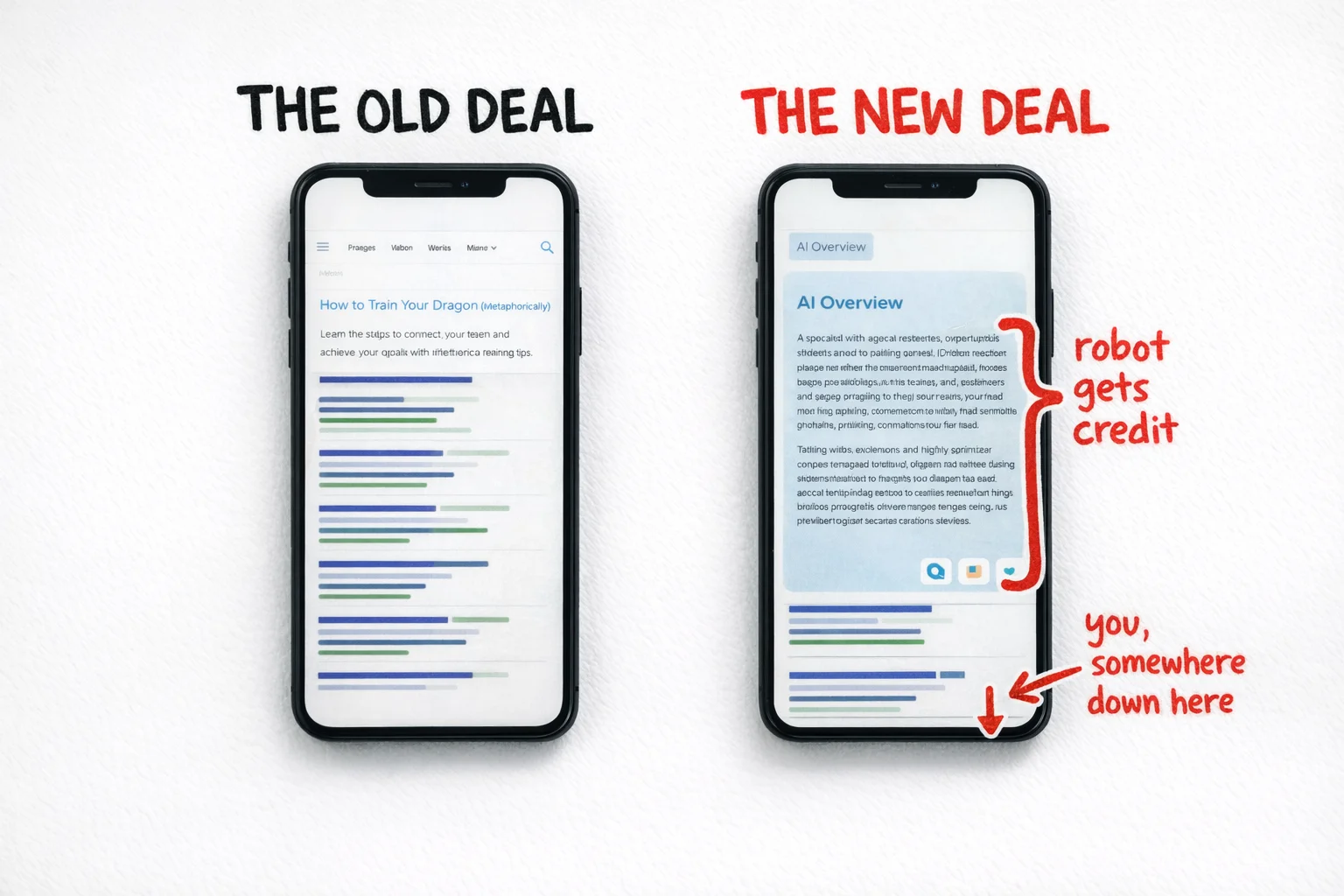
This is not a minor tweak.
Zero-click searches, where users get their answer from Google without clicking anything, hit approximately 58.5% of all U.S. searches in 2024, and 59.7% in the EU. [1] [18] That means for every thousand people who type something into Google, roughly 374 of them actually visit a website. The rest get their answer and leave.
On mobile, the number is worse, with zero-click rates reported above 70%. [19] [20] And AI Overviews are accelerating this. Queries that trigger an AI Overview show click-through rate drops in the range of 9 to 15% on average, with some marketing analyses reporting drops as steep as 70% on specific query types. [20] [26]
The queries hit hardest are exactly the ones most small business owners and content marketers spent years targeting: informational searches, how-to questions, problem-solving queries. AI Overviews appear on somewhere between 88% and 99.9% of informational searches depending on the study, and question-formatted queries trigger them at a rate of roughly 57.9%, compared to 15.5% for non-question queries. [1] [20] [26]
If your content strategy was “answer questions people are searching for,” congratulations, you built the training data for the machine that replaced you.

Meanwhile, a parallel universe of AI search has been growing outside Google entirely. ChatGPT reported approximately 800 million weekly active users by late 2025, with monthly visits estimated around 5.6 billion. [21] [22] [23] Perplexity, Gemini, and others are smaller but growing. These platforms do not rank pages. They synthesize information from sources they deem credible and either cite you or they don’t. There is no page two. There is no position four. There is a mention or there is silence.
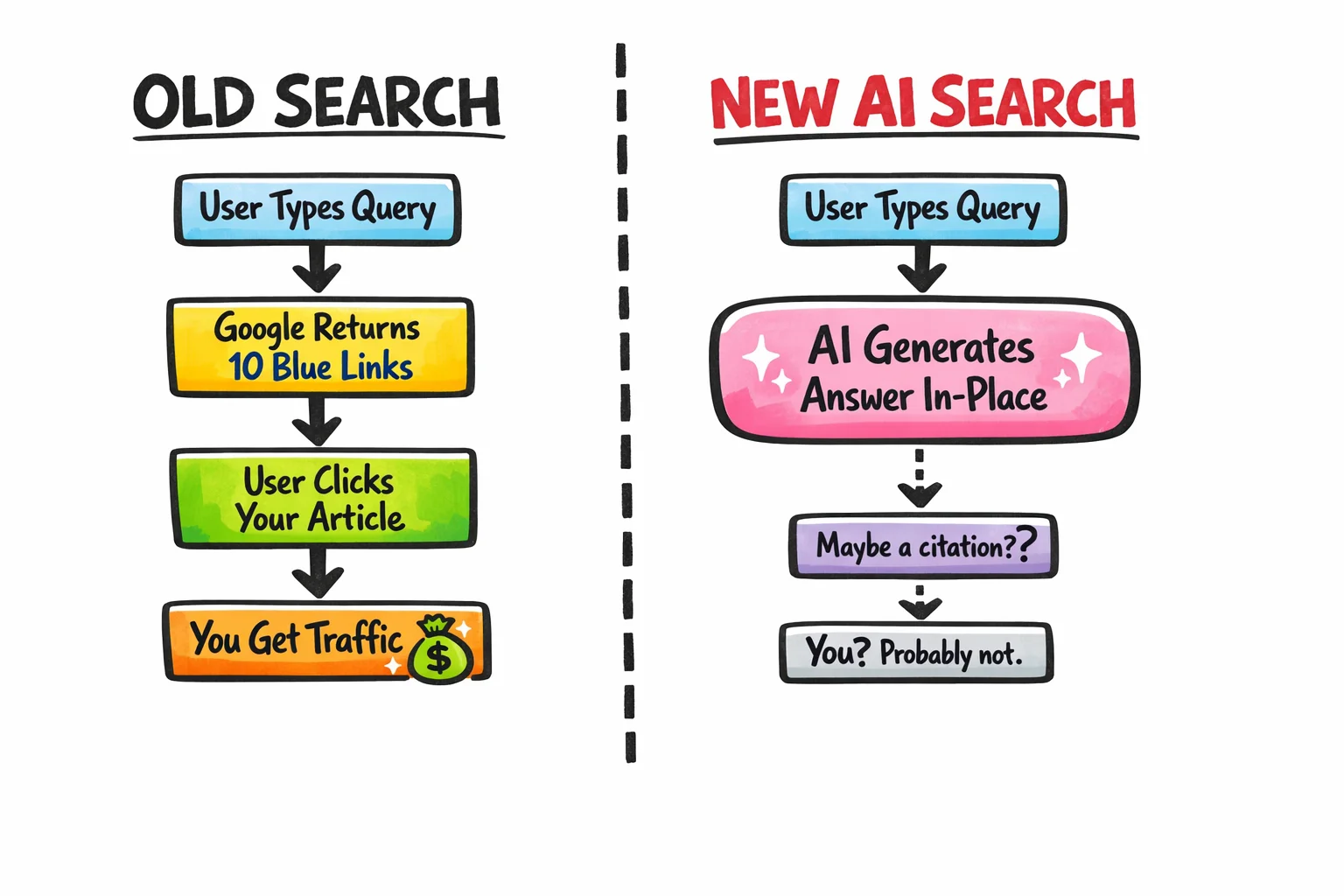
This is where GEO, Generative Engine Optimization, enters the picture. Researchers from Princeton, Georgia Tech, the Allen Institute for AI, and IIT Delhi published a paper in November 2023 that formally defined the discipline and tested which content techniques actually increased a source’s visibility inside AI-generated responses. [10] [24] [25] Adding statistics, citing sources explicitly, using authoritative language, and improving overall fluency increased source visibility in generative engine outputs by up to 30 to 40% in their experiments. [10] [28]
GEO is not a replacement for SEO. It is a second job you now have, whether you signed up for it or not.

The old playbook assumed that ranking meant traffic. That assumption is now wrong often enough to matter. The new game requires you to be cited, not just ranked, and those are different skills entirely.
The fundamentals didn’t die. They got promoted.
Here is the plot twist you actually needed: everything you spent the last decade building still matters. Not in a “participation trophy” way. In a “the AI is literally reading your old blog posts to answer questions” way.
Take a breath. Seriously. Go ahead.
Google’s March 2024 core update made this explicit. The announcement stated that there is “no longer one signal or system” doing the ranking work, which sounds scary until you read the rest of it: the foundational factors, content quality, relevance, user experience, helpfulness, are still the engine. [29]
The signals got more sophisticated. The destination did not change.
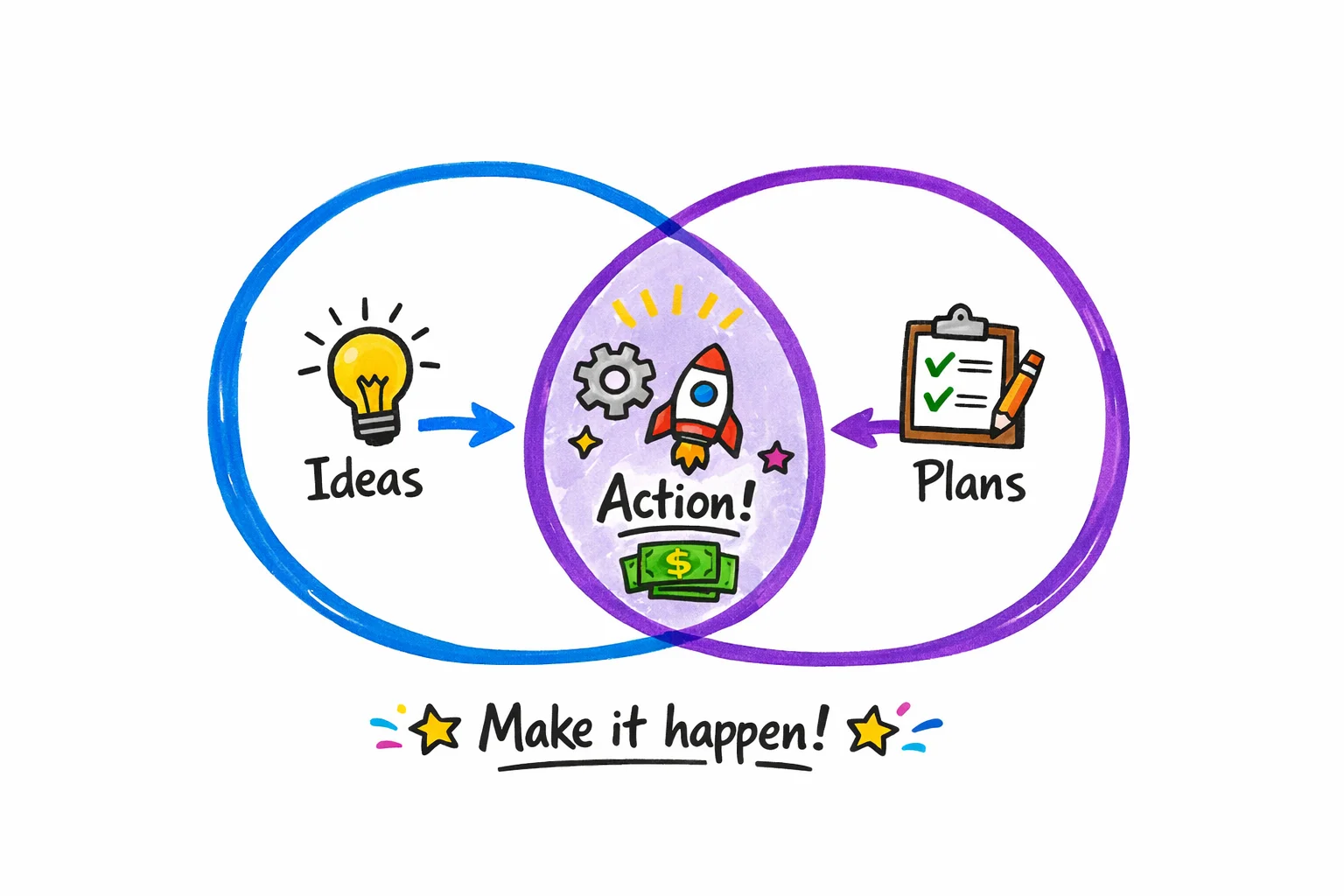
Think of it this way. GEO is not a replacement for classic SEO. It is a second floor built on top of the same foundation. If your foundation is cracked, the second floor collapses. If your foundation is solid, you get to climb.
E-E-A-T is now doing double duty.
Google’s quality raters have used Experience, Expertise, Authoritativeness, and Trustworthiness as an evaluation framework for years. [64] Now AI systems use the same signals to decide who gets cited. An analysis of over 10,000 AI Overview citations found that roughly 85% came from sources showing at least three of the four E-E-A-T signals. [33] [34] Your author bios, your credentials, your first-hand experience sections, your “about” pages: all of that is now working two jobs simultaneously.
Backlinks are still very much alive.
They have slid from their historically dominant position to something closer to third place in the modern ranking hierarchy [38], but “third place” is not “irrelevant.” Backlinko’s research found the top-ranking result has roughly 3.8 times more backlinks than pages in positions two through ten. [36] [37] The pages AI Overviews cite most often are, overwhelmingly, pages that already rank in the top ten organically. [33] [35] You cannot skip link building and expect to show up in AI answers.
The AI is not going out of its way to find obscure sources. It is pulling from the same pages Google already trusts.
Core Web Vitals are still a ranking factor.
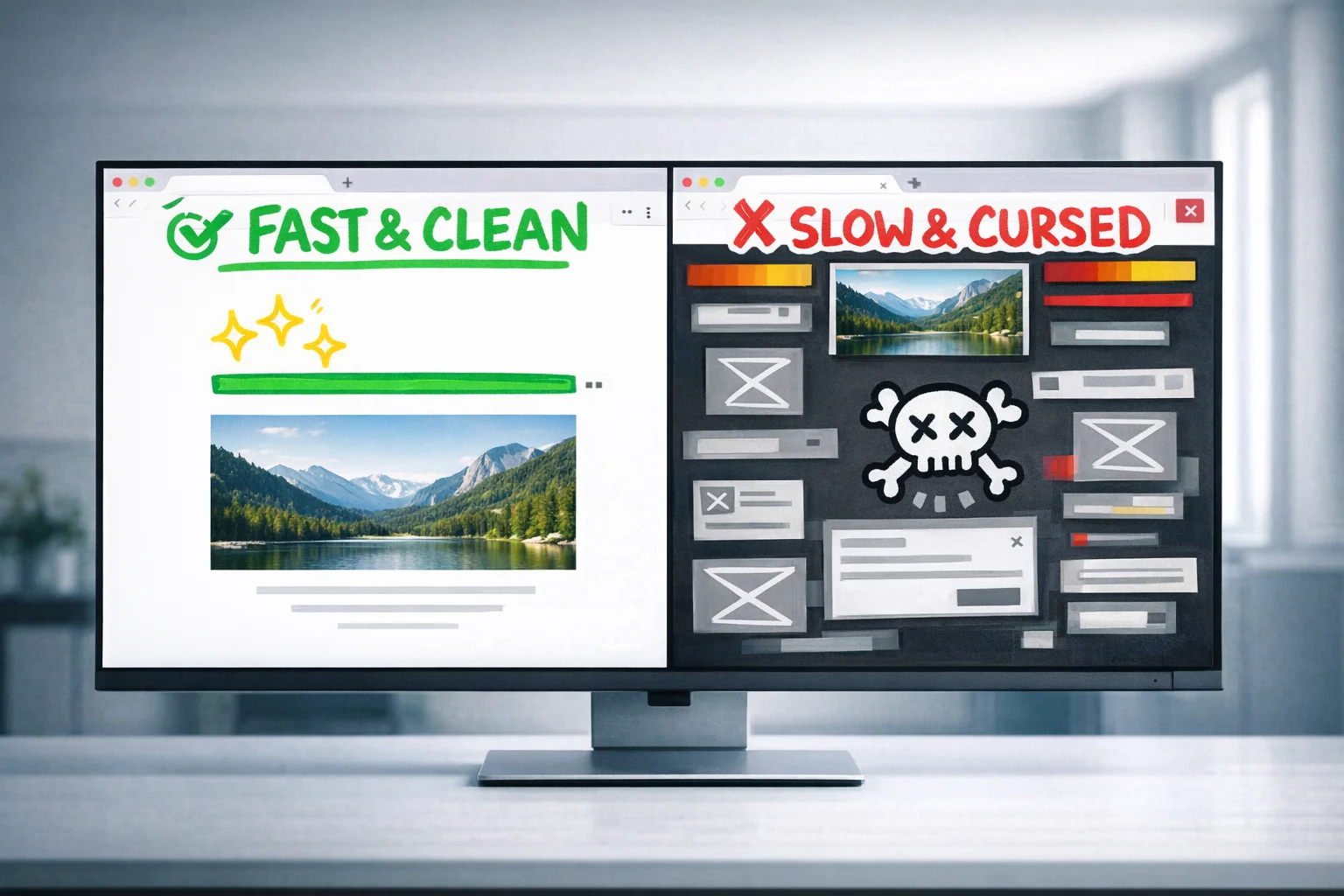
Google uses field data from CrUX at the 75th percentile to evaluate page experience, and INP joined the Core Web Vitals suite in 2023 as a direct measure of how responsive your page feels. [39] [40] [41] A slow, janky page is still a slow, janky page, and neither Google nor a user reading an AI-generated answer is going to reward it.
Structured content formats are thriving.
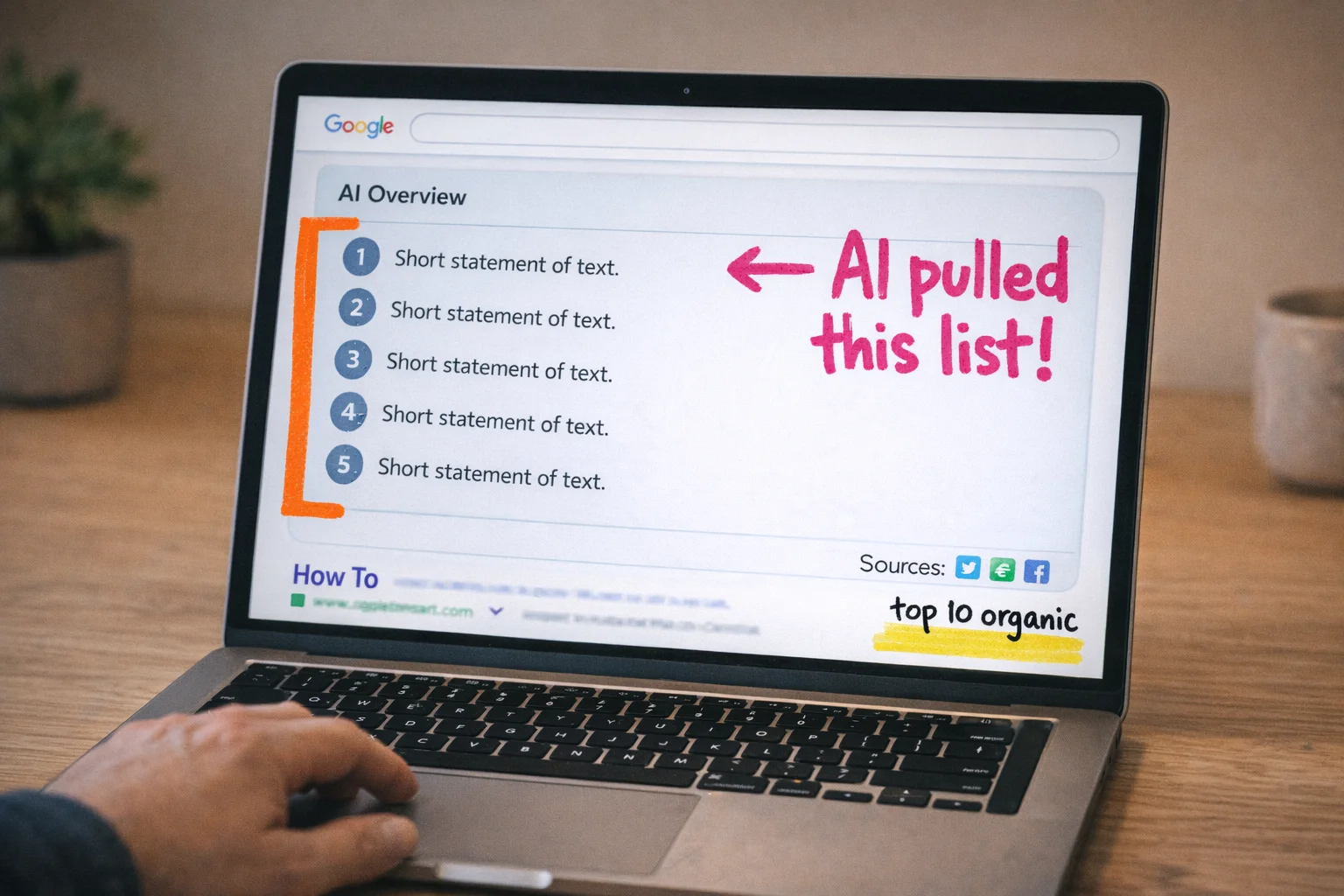
Lists, tables, FAQs, comparison pages, step-by-step how-tos: these formats ranked well before AI Overviews existed because they are easy for humans to scan. They rank well now because they are easy for AI to parse and quote. [33] [42] The format that helped you in 2019 is the format getting you cited in 2026.
The cockroaches of SEO survived the apocalypse not by accident but because they were always the right answer. The AI just made that more obvious.
Technical SEO Checklist: The Unglamorous Foundation That Determines Whether Any of This Matters
Here is the uncomfortable truth about technical SEO: nobody wants to talk about it at parties, nobody puts “fixed crawl budget inefficiencies” in their LinkedIn bio, and yet it is the reason half of beautifully written, expertly researched content pages rank on page seven next to a recipe blog from 2011.
Technical SEO is the plumbing. You only notice it when something is catastrophically wrong.
So let’s make sure nothing is catastrophically wrong.
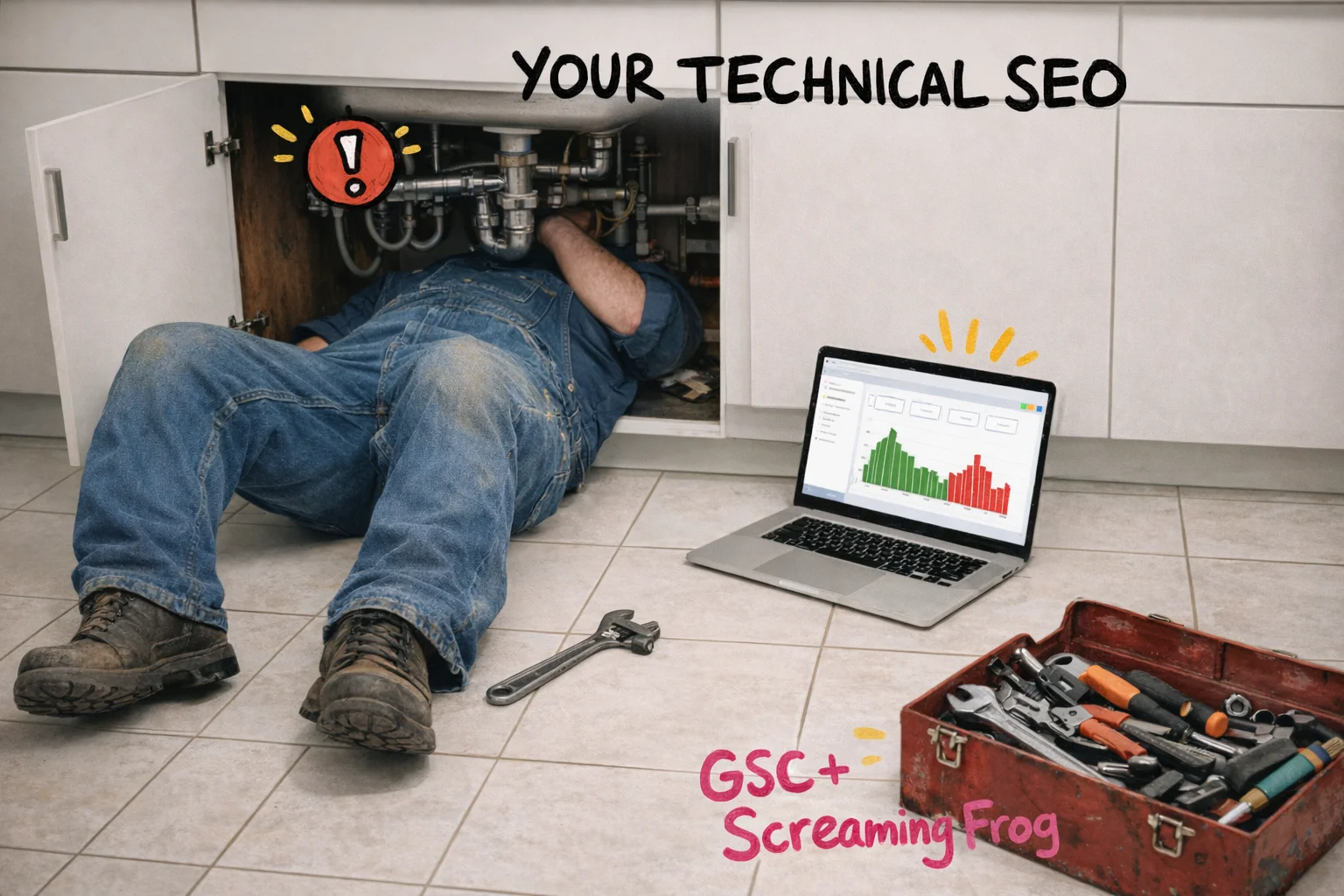
Start with what Google actually tells you for free. Google Search Console is the first tool you open, full stop. It shows you coverage errors, mobile usability issues, Core Web Vitals failures, and indexing problems directly from the source.
Pair it with the free version of Screaming Frog, which crawls up to 500 URLs and surfaces broken links, redirect chains, missing meta tags, and duplicate content without costing you a cent.
For most small business sites, this combination handles the majority of technical checks.
When you outgrow 500 URLs or need deeper analysis, the paid Screaming Frog license runs about $259 per year, which is genuinely one of the better deals in SEO tooling.
Sitebulb is worth a look if you prefer visual audit reports.
Ahrefs and Semrush both include site audit features in their paid tiers (starting around $129/month and $139.95/month respectively), and they add backlink and keyword data on top, so they make more sense once you need the full suite.
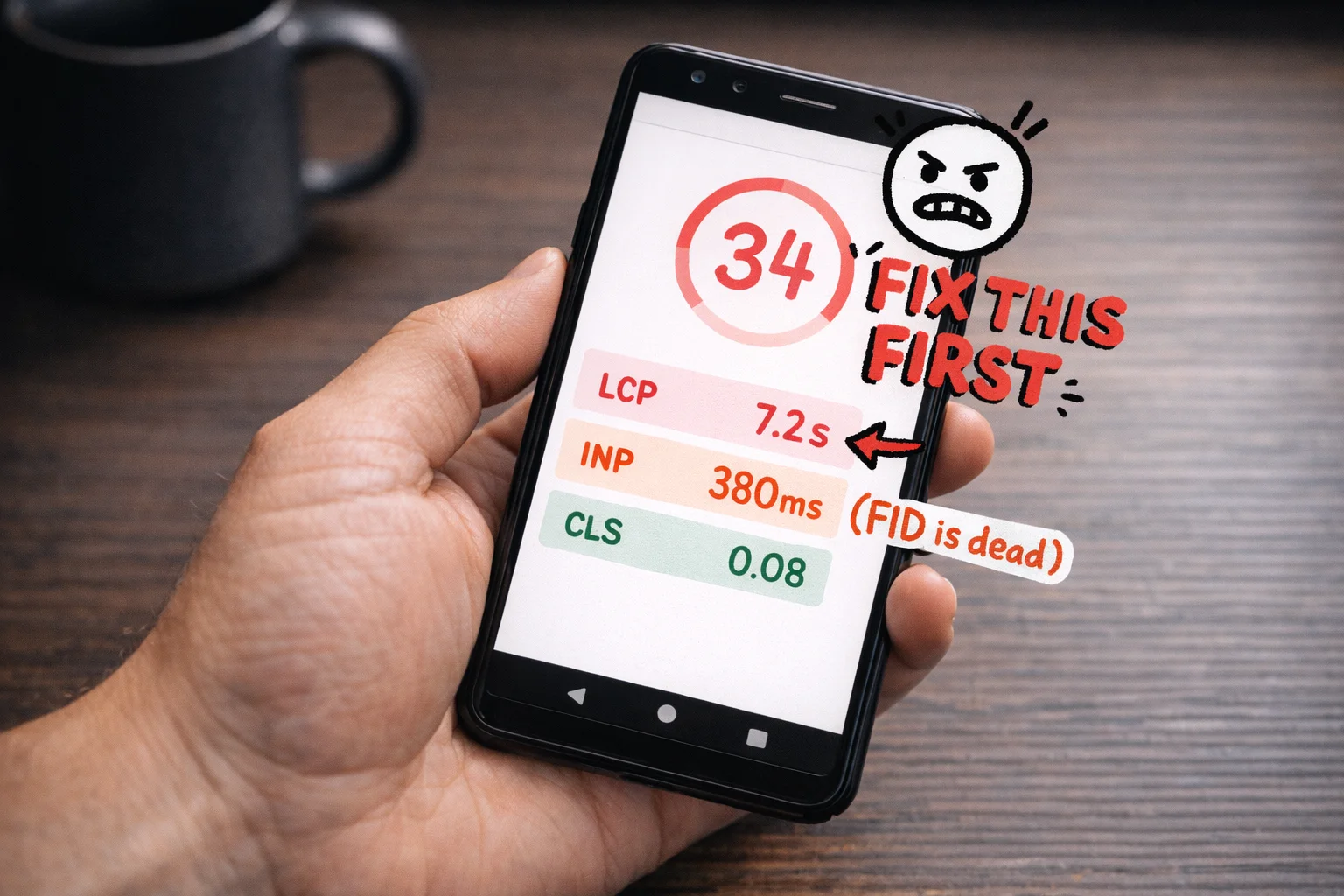
Core Web Vitals: the three numbers Google uses to judge your site’s user experience.
As of 2026, the thresholds are: Largest Contentful Paint (LCP) at or under 2.5 seconds, Interaction to Next Paint (INP) at or under 200 milliseconds, and Cumulative Layout Shift (CLS) at or under 0.1. [43] [44] [45]
All three are measured at the 75th percentile of real user data over a 28-day window, meaning your worst-performing quarter of visitors set the score. INP replaced First Input Delay as the interactivity metric in March 2024, so if your audit checklist still mentions FID, it is out of date. [43] [48]
Only about 43% of mobile pages currently pass all three thresholds, which means failing is the norm, not the exception. [47] B2B sites are particularly rough, with average mobile LCP reported around 7 seconds against a 2.5-second target. [40] [47]
Run PageSpeed Insights on your key pages and fix LCP first, because it is usually the biggest gap.
Mobile-first indexing is not a future concern.
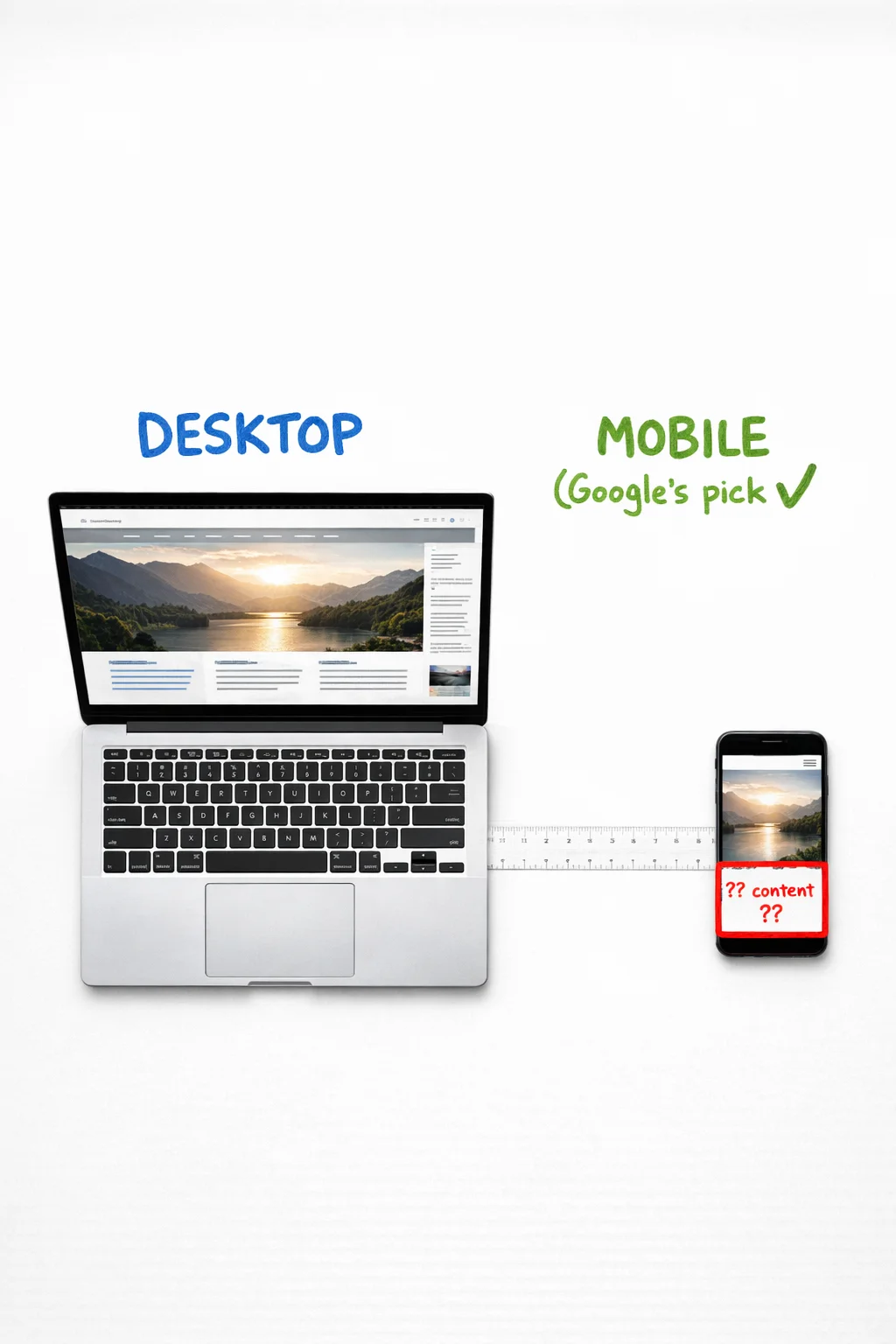
Google completed the full rollout on July 5, 2024, which means the mobile version of your site is now the primary signal for indexing and ranking. [43] [45] [56] If your mobile site hides content, loads slower, or has different structured data than your desktop version, Google is ranking the worse version.
Check Mobile Usability in Search Console regularly and test with Chrome DevTools.
Structured data is your handshake with AI systems.
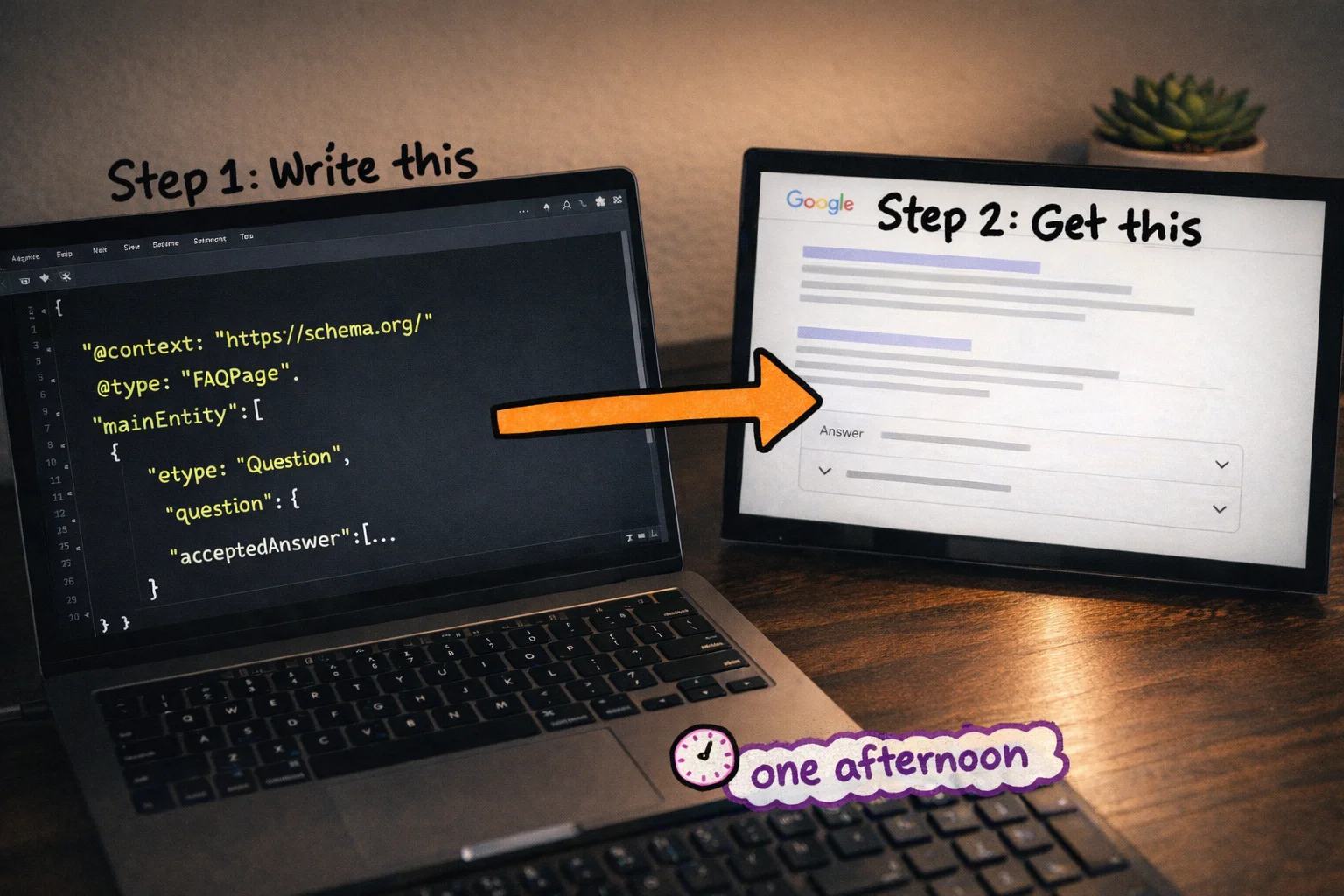
Google supports FAQPage, HowTo, Article, Organization, and Product schema for rich results, and recommends JSON-LD as the implementation format. [53] [54] [55] This matters doubly now because AI systems parsing your pages for citations and summaries read structured data the same way Google does.
If your content answers questions, mark it up as FAQ. If it describes a process, use HowTo. The markup takes an afternoon to implement and pays dividends in both traditional search and AI-generated answers.
The checklist here is not glamorous. It is crawl your site, fix what’s broken, hit the Core Web Vitals thresholds, make your mobile experience match your desktop, and add structured data.
Do those four things and you have already outrun a significant portion of your competition, who are busy arguing about AI on LinkedIn instead of checking their redirect chains.
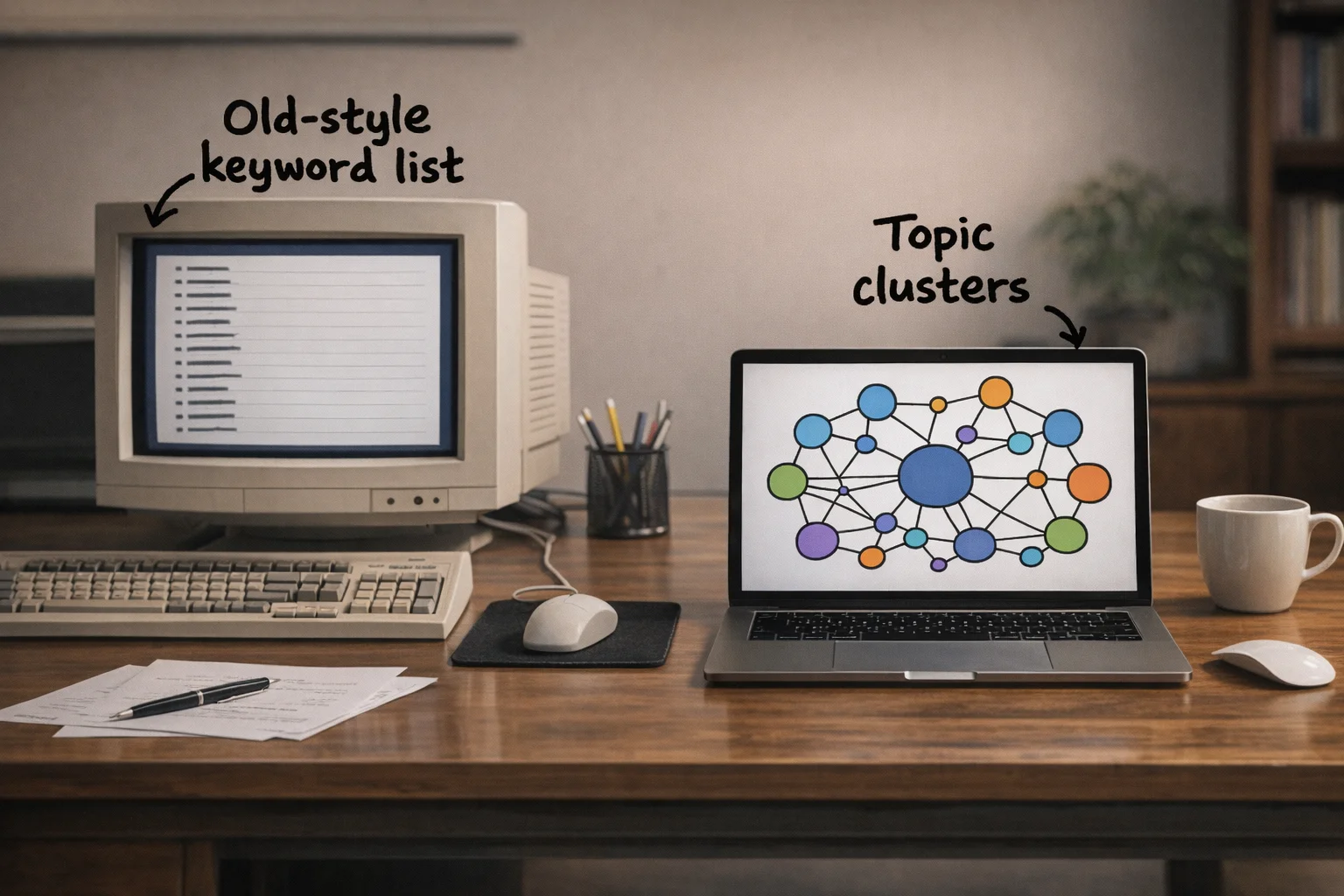
Keywords didn’t die. They went to therapy and came back as topics.
Here is the uncomfortable truth about keyword research in 2026: the version you learned, the one where you found a phrase with decent volume and low difficulty and then wrote a page about that exact phrase, is not how search works anymore.
Google’s language models (RankBrain, BERT, MUM) have gotten good enough at understanding meaning that exact-match targeting is mostly a relic. [57] [61] The search engine no longer needs you to say “best running shoes for flat feet” seventeen times. It knows what you mean. [2]
What replaced keyword targeting is topic ownership.
You pick a subject, build a cluster of interconnected content around it, and signal to both Google and AI systems that your site is the place that actually understands this thing. [57] [60]
Long-tail keywords, the specific, conversational, four-to-eight-word queries that sound like something a person would actually say out loud, now account for roughly 70% of all search traffic. [59] Voice search alone has crossed 27% monthly usage, which means a meaningful chunk of your potential audience is literally talking to their devices and expecting a direct answer back. [58]
If your content is written for a keyword and not a question, you are invisible to that audience.
The GEO twist on keyword research.
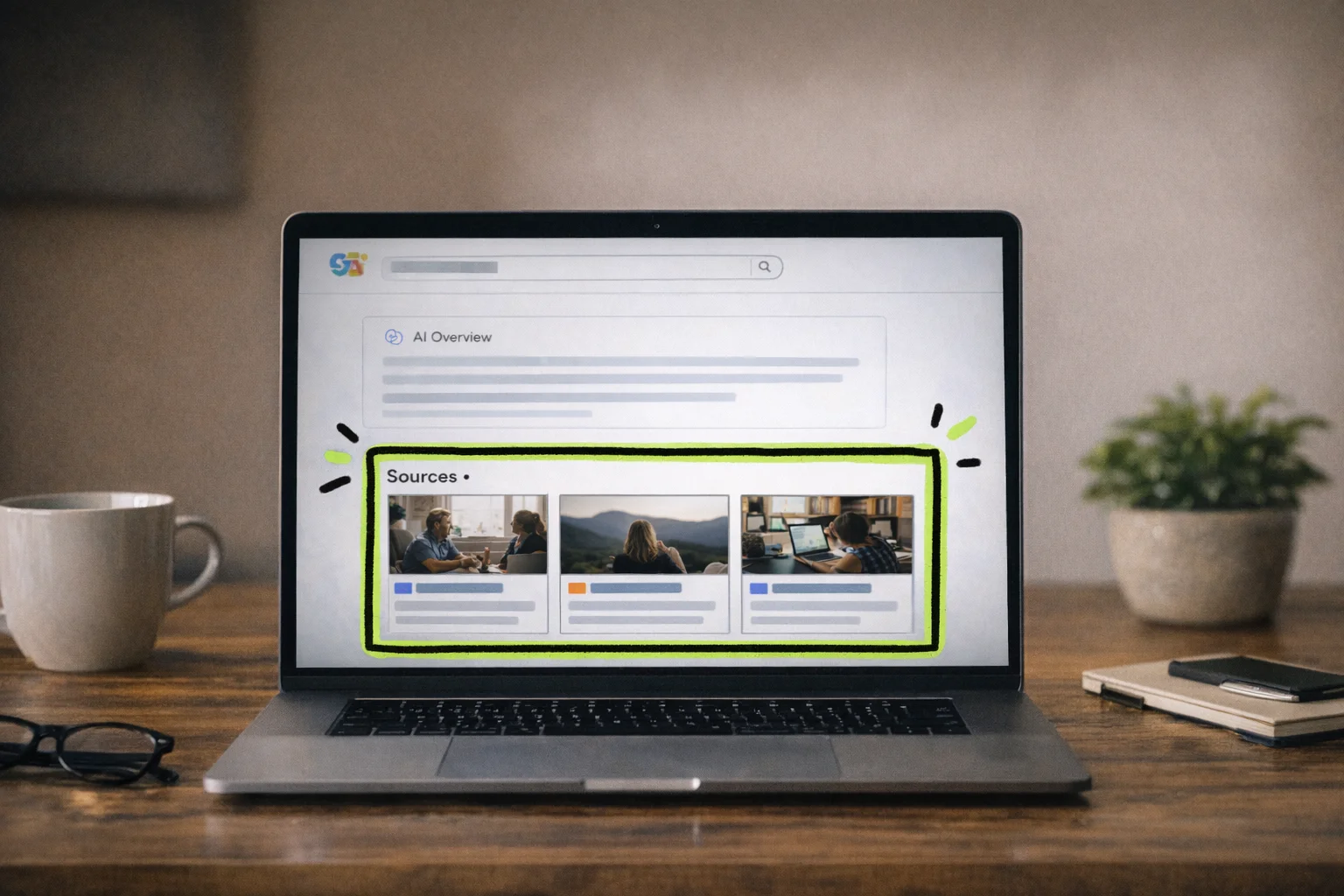
When you are optimizing for AI Overviews and generative engines, the question is not just “what do people search?” but “what would an AI cite when answering this?” That reframes everything. AI systems pull from content that is structured, specific, and clearly attributed. [60] [61] This means your keyword research now needs to surface intent signals and entity relationships, not just volume and difficulty scores. [57] [60] You are not writing for a ranking position. You are writing to be the source a machine quotes.
The content formats that actually get cited.
Eight formats consistently outperform traditional long-form blog posts in AI-driven results: comparisons, best-of lists, alternatives roundups, step-by-step guides, original research, case studies, FAQs, and checklists or tables. [60] [61] Structured elements, numbered lists, tables, clear headers, do more work than prose paragraphs when an AI is extracting an answer. [60] [61] This is not a coincidence. It is how these systems are built.
E-E-A-T baked into the content itself.
Google’s Rater Guidelines document what quality looks like: first-hand experience, demonstrated expertise, authoritativeness, and trustworthiness. [63] [64] [65] In practice, this means author bios with real credentials, original data or research you conducted yourself, expert quotes with names attached, and content that shows you have *done the thing* rather than summarized what others said about it. [63] [66] These signals matter for both traditional rankings and AI citation likelihood.

Tool callouts by budget.
For content optimization, Surfer SEO handles granular NLP scoring and AI-assisted drafting. Clearscope is simpler, with a cleaner editor experience and straightforward content grading. MarketMuse focuses on topical mapping and gap analysis across your whole site. [67] [68] [69]
- Budget tier: Surfer and Clearscope both start in the mid-double-digit monthly range;
- MarketMuse runs higher and is better suited to teams managing large content libraries.
For keyword clustering specifically, AI-powered tools now automate the process of organizing thousands of keywords into content ideas using NLP, which used to take a spreadsheet and a long afternoon. [60] [68]
Link building: the most hated part of SEO that still actually works
Let’s be honest about link building for a second. It is the part of SEO that everyone knows they should do, nobody wants to do, and approximately half the industry has been doing wrong for the last decade. It is also the part where the most money gets wasted, the most spam gets sent, and the most “guaranteed results” promises get made by people who will absolutely not be answering your emails in six months.
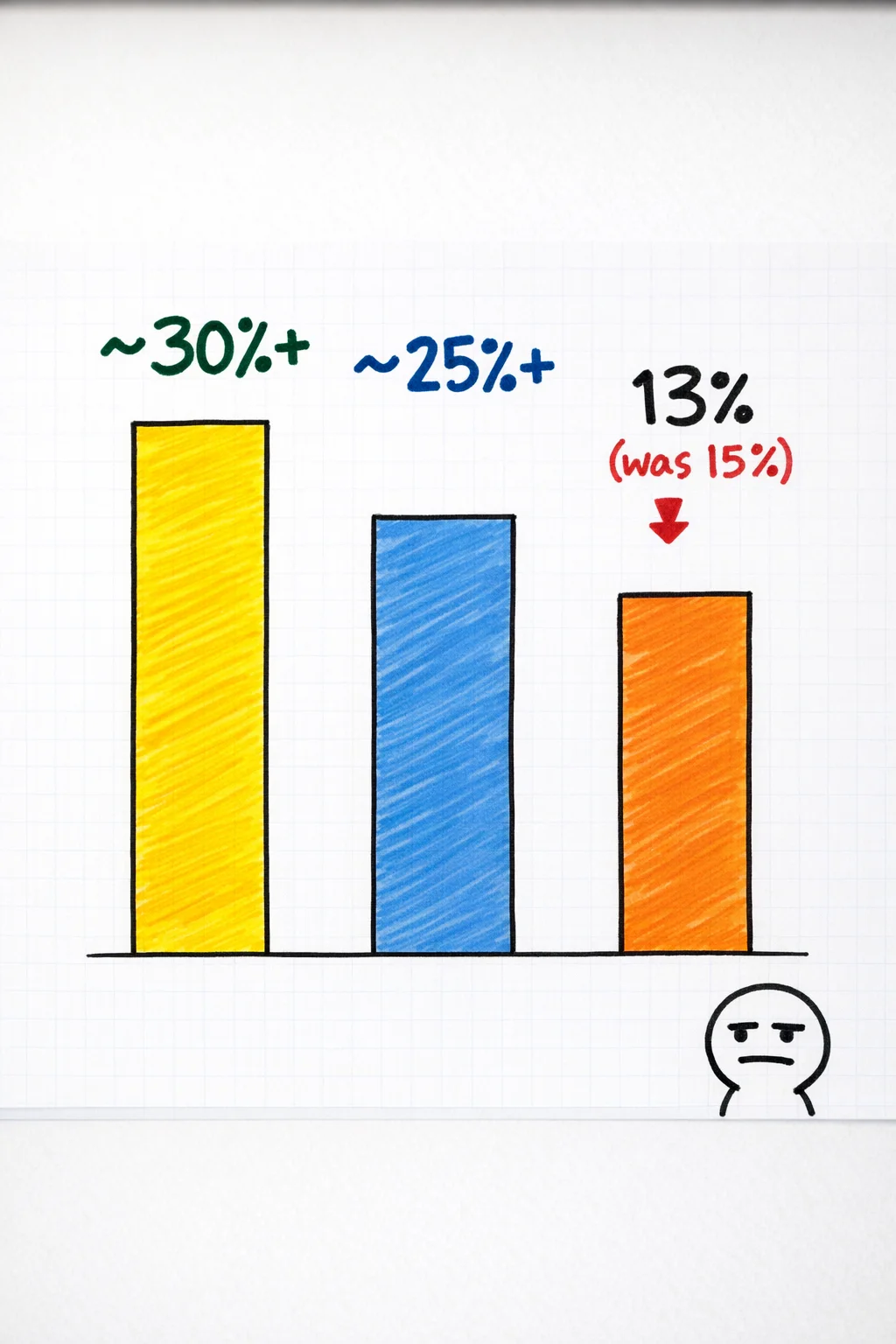
And yet. Backlinks remain a real ranking factor in 2025. Industry analysis puts them at roughly the 3rd most important signal, carrying about 13% weight in Q1 2025, down from around 15% previously. [71] That drop matters, but 13% of Google’s ranking brain is not nothing. You do not ignore 13% of anything.
The shift is that links now work with content quality and user experience rather than compensating for their absence. A thousand garbage links pointing to a thin page used to work. Now it just gets you a manual action and a very bad Tuesday. [71] [76]
What still works
Editorial and contextual links from relevant, high-authority sites continue to move the needle. [74] [75] The word “relevant” is doing heavy lifting there.
A link from a plumbing trade publication to your plumbing business is worth more than a link from a general lifestyle blog that also covers plumbing once a year. Referring-domain diversity matters too: sites with links from a broad range of sources tend to outrank sites with the same number of links concentrated in a few places. [37] [72]
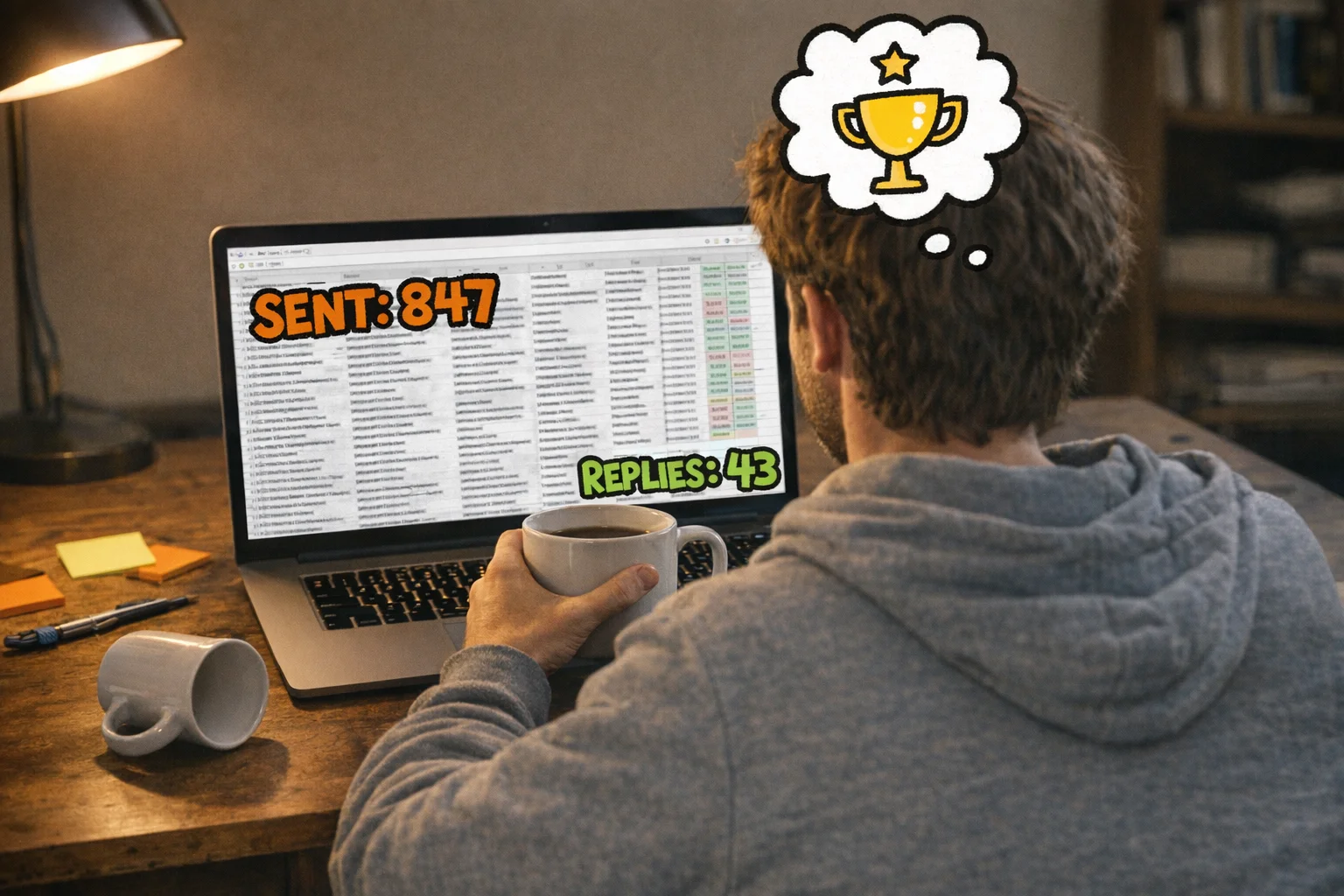
Broken link building and resource-page outreach are still viable, though you should calibrate your expectations. Typical outreach-to-acquisition rates run around 5-8%, with agency-level campaigns sometimes hitting 15-25% in responsive niches. [81] [82] [83]
That means you are sending a lot of emails. Budget accordingly, emotionally.
What will get you penalized
Private blog networks, undisclosed paid links, and link schemes are not a gray area anymore. [71] [76] [78] If you pay for a link and do not disclose it with rel=”sponsored” or rel=”nofollow”, you are gambling with your entire domain. Properly disclosed sponsored links are neutral-to-low-risk and Google-compliant. [77] [78] High-quality, industry-specific directory listings can help when they drive real traffic. Generic directories that exist only to sell links are a liability. [75] [76]
The GEO angle nobody is talking about yet
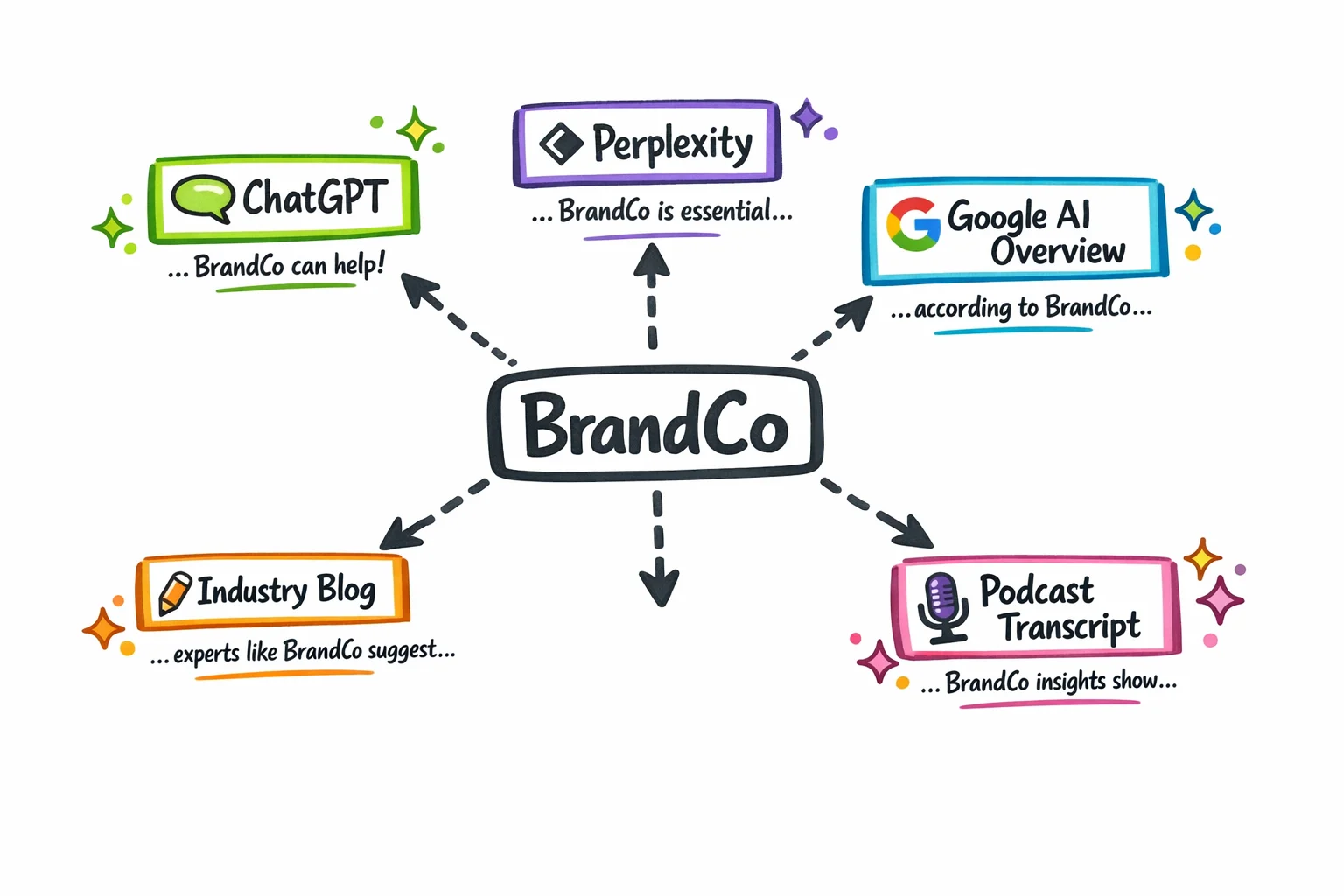
AI systems cite sources. When ChatGPT or Perplexity answers a question about your industry, it pulls from pages it considers authoritative. Unlinked brand mentions are increasingly treated as a trust signal by these systems even when no hyperlink exists. Getting your brand name into industry publications, podcast transcripts, forum discussions, and expert roundups builds the kind of ambient authority that AI models recognize. This is not a replacement for traditional link building. It is an additional layer that did not exist three years ago.
Tools by budget tier
For small businesses starting out, Google Search Console (free) shows who is already linking to you.
Ahrefs or Semrush at their entry tiers let you analyze competitor backlink profiles and find broken link opportunities.
For outreach at scale, BuzzStream starts at around $24/month for the Starter plan.
Qwoted, Respona, and Pitchbox sit in the mid-to-high range and are better suited to teams running digital PR campaigns or original research pushes.
The honest summary: link building is slower, harder, and more expensive than it was in 2018. It is also more durable when done right, because a genuine editorial link from a real publication is not something an algorithm update can easily devalue without breaking the web.
Build fewer, better links. Stop buying the cheap ones. And start tracking your unlinked mentions before your competitors figure out that game.
GEO: the secret level that opens after you’ve done everything else
Here is the thing nobody tells you when they start screaming about Generative Engine Optimization: it is not a replacement for the checklist you just worked through. It is a layer on top. Think of it like unlocking a secret level in a video game — you still had to beat the first four worlds to get here, and the skills you built there absolutely carry over.
Anyone selling you “GEO instead of SEO” is selling you a shortcut that doesn’t exist.
So what IS GEO, exactly? The term comes from a paper published on arXiv on November 13, 2023, by researchers from Princeton, Georgia Tech, the Allen Institute for AI, and IIT Delhi, and later presented at KDD 2024. [10] [24] [25] The core finding: specific content tactics can increase how often your pages get cited inside generative engine responses by up to 40%, tested across 10,000 diverse queries on their GEO-bench benchmark. [10] [85]
The three tactics that moved the needle most were:
- Adding statistics (up to ~33.9% lift)
- Quoting named experts (up to ~32%)
- Citing your sources directly in the content (up to ~30.3%). [10] [85] [86]
Keyword stuffing, by comparison, barely registered. The AI doesn’t care that you said “best plumber in Austin” eleven times. It cares whether your content sounds like something a knowledgeable human would actually trust.
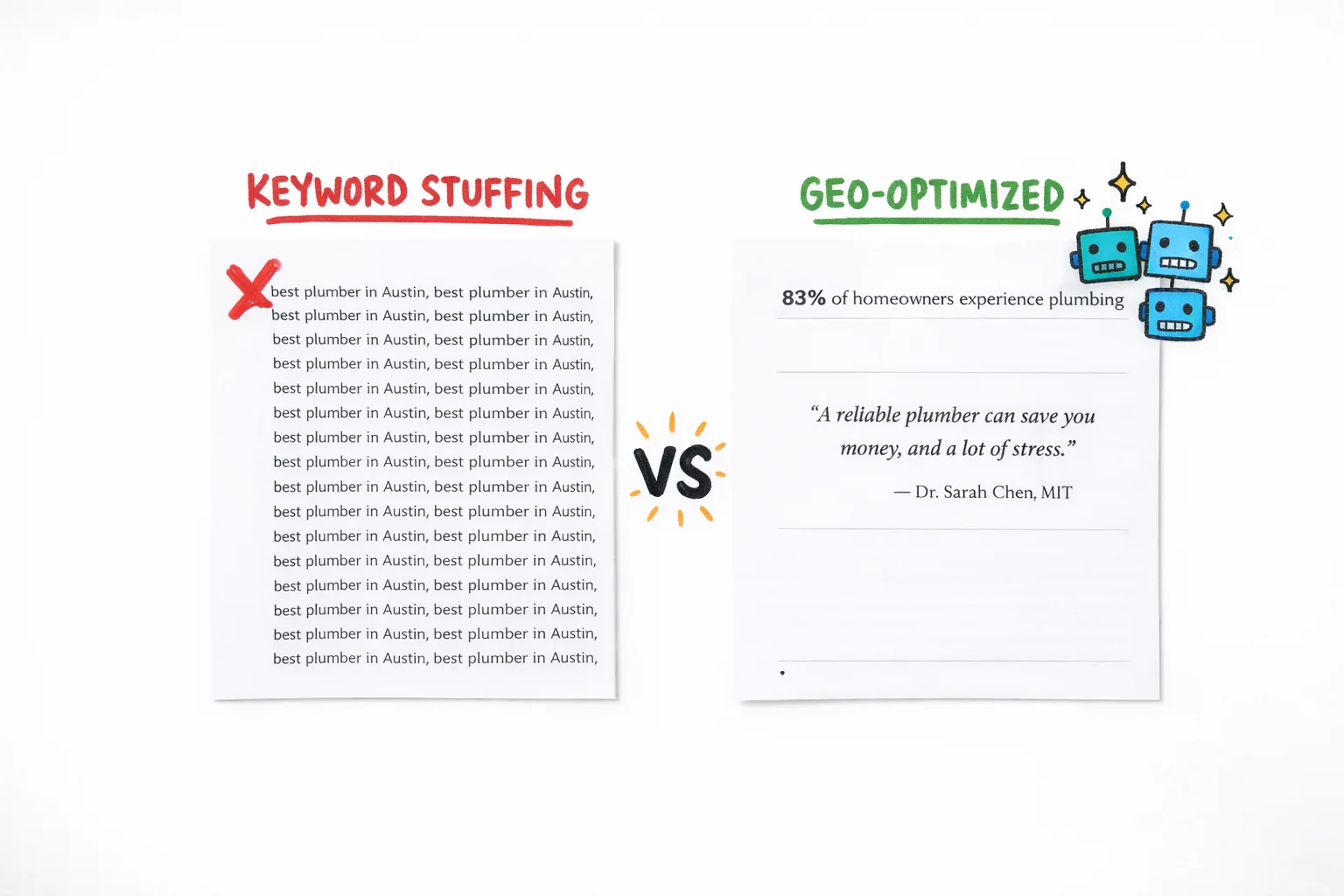
Structure your content for machines that read like humans.
Write in Q&A format. Front-load your direct answer in the first sentence or two, then expand. Use FAQ schema and HowTo schema where they fit naturally, because pages with FAQ markup appear in AI summaries at a meaningfully higher rate than those without. [53] [87] Research the actual questions your audience types into search bars (AnswerThePublic and AlsoAsked are both useful here), then answer those questions in plain language before the reader has to scroll. [87] [94] [95]

Implement structured data in JSON-LD.
This is Google’s preferred format, and it keeps your schema separate from your HTML so it’s easier to maintain. [88] [89] [90] The schema types that matter most for AI parsing right now are Organization, Person, LocalBusiness, Product, Service, FAQPage, Review/AggregateRating, and Article. [87] [88] [89] [90] One thing to cross off your list immediately: Speakable schema is deprecated and no longer supported. Stop using it. [53] [89]
Build your brand as an entity, not just a website.
Google’s Knowledge Graph needs to know you exist as a real, distinct thing in the world. That means consistent NAP (name, address, phone) across every profile, a Wikidata entry with a QID if you can get one, mainEntityOfPage markup on your key pages, and verified listings everywhere your business appears. [91] [92] [93] Tools like InLinks and WordLift help with entity mapping; the Google Knowledge Graph Search API and the Google Natural Language API let you check how Google currently understands your brand. [91] [93]
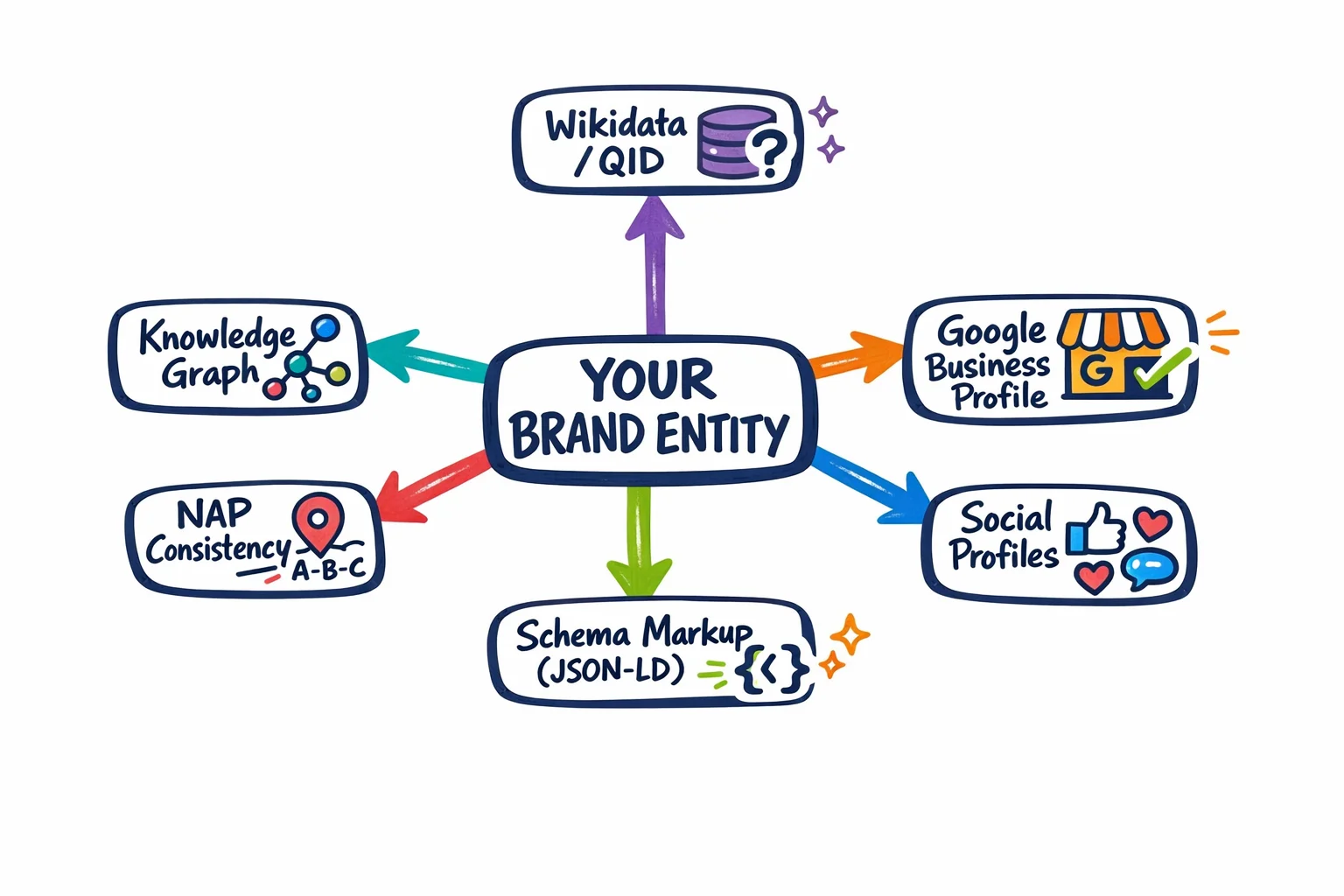
Monitor your AI visibility.
This is where most people have no idea what’s happening to them. Tools like Otterly.ai let you track how often your brand appears in AI Overview responses and what context surrounds those mentions. [106] [107] [108] Riff Analytics and similar platforms track brand visibility across ChatGPT, Perplexity, and Gemini. [109] Set up a baseline now, before you make any changes, so you can actually measure whether any of this is working.

None of this replaces a fast site, clean crawlability, or content that actually answers real questions. GEO is the multiplier. The foundation is still everything that came before it.
Stop measuring the wrong things (and what to track instead)
Here is the uncomfortable truth about your SEO dashboard right now: most of the numbers on it are measuring a game that has already ended. Average position? Cute. Organic click-through rate? Adorable. These metrics made perfect sense when every search ended with a human eyeballing ten blue links and picking one. That is not what search looks like anymore, and tracking those numbers with the same reverence you gave them in 2019 is like checking your Blockbuster membership card balance in 2026.
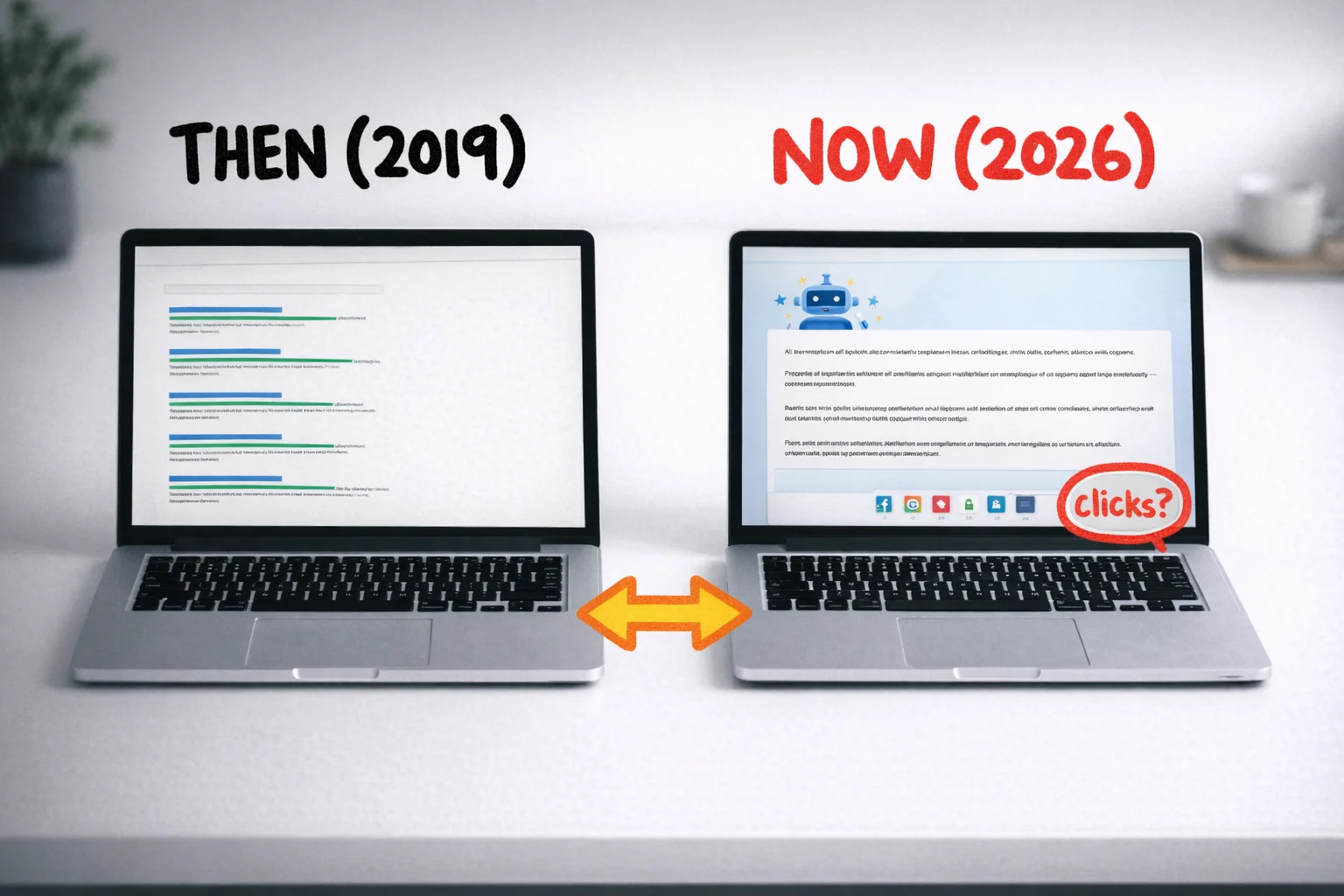
Rand Fishkin at SparkToro has been saying this out loud for a while now: organic traffic is no longer the primary metric worth optimizing for, because roughly 58.5% of US searches end without a click to any website at all [19]. When an AI Overview answers the question before the user even considers scrolling, the click never happens. The impression happened. The brand exposure happened. The click did not. So if you are only counting clicks, you are only counting the searches where AI failed to satisfy the user, which is a strange thing to celebrate.
The four KPI categories that actually matter now are:
- AI citation rate: how often your brand or content gets named inside AI-generated answers
- Share of Voice in generative search: how often your content gets retrieved and cited compared to competitors across Google AI Overview, ChatGPT, and Perplexity
- Brand search volume and recall: whether people who saw your name in an AI summary later search for you directly
- Engagement quality once they do arrive: are they doing the thing you wanted, or bouncing immediately [97] [98] [99]
Traditional rankings and raw traffic volume do not disappear entirely, but they drop from starring roles to supporting cast [96] [101].
For tracking generative visibility specifically, Otterly.ai is the most practical entry point right now. It monitors your presence across AI Overviews and other generative interfaces, starts at around $29 per month, and offers a 14-day trial, which means you can get real baseline data before committing to anything [106] [107].
It is not magic, and the methodology for measuring “vector index presence” across different LLMs is still being figured out industry-wide, so treat early numbers as directional rather than gospel. But directional is infinitely better than blind.
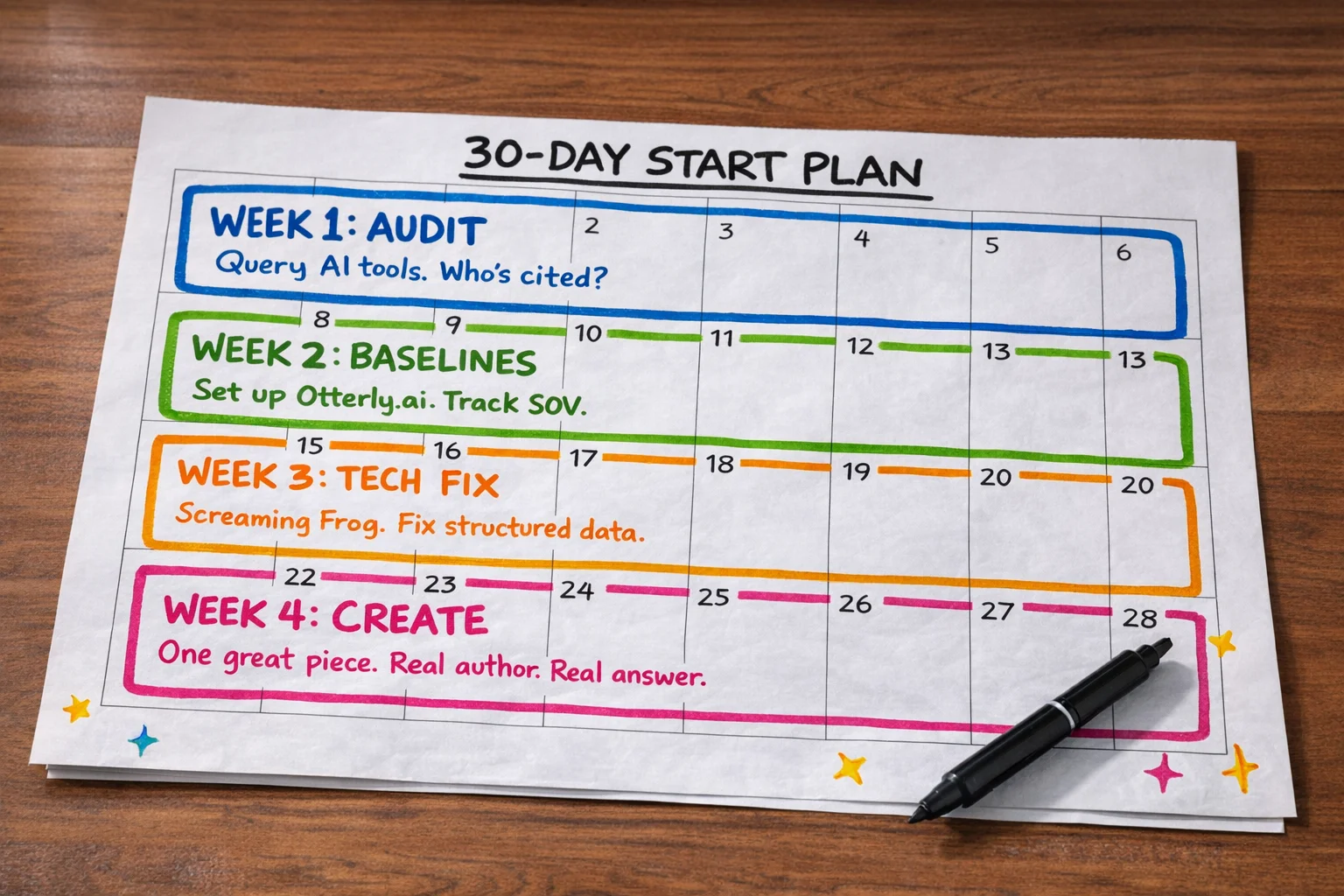
Your 30-day starting point is not complicated
Week one
Audit your current presence by manually querying your core topics in Google AI Overview, ChatGPT, and Perplexity and noting whether your brand appears, how it is described, and who is getting cited instead of you.
Week two
Set up Otterly.ai or a comparable tool and establish your baselines for citation count, sentiment, and Share of Voice.
Week three
Run a technical audit with Screaming Frog, fix your most broken structured data, and make sure your author pages and About content are actually findable.
Week four
Publish one genuinely useful, well-sourced piece of content that answers a real question your customers ask, with a named human author attached to it.
That is it. That is the whole starting plan.
Now, the rallying cry
Yes, AI changed search.
Yes, the metrics shifted.
Yes, some traffic is gone and is not coming back.
But here is what did not change: AI systems are trained on human-created content, they cite sources written by people who did the work, and they consistently favor brands that have built real credibility over time [98] [99] [102]. The businesses that will win in this environment are not the ones who found the cleverest workaround. They are the ones who decided to be genuinely useful, genuinely visible, and genuinely trustworthy, and then did the unglamorous work of proving it.
You already know how to do that. You just needed a new scorecard.
Get a FREE Digital Marketing Strategy For Your Business or Your Clients — In Under 5 Minutes
Sources
[1] 2024 zero-click search study: For every 1,000 US Google searches, only 374 clicks go to the open web; in the EU it’s 360 — https://sparktoro.com/blog/2024-zero-click-search-study-for-every-1000-us-google-searches-only-374-clicks-go-to-the-open-web-in-the-eu-its-360/
[2] AI Overviews study — https://www.semrush.com/blog/ai-overviews-study/
[3] Google AI Overviews drive drop in organic & paid CTR — https://searchengineland.com/google-ai-overviews-drive-drop-organic-paid-ctr-464212
[4] AI Overviews reduce clicks — update — https://ahrefs.com/blog/ai-overviews-reduce-clicks-update/
[5] AIO impact on Google CTR — September 2025 update — https://www.seerinteractive.com/insights/aio-impact-on-google-ctr-september-2025-update
[6] Google AI Overviews linked to 25% drop in publisher referral traffic, new data shows — https://digiday.com/media/google-ai-overviews-linked-to-25-drop-in-publisher-referral-traffic-new-data-shows/
[7] AI Overviews impact — https://www.conductor.com/blog/ai-overviews-impact/
[8] 2025 organic traffic crisis analysis report — https://thedigitalbloom.com/learn/2025-organic-traffic-crisis-analysis-report/
[9] AI Overview statistics — https://www.sellerscommerce.com/blog/ai-overview-statistics/
[10] GEO: Generative Engine Optimization — https://arxiv.org/pdf/2311.09735
[11] What is Generative Engine Optimization (GEO)? — https://searchengineland.com/what-is-generative-engine-optimization-geo-444418
[12] How SGE and other Google search changes could impact your traffic (data & predictions) — https://blog.hubspot.com/marketing/how-sge-other-google-search-changes-could-impact-your-traffic-data-predictions
[13] Google users are less likely to click on links when an AI summary appears in the results — https://www.pewresearch.org/short-reads/2025/07/22/google-users-are-less-likely-to-click-on-links-when-an-ai-summary-appears-in-the-results/
[14] AI-induced anxiety and SEO volatility among top 10 challenges for marketers in 2024 — https://www.marketingtechnews.net/news/ai-induced-anxiety-and-seo-volatility-among-top-10-challenges-for-marketers-in-2024/
[15] New research: Google Search grew 20% in 2024; receives 373x more searches than ChatGPT — https://www.sparktoro.com/blog/new-research-google-search-grew-20-in-2024-receives-373x-more-searches-than-chatgpt/
[16] A more helpful Google Search with generative AI — https://blog.google/products-and-platforms/products/search/generative-ai-google-search-may-2024/
[17] AI Overviews — https://en.wikipedia.org/wiki/AI_Overviews
[18] State of Search Q1 2025 (Datos) — report — https://23904045.fs1.hubspotusercontent-na1.net/hubfs/23904045/EN%20Datos%20State%20of%20Search%20report%20Q1%202025.pdf
[19] New research: Google Search grew 20% in 2024 (SparkToro) — https://sparktoro.com/blog/new-research-google-search-grew-20-in-2024-receives-373x-more-searches-than-chatgpt/
[20] Zero-click searches up; organic clicks down — https://searchengineland.com/zero-click-searches-up-organic-clicks-down-456660
[21] ChatGPT Statistics and Usage (overview) — https://nerdynav.com/chatgpt-statistics/
[22] How many ChatGPT users? (Exploding Topics) — https://explodingtopics.com/blog/chatgpt-users
[23] ChatGPT user growth reporting (Business Insider) — https://www.businessinsider.com/chatgpt-users-growth-openai-growth-sam-altman-ai-llm-2025-10
[24] GEO: Generative Engine Optimization — Princeton publication page — https://collaborate.princeton.edu/en/publications/geo-generative-engine-optimization
[25] GEO paper — KDD 2024 (ACM DOI entry) — https://dl.acm.org/doi/10.1145/3637528.3671900
[26] How zero-click searches are changing SEO in 2025 — https://www.jellyfish.com/en-gb/training/blog/how-zero-click-searches-are-changing-seo-in-2025
[27] Google Algorithm History — https://www.searchenginejournal.com/google-algorithm-history/
[28] What is Generative Engine Optimization (GEO)? (Frase blog) — https://frase.io/blog/what-is-generative-engine-optimization-geo
[29] March 2024 core update & spam policies — https://developers.google.com/search/blog/2024/03/core-update-spam-policies
[30] March 2024 Google Core Update — https://yoast.com/march-2024-google-core-update/
[31] State of SEO: Google Search Algorithm Updates — https://www.cmswire.com/digital-marketing/state-of-seo-google-search-algorithm-updates/
[32] Google update (coverage/analysis) — https://www.goodsignals.com/seo/google-update/
[33] Google ranking & AI citations study — https://originality.ai/blog/google-ranking-ai-citations-study
[34] EEAT for GEO Trust Framework & Generative Engine Optimization — https://www.agenxus.com/blog/eeat-for-geo-trust-framework-generative-engine-optimization
[35] Google E-E-A-T (experience, expertise, authoritativeness, trustworthiness) — https://blog.clickpointsoftware.com/google-e-e-a-t
[36] Google ranking factors (analysis & summary) — https://linkbuilder.io/google-ranking-factors/
[37] Google ranking factors (Backlinko research) — https://backlinko.com/google-ranking-factors
[38] 200 Google ranking factors explained (guide) — https://go-seo.com/200-google-ranking-factors-explained-simply-the-complete-guide-heading-into-2025/
[39] Core Web Vitals revealed — data from real websites — https://theasknetwork.com/core-web-vitals-revealed-data-from-real-websites/
[40] Core Web Vitals & SEO after the Google Content Warehouse API data leaks — https://www.hobo-web.co.uk/core-web-vitals-seo-after-the-google-content-warehouse-api-data-leaks/
[41] Introducing INP (Interaction to Next Paint) — https://developers.google.com/search/blog/2023/05/introducing-inp
[42] E-E-A-T — How Google and AI platforms evaluate trust and authority — https://www.blissdrive.com/blog-ai-visibility/eeat-how-google-and-ai-platforms-evaluate-trust-and-authority/
[43] Core Web Vitals (Google Search Central) — https://developers.google.com/search/docs/appearance/core-web-vitals
[44] Core Web Vitals — Guide & thresholds — https://www.corewebvitals.io/core-web-vitals
[45] Web Vitals (web.dev) — https://web.dev/articles/vitals
[46] Core Web Vitals 2026: INP, LCP, CLS optimization guide — https://www.digitalapplied.com/blog/core-web-vitals-2026-inp-lcp-cls-optimization-guide
[47] Google Core Web Vitals guide for B2B — https://whitehat-seo.co.uk/blog/google-core-web-vitals-guide-for-b2b
[48] Google will update its Core Web Vitals metrics on March 12 — https://onward.justia.com/google-will-update-its-core-web-vitals-metrics-on-march-12/
[49] Core Web Vitals explained (InMotion Hosting) — https://www.inmotionhosting.com/blog/core-web-vitals/
[50] Screaming Frog vs Ahrefs — tool comparison — https://explodingtopics.com/blog/screaming-frog-vs-ahrefs
[51] Best SEO tools (comparison/guides) — https://landingi.com/seo/best-tools/
[52] 8 best SEO optimization tools for 2025 — https://digitalhumanity.co.za/resources/8-best-seo-optimization-tools-for-2025/
[53] Google is not diminishing the use of structured data in 2026 — https://www.searchenginejournal.com/google-is-not-diminishing-the-use-of-structured-data-in-2026/560516/
[54] Search Gallery — supported structured data (Google) — https://developers.google.com/search/docs/appearance/structured-data/search-gallery
[55] Schema markup in 2026 (overview) — https://www.yocreativ.com/blog/schema-markup-in-2026/
[56] Best SEO tools in 2025 — free vs paid comparison — https://www.weblayer.nl/blogs/best-seo-tools-in-2025-free-paid-full-comparison
[57] Is Keyword Research Dead? Not So Fast — https://www.straightnorth.com/blog/is-keyword-research-dead-not-so-fast/
[58] How AI Is Changing Keyword Research in 2025 — https://www.creativewarrior.com.au/how-ai-is-changing-keyword-research-in-2025/
[59] Keyword Research Statistics — https://www.amraandelma.com/keyword-research-statistics/
[60] Types of Keyword Research — 2025 Guide — https://www.babylovegrowth.ai/en/blog/types-of-keyword-research-2025-guide
[61] Keyword Research (Guide) — https://www.siegemedia.com/strategy/keyword-research
[62] Google E‑A‑T (Explanation) — https://moz.com/learn/seo/google-eat
[63] Google E‑E‑A‑T: How to Demonstrate First‑Hand Experience — https://www.searchenginejournal.com/google-e-e-a-t-how-to-demonstrate-first-hand-experience/474446/
[64] Google Search Central blog: Rater Guidelines and E‑E‑A‑T (Dec 2022) — https://developers.google.com/search/blog/2022/12/google-raters-guidelines-e-e-a-t
[65] Search Quality Evaluator Guidelines (PDF) — https://guidelines.raterhub.com/searchqualityevaluatorguidelines.pdf
[66] Google Quality Rater Guidelines (summary) — https://www.theblogsmith.com/blog/google-quality-rater-guidelines/
[67] Surfer SEO vs Clearscope vs MarketMuse — Developer’s Guide — https://sparkco.ai/blog/surfer-seo-vs-clearscope-vs-marketmuse-developers-guide
[68] SEO Content Optimization Comparison (Surfer, Clearscope, MarketMuse) — https://www.conbersa.ai/learn/seo-content-optimization-comparison
[69] Surfer SEO Alternatives and Comparisons — https://seowriting.ai/blog/surfer-seo-alternatives
[70] Best AI SEO Tools (2025) — https://www.blankboard.studio/originals/blog/best-ai-seo-tools-2025
[71] The Google Algorithm: Ranking Factors — https://firstpagesage.com/seo-blog/the-google-algorithm-ranking-factors/
[72] Google Ranking Factors — Semrush Blog — https://www.semrush.com/blog/google-ranking-factors/
[73] Core Updates — Google Search Central — https://developers.google.com/search/docs/appearance/core-updates
[74] Google SEO Rules: Link Building — https://opace.agency/blog/google-seo-rules-link-building
[75] A 2025 Guide to Building Quality Backlinks — https://www.smartmonkeymarketing.co.uk/insights/a-2025-guide-to-building-quality-backlinks/
[76] SEO and Backlinks — 2025 Guide — https://www.backlink-tool.org/en/seo-and-backlinks-2025-guide/
[77] Links: Crawlable vs. Non-crawlable — Google Search Central — https://developers.google.com/search/docs/crawling-indexing/links-crawlable
[78] SEO Starter Guide — https://developers.google.com/search/docs/fundamentals/seo-starter-guide
[79] Best Link Building Tools (overview & pricing) — https://www.uprankly.com/blog/link-building-tools
[80] Link Building Pricing — BuzzStream Blog — https://www.buzzstream.com/blog/link-building-pricing/
[81] Broken Link Building Guide — https://lagrowthmachine.com/broken-link-building-guide/
[82] Broken Link Building — Semrush Blog — https://www.semrush.com/blog/broken-link-building/
[83] Broken Link Building — Linkbuilder.io — https://linkbuilder.io/broken-link-building/
[84] Best Link Building Tools 2025 — https://linkjuiceclub.com/best-link-building-tools-2025/
[85] Generative Engine Optimization — blog explainer — https://geoptie.com/blog/generative-engine-optimization
[86] Generative Engine Optimization (GEO) — Glossary entry — https://www.paz.ai/glossary/generative-engine-optimization-geo
[87] Schema markup for AI search types that get you cited — https://wpriders.com/schema-markup-for-ai-search-types-that-get-you-cited/
[88] Schema Markup — guide — https://www.wearetg.com/blog/schema-markup/
[89] Google Schema Updates — SEO guide — https://www.webfx.com/blog/seo/google-schema-updates/
[90] What 2025 revealed about AI search and the future of schema markup — https://www.schemaapp.com/schema-markup/what-2025-revealed-about-ai-search-and-the-future-of-schema-markup/
[91] Entity‑first content optimization — guide — https://searchengineland.com/guide/entity-first-content-optimization
[92] Understanding Google’s Knowledge Graph and its impact — https://www.marketingmix.com.au/understanding-googles-knowledge-graph-and-its-impact-on-your-business/
[93] Google Knowledge Graph algorithm updates and volatility — https://jasonbarnard.com/digital-marketing/articles/articles-by/tactical-intelligence/google-knowledge-graph-algorithm-updates-and-volatility/
[94] From keywords to conversations — conversational voice search (2025) — https://www.hozio.com/from-keywords-to-conversations-why-conversational-voice-search-matter-in-ai-seo-2025/
[95] Beyond SEO: Your GEO checklist — content for AI search — https://totheweb.com/blog/beyond-seo-your-geo-checklist-mastering-content-creation-for-ai-search-engines/
[96] How AI Is Reshaping SEO — https://uproer.com/articles/how-ai-is-reshaping-seo/
[97] SEO KPIs in 2025 — https://wordlift.io/blog/en/seo-kpis-in-2025/
[98] AI Search KPI Frameworks — visibility, sentiment, conversion (2025) — https://geneo.app/blog/ai-search-kpi-frameworks-visibility-sentiment-conversion-2025/
[99] 12 New KPIs for the GenAI Era — https://duaneforresterdecodes.substack.com/p/12-new-kpis-for-the-genai-era-the
[100] SEO novità del 2025 — https://www.cerved.com/pro-web-digital-consulting/a/seo/novita-seo-del-2025
[101] LLM consistency, recommendations and SEO KPI implications — https://searchengineland.com/llm-consistency-recommendation-share-seo-kpi-469512
[102] New front door to the internet: winning in the age of AI search — https://www.mckinsey.com/capabilities/growth-marketing-and-sales/our-insights/new-front-door-to-the-internet-winning-in-the-age-of-ai-search
[103] Top 2025 AI SEO agency rankings — The elite 10 — https://contently.com/2025/07/16/top-2025-ai-seo-agency-rankings-the-elite-10/
[104] Search isn’t dead — it’s just getting smarter — https://www.searchpilot.com/resources/blog/search-isnt-dead-its-just-getting-smarter
[105] Understanding zero-clicks — insights from 2024 research — https://www.rubyshore.com/understanding-zero-clicks-insights-from-the-2024-research/
[106] Otterly.ai pricing — navigating your options for AI visibility in 2025 — http://oreateai.com/blog/otterlyai-pricing-navigating-your-options-for-ai-visibility-in-2025/9b2d002aa547606d5bd13579ac82672c
[107] Otterly.ai — Pricing — https://otterly.ai/pricing
[108] Otterly AI review (2025) — https://generatemore.ai/blog/otterly-ai-review
[109] Top 10 AI brand visibility tools (2025) — https://riffanalytics.ai/blog/top-10-ai-brand-visibility-tools-2025