
Your Reservation System Is Sitting on a Gold Mine You’re Not Using
Somewhere in your OpenTable or Resy account right now, there are 2,000 email addresses from people who have already eaten your food and paid for it. They liked you enough to come back at least once, or they wouldn’t be on the list. And what are you sending them? One photo of your cocktail menu. Maybe nothing since March.
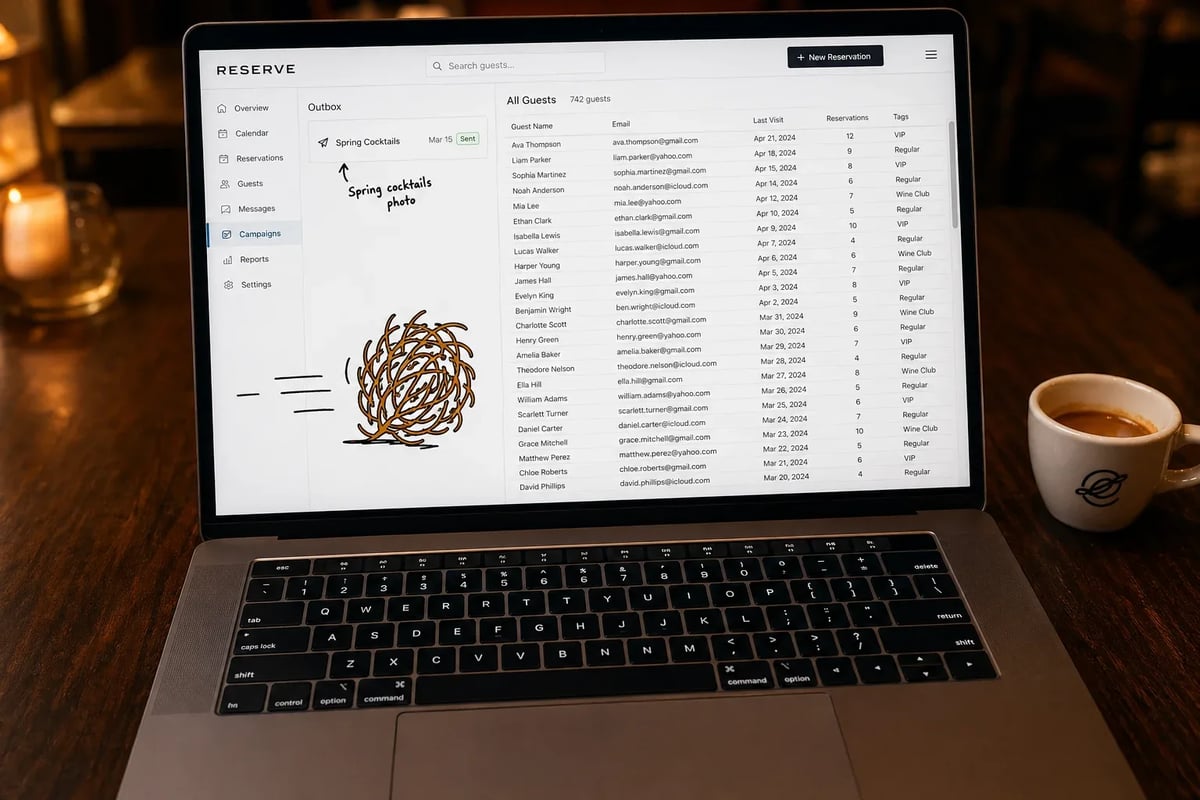
That’s the failure mode. One broadcast a month, vaguely promotional, easy to ignore. It reads like a flyer on a telephone pole rather than a note from somewhere you actually love going.
The restaurants that get real repeat business from email aren’t doing anything technically impressive. They’re writing newsletters that make guests feel like they’re in on something. A heads-up about the new dish before it goes on the menu. The story behind where the fish comes from this week. A table held back for people on the list.
That’s the difference between an announcement channel and a relationship. The rest of this guide is about building the second one. (For the broader email playbook this restaurant newsletter plugs into — automations, deliverability, segmentation — see our email marketing strategy guide.)
Your Newsletter Has One Job, and It’s Not “Announcing Things”
Most restaurant newsletters read like a press release nobody asked for. New hours. New menu. New patio. Sent to 2,000 people who already like you, formatted like a flyer, and ignored at the same rate.
The problem isn’t the list. It’s the posture. An announcement treats guests as an audience. A good restaurant newsletter treats them as insiders.
That word matters. An insider gets the story behind the new dish before it lands on the menu. An insider hears that the halibut this week came from a guy the chef has bought from for eight years. An insider gets first access to the eight seats held back for the wine dinner. None of that is hard to write. All of it makes the reader feel like they have a relationship with you, not just a reservation history.
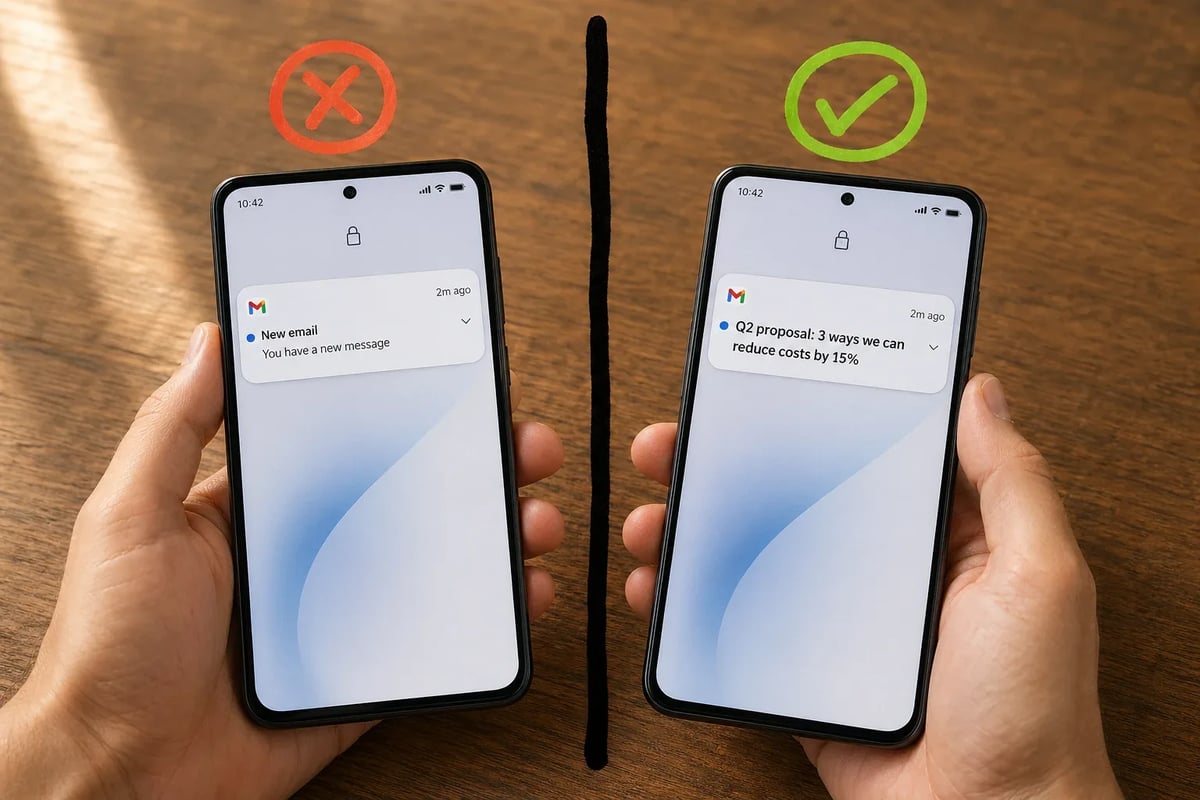
The content that doesn’t work tends to be interchangeable: “We’re so excited to announce…” The content that works is specific to your restaurant and couldn’t have come from anyone else.
That’s the framework. Everything in the next section is built around it.
Restaurant newsletter ideas, organized by what they actually do
Behind-the-scenes content
This is the category most restaurant newsletters skip entirely, which is exactly why it works.
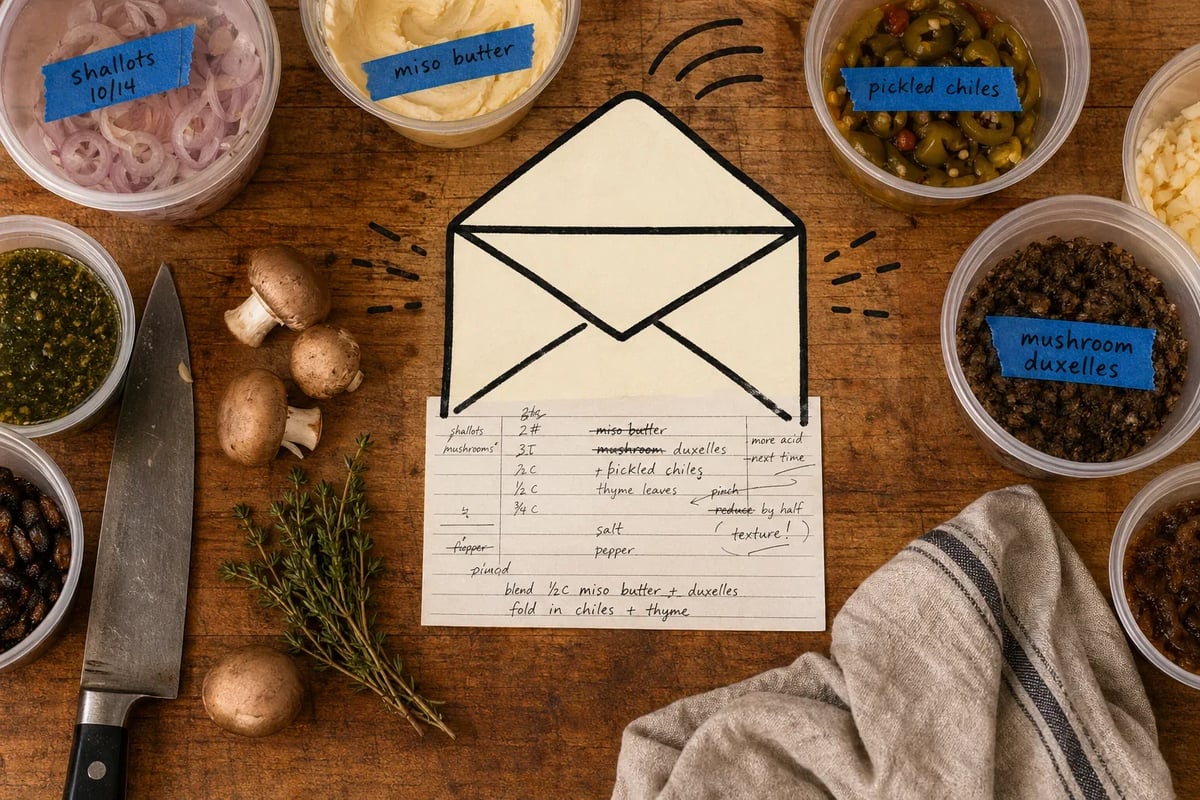
Send a “prep day” photo series showing mise en place for a new dish before it hits the menu. Three or four photos, a short paragraph from the person who built the recipe, no polish required.
Profile whoever’s been expediting Friday nights for six years. Name, one quote, one fact guests would never guess. That’s the kind of detail that makes a regular feel like an insider.
Show your sourcing in real time: a photo from the farmers market, which mushroom you bought, why, and which dish it’s going into this week. That’s a newsletter people forward.
Take subscribers into family meal and explain what’s on the plate. Casual, specific to you, impossible to duplicate.
Offers and exclusives that feel special, not spammy
The trick is access, not discounts. Insider knowledge reads completely differently than a coupon.
Give subscribers 48-hour early access to a new tasting menu with a direct reservation link, before it goes anywhere public. Create a subscriber-only dish that only people on the list know to ask for, rotated monthly, listed nowhere on the physical menu. For a slow night coming up, offer something small but real to the first 20 subscribers who book: a glass of wine on arrival or a dessert for the table. Run a referral offer where subscribers who bring a first-time guest get priority booking the following month or a preferred table.
Event and seasonal content
Preview a seasonal menu launch with one hero ingredient: where it came from, how it’s used across three dishes, and a photo of the raw product. Tie a one-night event to a food holiday your kitchen actually cares about. Send a “what’s leaving the menu” email the week before a changeover. Scarcity for dishes people already love is underused and genuinely effective. For a ticketed dinner, include the actual draft menu, not a summary. Guests book events they can picture.
Community and story content
Spotlight a local vendor by name with a photo and two or three sentences about how long you’ve worked together. Feature a regular by name, with their permission, and one sentence about what they always order. Mention a local event you’re genuinely attending the way you’d text a friend. Share a small piece of restaurant history: the dish that’s been on the menu since opening, or the week you nearly didn’t survive your first December.
Light utility content
A short seasonal pairing guide, three dishes matched to three wines or cocktails with one sentence each, gives subscribers a reason to revisit something they’ve already tried. A heads-up about holiday hours or a private event blocking reservations on a specific date saves real frustration. A “what to order if it’s your first time” email is something subscribers can forward to new guests without explanation.
Timing your send around how people actually plan to eat out
The most common mistake isn’t sending too much or too little. It’s sending a Friday-focused reservation email on Tuesday morning, when your guest is thinking about anything except where to eat this weekend.
If your goal is a Friday or Saturday reservation, send Thursday evening or Friday around 6 PM, when the decision is live. Newsletter statistics from ClickMinded’s analysis of MailerLite data show Friday 6 PM as an outlier high-performing window, with open rates near 49.7%. That’s not a coincidence. People are already thinking about their weekend.
For slower-night pushes or event announcements with more lead time, Tuesday through Thursday morning sends (9 to 11 AM) perform consistently well. Guests are in planning mode, not survival mode.
On cadence: twice a month is the right default for most independent restaurants. Monthly is too sparse to build any habit in your readers’ inboxes. More than twice a week and you’re burning goodwill faster than you’re earning it.
One practical shortcut worth using: most email platforms (Mailchimp, Klaviyo, and others) offer send-time optimization that delivers each email when that individual subscriber is most likely to open it. If you’re on one of those platforms, turn it on.
The calendar does the work. Your job is just not to send a weekend invitation three days after the weekend is over.
The four subject line types worth knowing
Curiosity creates a gap your reader needs to close. The answer is only inside the email.
“We’re changing something you order every time” “The dish that almost didn’t make the menu”
Scarcity works because urgency words genuinely lift open rates. The window has to be real, not manufactured.
“24 hours left to book your Valentine’s table” “Only 6 seats left for Thursday’s wine dinner”
Story opens a loop. It starts a narrative mid-sentence and the only way to finish it is to open the email.
“Why we pulled the lamb off the menu last spring” “Our pastry chef almost quit over this dessert”
Personal feels like it was written for one person, not a list. Using a guest’s name or a detail specific to them lifts open rates meaningfully.
“Maria, your table is ready for spring” “You haven’t been in since December. Come back.”
One thing all four have in common: none of them contain the word “newsletter.” That word alone correlates with an ~18.7% drop in opens.
Here’s what it looks like when all of it comes together
Below is a complete issue for Fern, a fictional 48-seat neighborhood restaurant in Portland’s Sellwood district, written for their late-September menu launch.
Subject line: The dish Marco almost didn’t put on the menu
Hi there,
Fall hit the kitchen hard this week. We just got our first chanterelle delivery from a forager we’ve worked with for three years, and Marco built a whole new dish around them almost overnight: hand-rolled pappardelle, chanterelle ragù, a soft egg, and a shaving of aged Grana Padano he’s been saving since July.
It’s on the menu starting Thursday. We have no idea how long the chanterelles hold out.
We’re also pulling the tomato crudo this week. It had a good run.
A few seats are still open Friday and Saturday if you want to come while the pappardelle is definitely still there.
Reserve here: fern-portland.com/reservations
See you soon, Marco and the Fern team
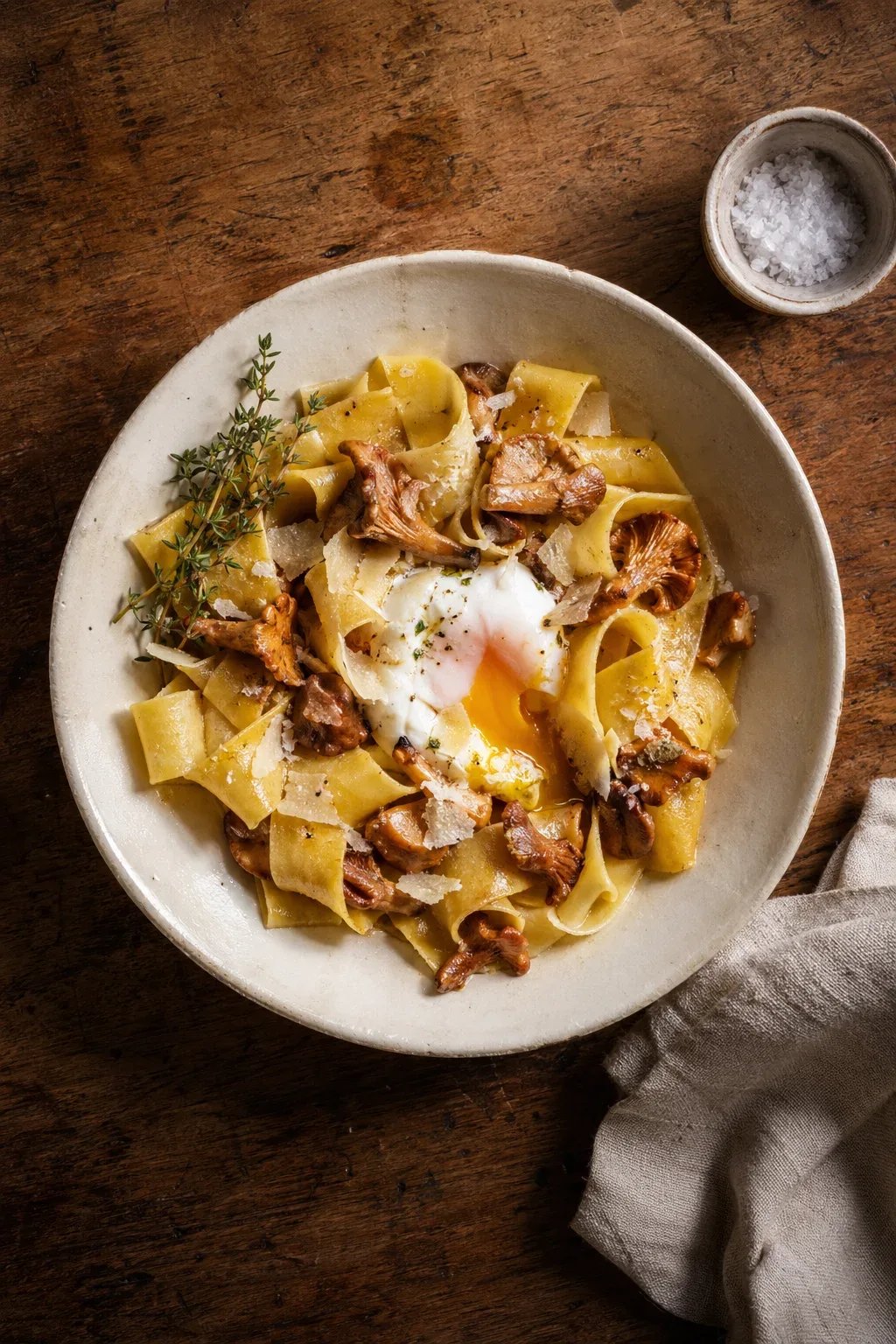
Real dish, real ingredient, real deadline, one link.
Frequently asked questions
What should a restaurant newsletter include?
A restaurant newsletter should include behind-the-scenes stories, seasonal menu notes, event previews, local vendor details, light utility content, and occasional subscriber-only offers. The best issues make readers feel like insiders rather than coupon recipients.
How often should a restaurant send a newsletter?
Twice a month is a good default for most independent restaurants. Monthly can be too sparse to build a habit, while more than twice a week usually burns attention unless every send has a strong reason to exist.
When is the best time to send a restaurant newsletter?
For weekend reservations, Thursday evening or Friday around 6 PM works well because guests are already thinking about where to eat. For events or slower-night promotions, Tuesday through Thursday morning is usually safer.
What restaurant newsletter ideas drive repeat visits?
The ideas most likely to drive repeat visits are early menu access, what is leaving the menu soon, subscriber-only dishes, event previews, chef or vendor stories, and timely reservation prompts tied to a real reason to come in.
If you have the ideas but not the hours
If writing newsletters keeps landing at the bottom of your to-do list because you have no marketing staff and Saturday is already spoken for, the ClickMinded Newsletter Generator is worth a look. You tell it your restaurant’s tone and audience once, and it produces a ready-to-review draft each week by pulling from over 100 sources and tracking what you’ve already sent so nothing repeats. The ongoing time commitment is close to five minutes of reviewing and approving, not an afternoon of writing and formatting. It exports clean HTML that works with Mailchimp, Beehiiv, and similar platforms. If the main reason your email list sits quiet is that nobody has time to write, this removes that excuse pretty cleanly.