
The Dental Marketing Advice You’re Getting Is Mostly a Checklist in Disguise
Somewhere, right now, a dental marketing blog is telling you to “offer a free consultation to build trust.” Another one suggests a referral discount. A third recommends you “stay connected with patients via email.” All three give you the same list, none of them tell you what it costs, who it’s for, or what to do when it doesn’t work.
This vertical plan fits into the broader marketing strategy template and digital marketing strategy guide.
That’s the problem. Most dental marketing advice is a channel checklist dressed up as strategy. Post on social media. Ask for reviews. Run a promotion. It creates the feeling of forward motion without forcing a single real decision.
Real decisions look like this: Should you spend $2,000 on Google Ads or fix the fact that 40% of your inbound calls go unanswered? Those two choices have completely different returns depending on your practice. A checklist won’t tell you which one matters more for YOU.
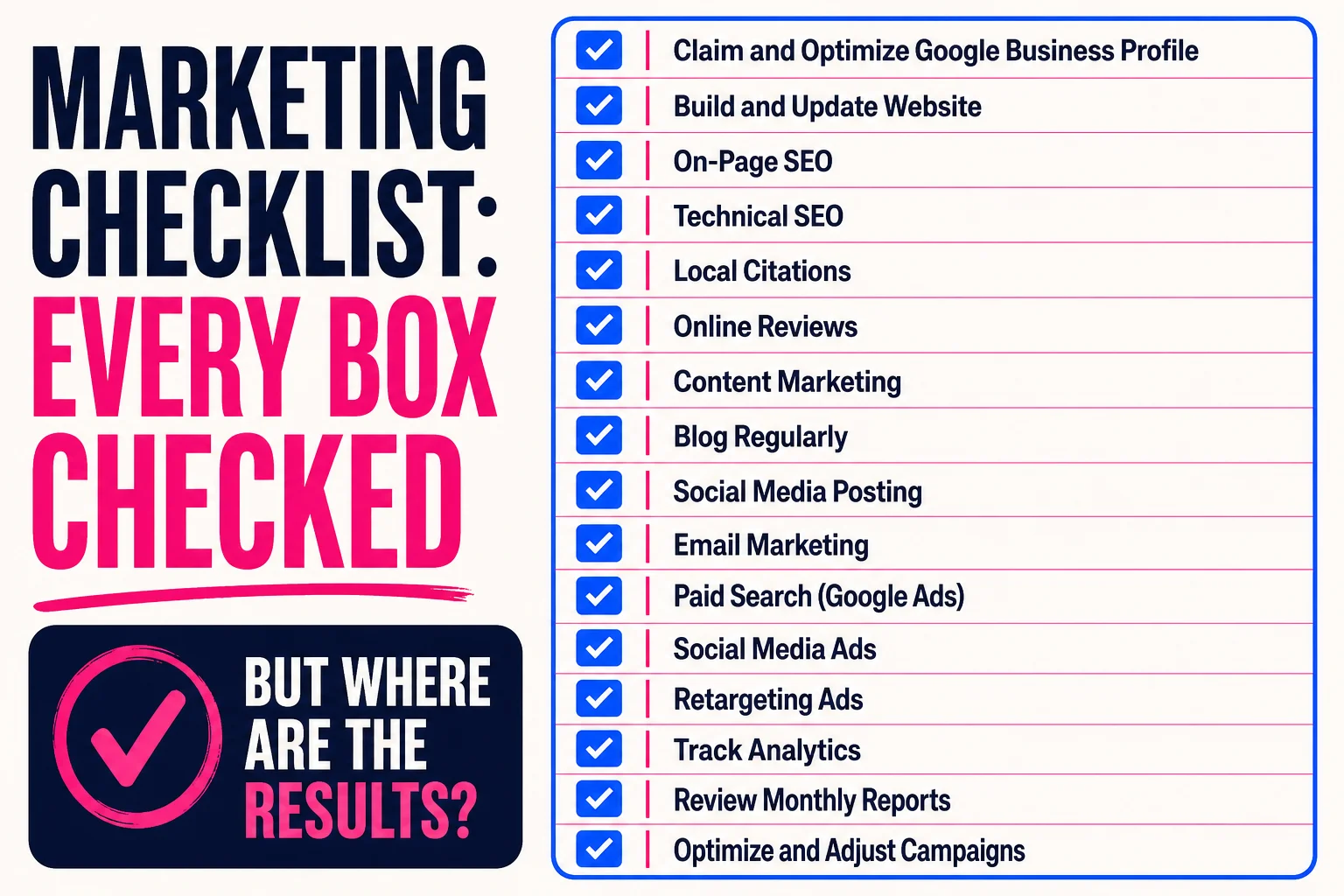
The rest of this piece is about those actual decisions: what kind of practice you’re building, which levers move revenue, and where most budgets quietly disappear.
Volume vs. Value: The One Decision That Shapes Every Marketing Dollar
Before you pick a channel, set a budget, or write a single ad, you need to answer one question honestly: are you building a practice that serves a lot of patients at moderate revenue per visit, or one that serves fewer patients at significantly higher case value?
This isn’t about which model is better. Both work. The problem is that most practices try to market both at once, which means their messaging is vague, their targeting is broad, and their budget is split across channels that work for completely different buyer behaviors.
Here’s what the difference actually looks like in practice. Two hypothetical dentists, same zip code, similar square footage.
Dr. A runs a high-volume general practice. She wants 40 to 60 new patients a month, most of them coming in for cleanings, fillings, and basic restorative work. Average revenue per patient in this model sits around $600 to $800 annually. Her marketing priority is reach and convenience. She needs to show up when someone searches “dentist near me,” accept most insurance plans, and make booking frictionless. Her ads should be cheap and high-volume, targeting anyone in the area who needs a dentist.
Dr. B wants 10 to 15 new patients a month, but each one is there for implants, full-mouth rehabilitation, or cosmetic work. Revenue per patient in this model regularly clears $1,000 and often much more. He doesn’t need reach. He needs trust and specificity. His messaging has to speak to patients who are already considering a significant procedure, not someone shopping for the closest in-network provider.
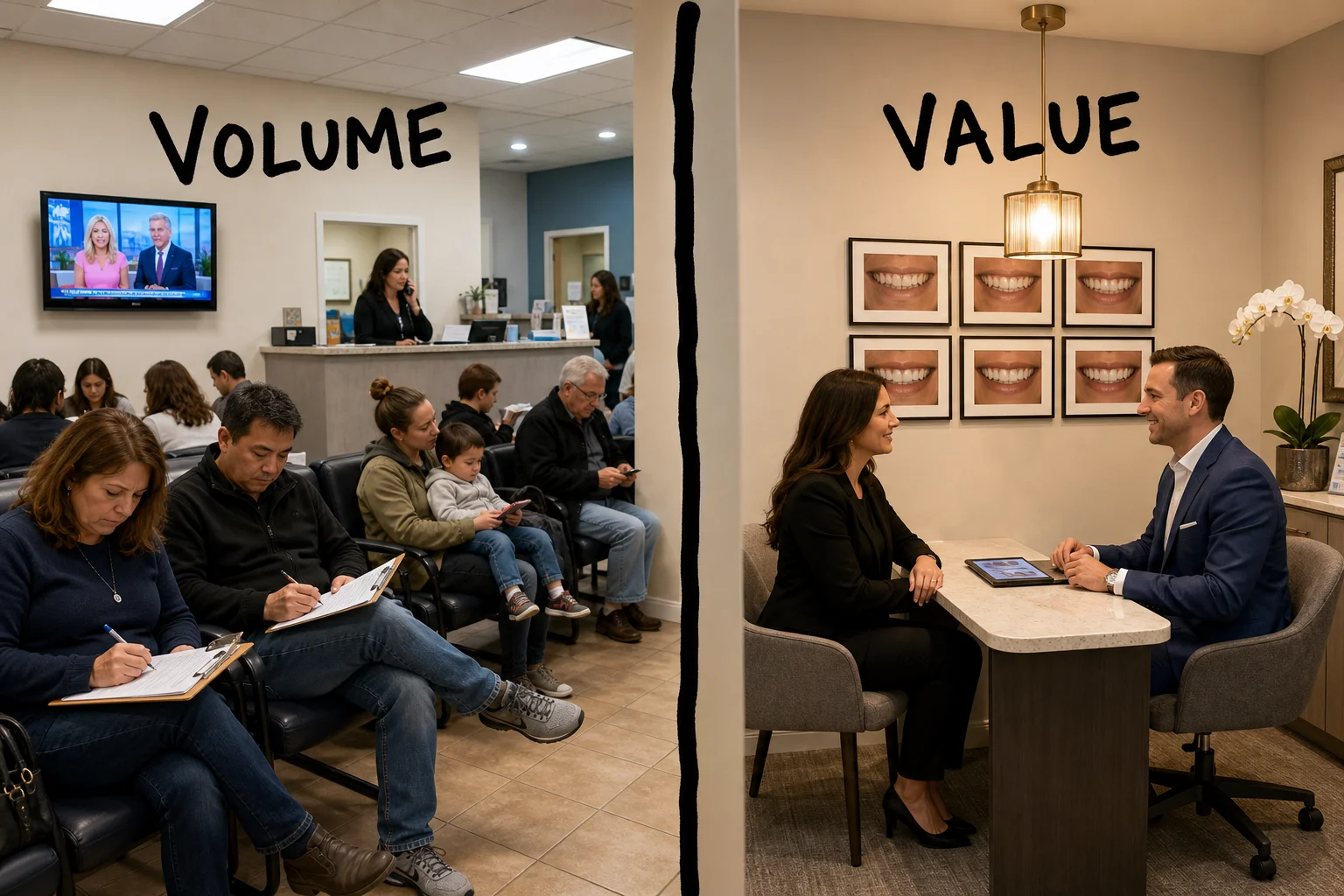
The marketing tactics that work for Dr. A will actively undermine Dr. B’s positioning, and vice versa. Paying for high-volume, low-CPC keywords to attract implant patients wastes money because those patients don’t search the same way. Running luxury cosmetic ads to fill a high-volume general schedule attracts the wrong patients and misses the people who just need a crown.
Decide which model you are actually running before you spend anything. If your answer is “somewhere in between,” that’s fine, but you still need to weight your spend toward one end or the other. Pick the patient type that represents your highest-margin work and let that drive your marketing choices.
Visibility Is the Easy Part (And That’s Why Everyone Wastes Money There)
Once you know what kind of practice you’re building, you can think about the three things that actually control how many patients walk through the door.
Visibility is whether new patients can find you. Search rankings, ads, social presence, word of mouth from existing patients. Most practices treat this as the whole game. It isn’t.
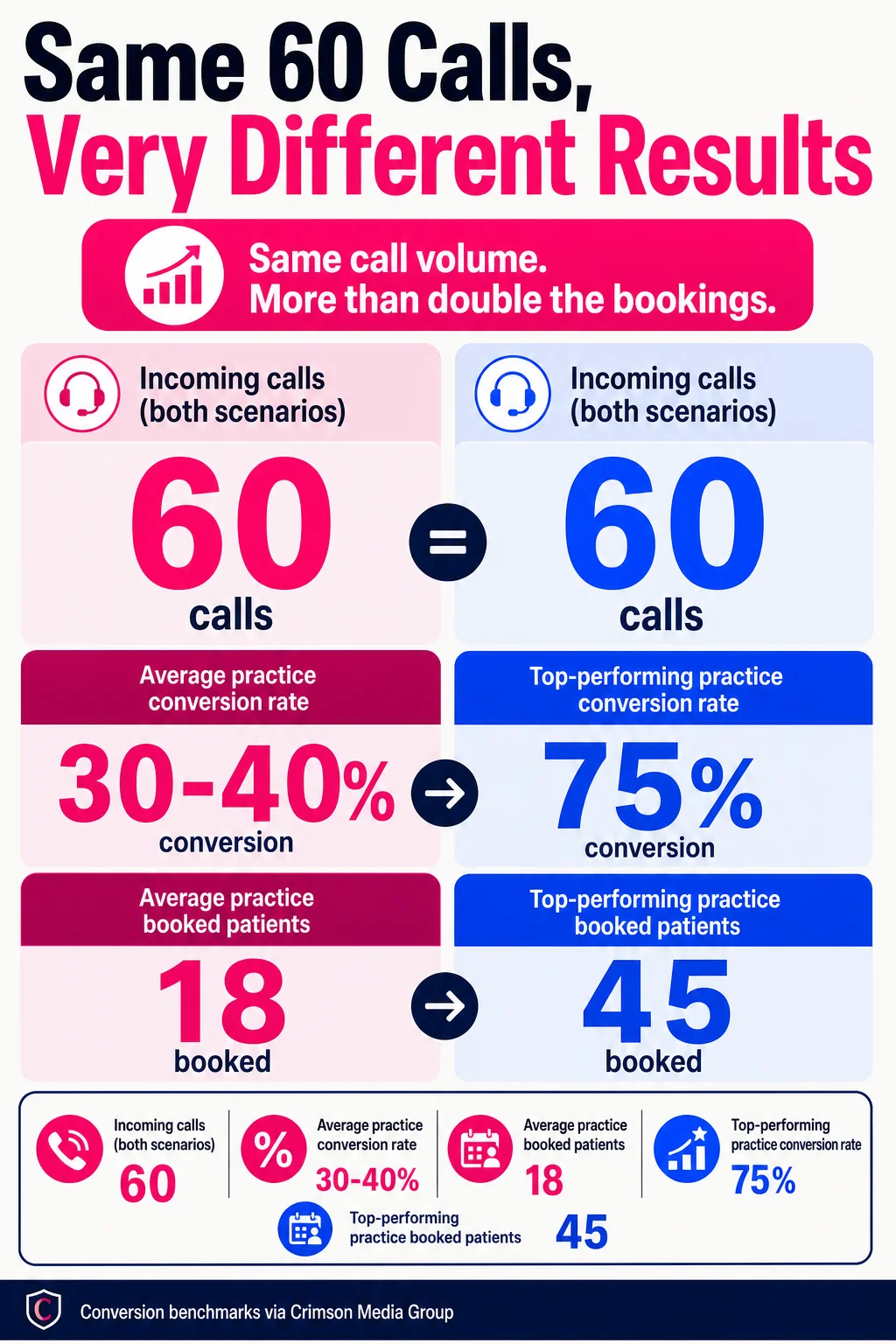
Conversion is whether someone who finds you actually books. This lives in your phone handling, your website, your response time, and how easy you make it to say yes. The numbers here are genuinely bad across most practices. Average phone conversion sits around 30 to 40%, meaning the majority of people who call never book. Top-performing practices convert around 75% of callers. On 60 incoming calls a month, that gap is the difference between 18 booked patients and 45.
Retention and referral is whether patients come back and bring others. Most practices have hundreds or thousands of inactive patients sitting in their database. Reactivation campaigns typically recover 8 to 15% of those contacts, at near-zero acquisition cost.
The reason practices overspend on visibility is that it feels like marketing. Running ads is tangible. Fixing how your front desk handles calls or adding a clear booking button to your website feels like operations. But if your conversion rate is 35%, doubling your ad spend gets you twice as many lost leads. Fix conversion first, then buy more visibility.
Google Ads vs. SEO vs. social: pick your poison
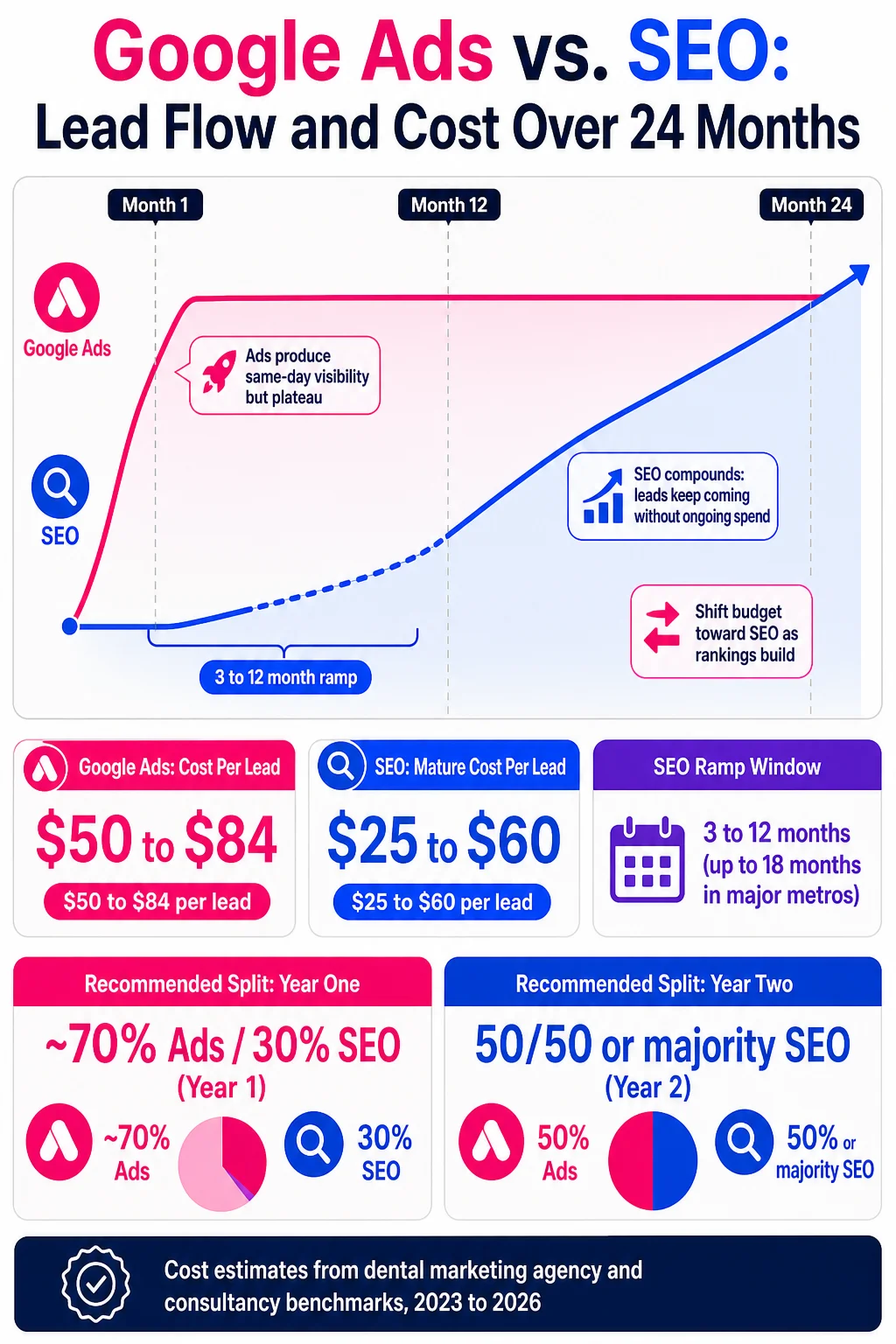
Google Ads is the only channel that works on day one. You launch, patients searching “dentist near me” see your ad, and calls can come within hours. The cost is real: new patient acquisition typically runs $150 to $300 in most US markets, climbing to $200 to $400 for implants or cosmetic work in competitive cities. The moment you stop paying, the leads stop. For a new practice that needs patients now, that tradeoff is usually worth it. For an established practice with steady volume, it gets expensive fast.
SEO takes 3 to 12 months to produce meaningful results, longer in major metros. The payoff: mature SEO typically costs $25 to $60 per lead versus $50 to $84 for paid search, and those leads keep coming without ongoing spend. The practical move for most practices is heavy Ads in year one, then gradually shift budget toward SEO as rankings build.
Social media rarely works as a standalone acquisition channel. Cost per acquisition runs two to three times higher than search, and most practices lack the tracking to know what they’re getting. Use it to stay visible to existing patients.
Direct mail and referral programs generate volume, not high-value cases. Referral programs reward patients for sending people like themselves, so your referral base shapes your patient mix whether you plan for that or not.
Where the money actually goes (hint: not where you think)
The biggest channel question isn’t which channel to use. It’s whether your funnel can convert traffic before you pay to send more of it.
Most practices run ads to a homepage with a generic headline and a phone number. Someone searches “dentist near me,” clicks the ad, reads nothing useful, and leaves. The ad still cost $8 to $15. Broad keyword targeting combined with generic landing pages is the single fastest way to push cost per acquisition past $150 when optimized campaigns regularly hit $40 to $60.
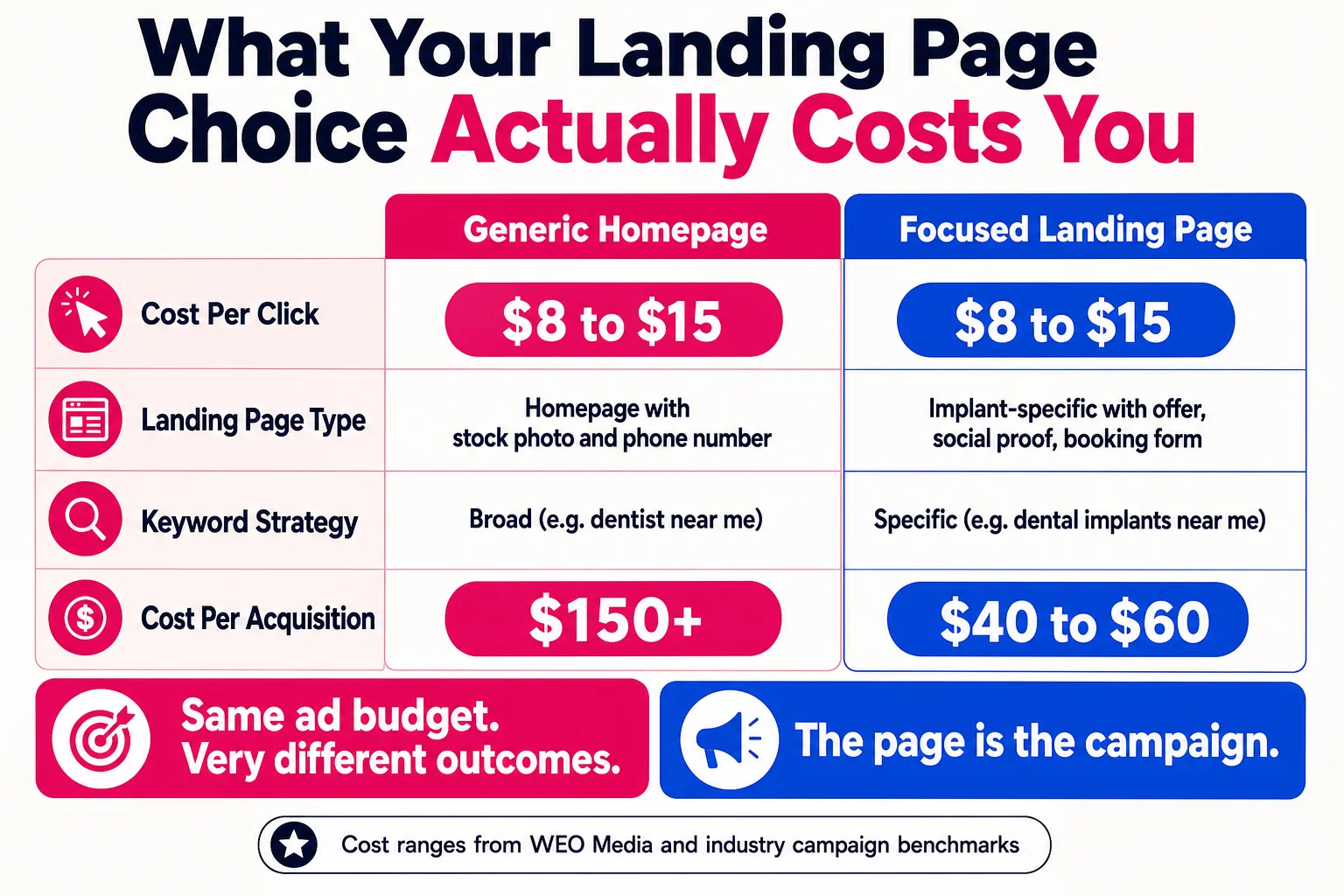
The second mistake is targeting everyone. A practice that wants implant patients but runs ads for cleanings fills chairs with the wrong cases. Your patient mix follows your marketing, not your intentions.
The third mistake is measuring impressions and follower counts instead of booked appointments. Reported conversions frequently overstate true results: one analysis found that 100 claimed bookings from a campaign may reflect only about 30 patients who wouldn’t have booked anyway. If your agency sends you a report full of clicks and reach numbers, ask how many of those people are now scheduled.
The 90-day sequence that actually holds together
The order matters more than the effort. Practices that skip to paid ads before fixing their foundation waste money and corrupt their own data.
Days 1-30 are infrastructure only. Claim and fully complete your Google Business Profile immediately — verification takes 7-14 days. Install call tracking and form tracking so you have a baseline before traffic arrives. Lock in your positioning based on the practice type you settled on earlier. Spend nothing on paid ads yet; your conversion rate is unknown, which makes every ad dollar a guess.
Days 31-60: activate. Launch Google Ads targeting high-intent local searches, starting around $1,500-$3,000 per month. Track contact rate, booking rate, and show rate from day one. High-case-value practices should start their referral system now — those patients take longer to convert.
Days 61-90: cut and layer. Pause keywords generating clicks but no bookings. Publish three to five content pieces answering questions your target patient actually searches. Add a simple email follow-up for leads who didn’t book. Realistic new patient volume over 90 days runs 15-40 for a general practice, depending on local competition and how well your phones are handled.
The foundation phase feels like nothing is happening. That’s the point.
The numbers that tell you whether any of this is working
Check these monthly. For a single-doctor general practice: 20-40 new patient exams (below 15 means you’re losing ground to attrition), 65-70% case acceptance (below 60% is a conversion problem, not a marketing problem), and $300-$500 production per visit (under $250 signals undertreatment or wrong patient mix). Your active patient count should sit between 1,500 and 1,800; below 1,500 means retention is bleeding out faster than acquisition fills it. Cost per new patient runs $150-$400 nationally, lower in suburbs, higher in metros. If yours is climbing past $400, either the channel is wrong or the phones are still broken.