
“Marketing” feels like a bad word in church hallways — here’s why that’s worth examining
A lot of pastors flinch at the word. Marketing sounds like selling something, and the gospel isn’t a product. That discomfort is theologically understandable, and the critique has real roots.
But here’s what’s actually happening when a church has no deliberate communication strategy: a newcomer searches “church near me” on a Sunday morning, finds a website with no service times, no address, and a stock photo from 2011, and drives past. The door was never closed. They just couldn’t find it.
That’s not a theology problem. It’s a clarity problem.
Framed this way, a church marketing strategy is how you answer the question someone is already asking: “Is there a place for me here?” Good outreach makes that answer findable, readable, and warm. It’s closer to hospitality than advertising.
The rest of this guide covers the specific places where that clarity breaks down, and what to fix first.
Before you pick a channel, answer this first
The hospitality framing from the intro only works if the church knows what it’s hosting. A lot of churches skip that part and go straight to posting on Instagram or buying Facebook ads, and then wonder why nothing converts. The problem usually isn’t the channel. It’s that nobody agreed on the message before anyone started talking.
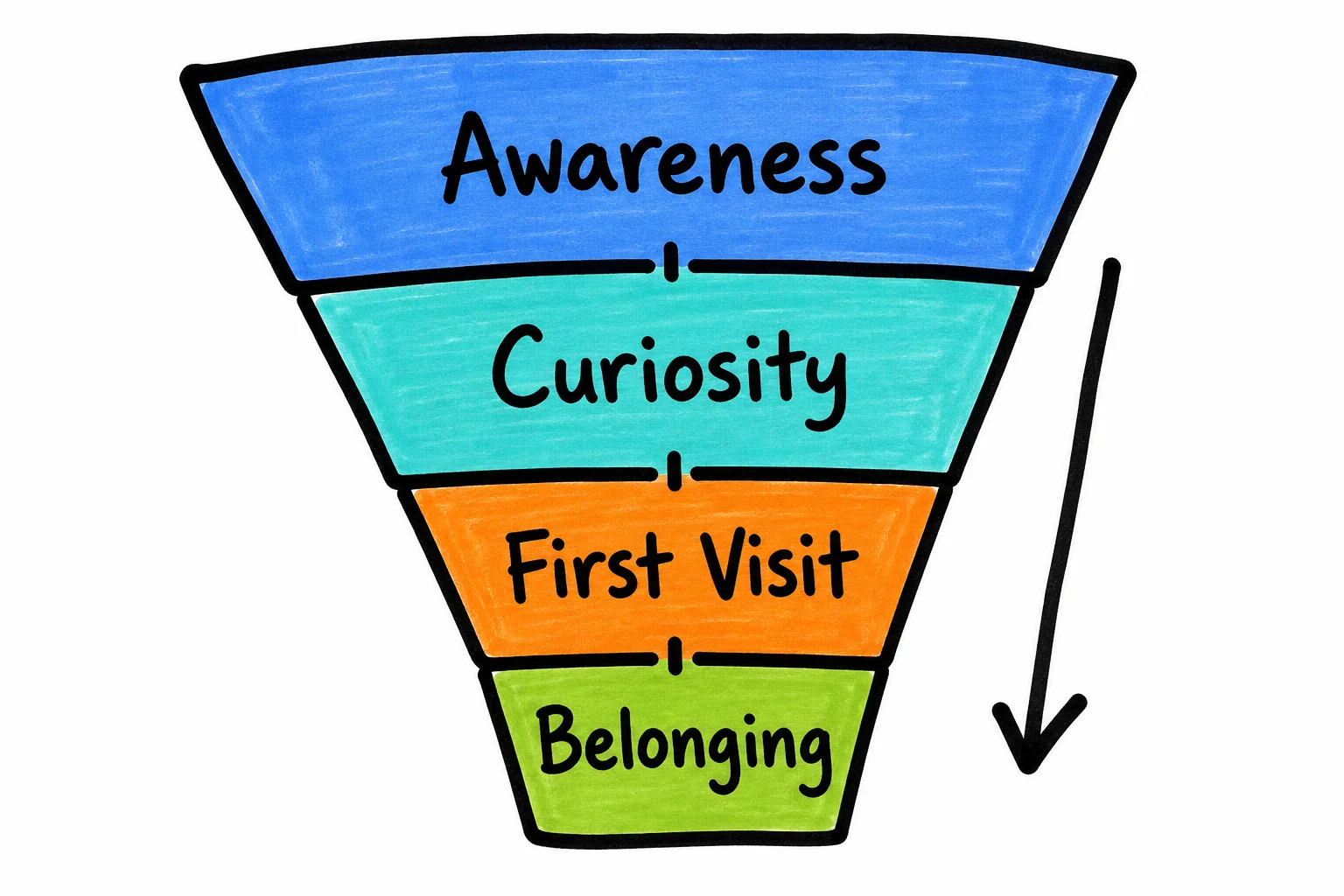
Think of your church marketing strategy as a funnel with four stages: someone becomes aware you exist, gets curious enough to look you up, takes the step of visiting for the first time, and eventually feels like they belong. Every channel decision you make should map back to one of those stages. But none of it works if the front of the funnel is blurry.
Vague positioning is the most common failure mode. “We want to grow our church” tells a first-time visitor nothing. A statement like “a multicultural congregation serving families in the east side of [city]” tells them whether they might fit. Specificity about who you serve, what you do together, and where you do it is what turns a homepage headline into an actual invitation. Vision statements that name a target audience and describe concrete activities give outreach something to point at.
The practical test: read your homepage headline out loud. If a stranger couldn’t tell from that sentence whether your church is for them, the message needs work before the megaphone does.
This guide fits inside a broader marketing strategy generator framework. The church context shapes nearly every decision downstream from here.
If a first-time visitor can’t find your parking lot, they won’t find your pew
Once your message is clear, your website becomes the first real test of it. And for someone who has never walked through your doors, that site has essentially one job: answer the questions they’re too nervous to ask anyone.
The Plan Your Visit page is the most important page most churches underinvest in. A visitor landing on it is already curious enough to show up. What stops them is uncertainty: Where do I park? Where do I take my kids? Will I look out of place? Your page should answer all of it, in order of urgency.
The list of what it needs to cover is concrete. Service times and the full address, including which entrance to use. Parking instructions, with a note if guest spots are reserved near the front. A description of the service format, typical length, and what participation looks like. Dress code, stated plainly. Child check-in details, including how the security process works and where parents go once kids are dropped off. Photos of the parking lot, lobby, and check-in area help more than most copy ever will.
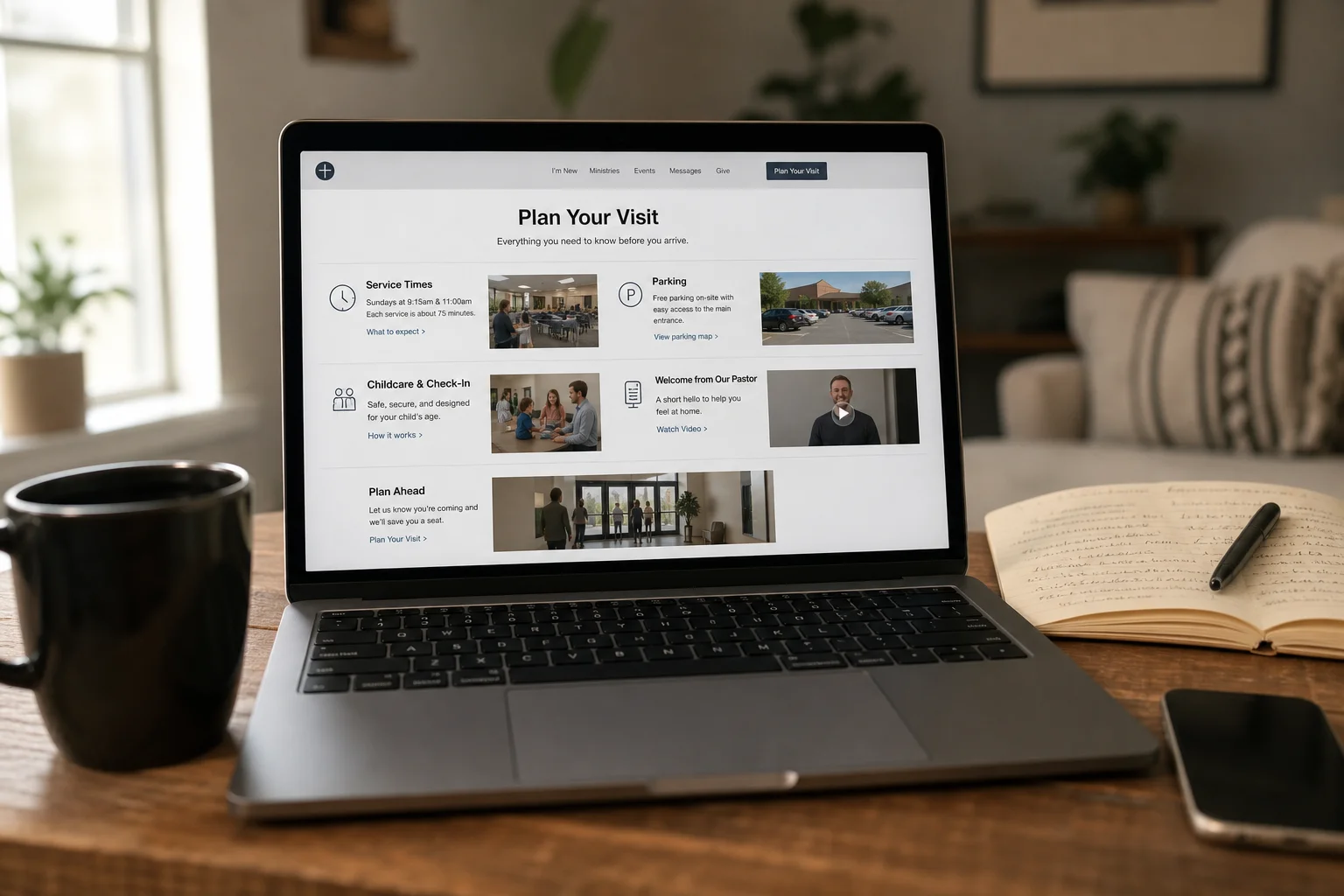
A short welcome video from the pastor, under a minute, does real work here. So does a simple pre-visit form with a brief automated follow-up.
On the technical side: the page must load fast and work on a phone. Most people searching for a church on Sunday morning are doing it from a car.
Before someone visits your website, they search
Most first-time visitors find a church the way they find a dentist: type “church near me” into Google, look at the map. Your Google Business Profile loads before your website does.
Claiming the listing is just the start. Every field needs the same care you’d give your homepage, beginning with your name, address, and phone number spelled out exactly as they appear everywhere else online. Any mismatch between your GBP, your website footer, and directories like Yelp or Apple Maps creates conflicting signals. Missional Marketing notes that inconsistent NAP across directories measurably weakens local rankings, and correcting those mismatches across 50-plus listings is tedious but worth it.
For your primary category, pick the most specific option. “Baptist church” ranks better for denomination-targeted searches than a generic “church” category. Add secondary categories for any programs your congregation runs.
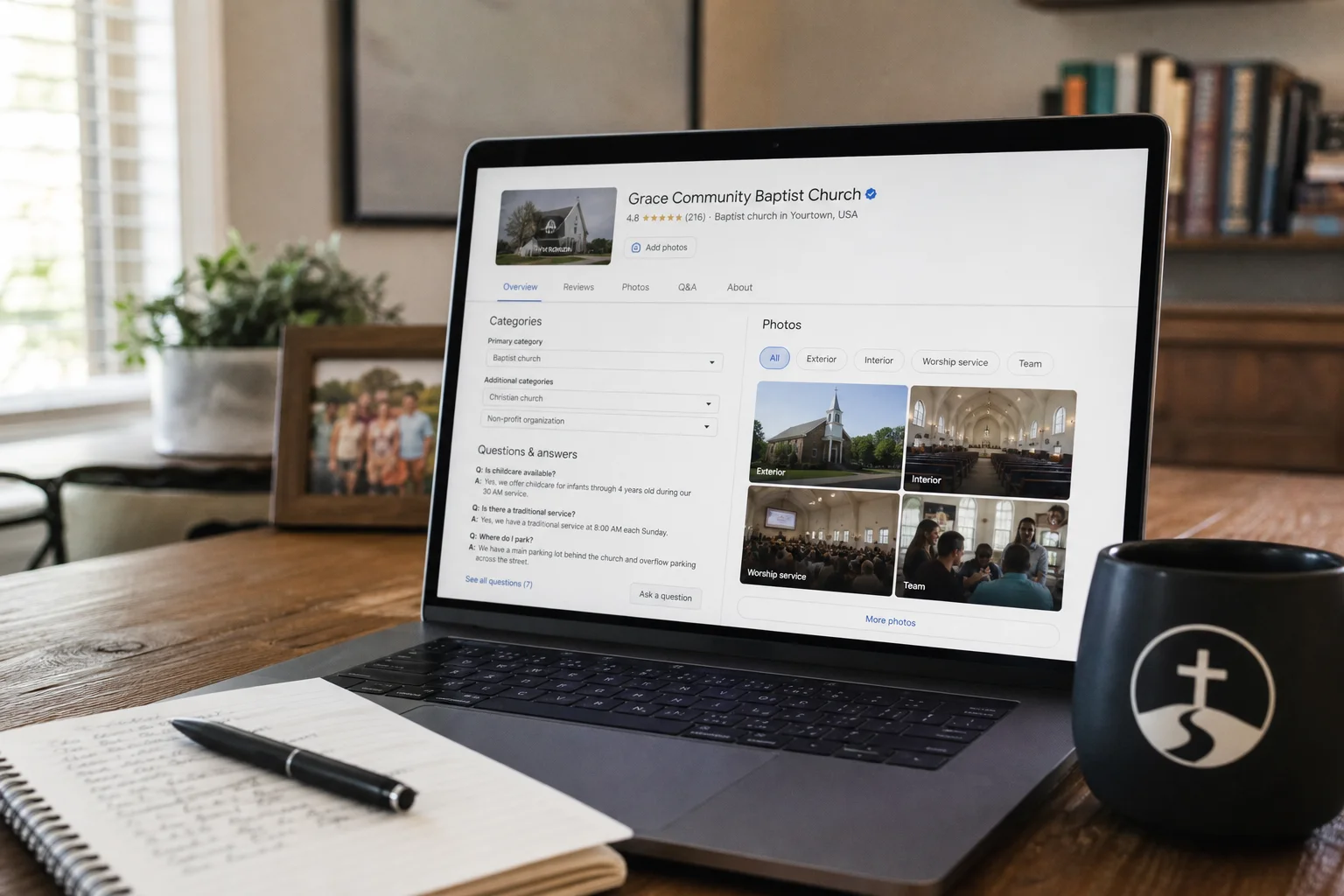
The Q&A section is one of the most overlooked features in church local SEO. You can seed it yourself by posting the questions visitors actually ask: Is childcare available? Is there a traditional service? Where do I park? If you leave it blank, anyone can answer, and they may get it wrong.
Photos do more work than most churches expect. Interior shots of the worship space, exterior shots showing which entrance to use, candids from events, a photo of the pastor — each one serves a different visitor. Upload new photos regularly rather than posting a batch once.
GBP Posts let you promote upcoming events directly in search results. A post announcing a Christmas Eve service or community dinner costs nothing and shows up exactly when someone is deciding whether to visit.
Don’t skip Apple Maps and Bing Places. iPhone users searching in Maps hit your Apple listing before they open a browser.
The content question worth asking before you post anything
Once someone finds you on Google, they have a question no search result fully answers: what is it actually like to be there? Content answers it, but only if you’re making it for the curious visitor rather than the people already in the room.
Sort your content by the job it does.
Discovery content puts you in front of people who don’t know you exist. A 60-second sermon clip posted to YouTube Shorts or Instagram Reels can reach someone who searched “forgiveness” or “grief” with no destination in mind. A good clip doesn’t try to go viral. It answers a question, then ends with one clear next step: watch the full message, or join us Sunday. Churches that batch five or six clips per sermon rather than laboring over one tend to build more consistent reach with less stress.
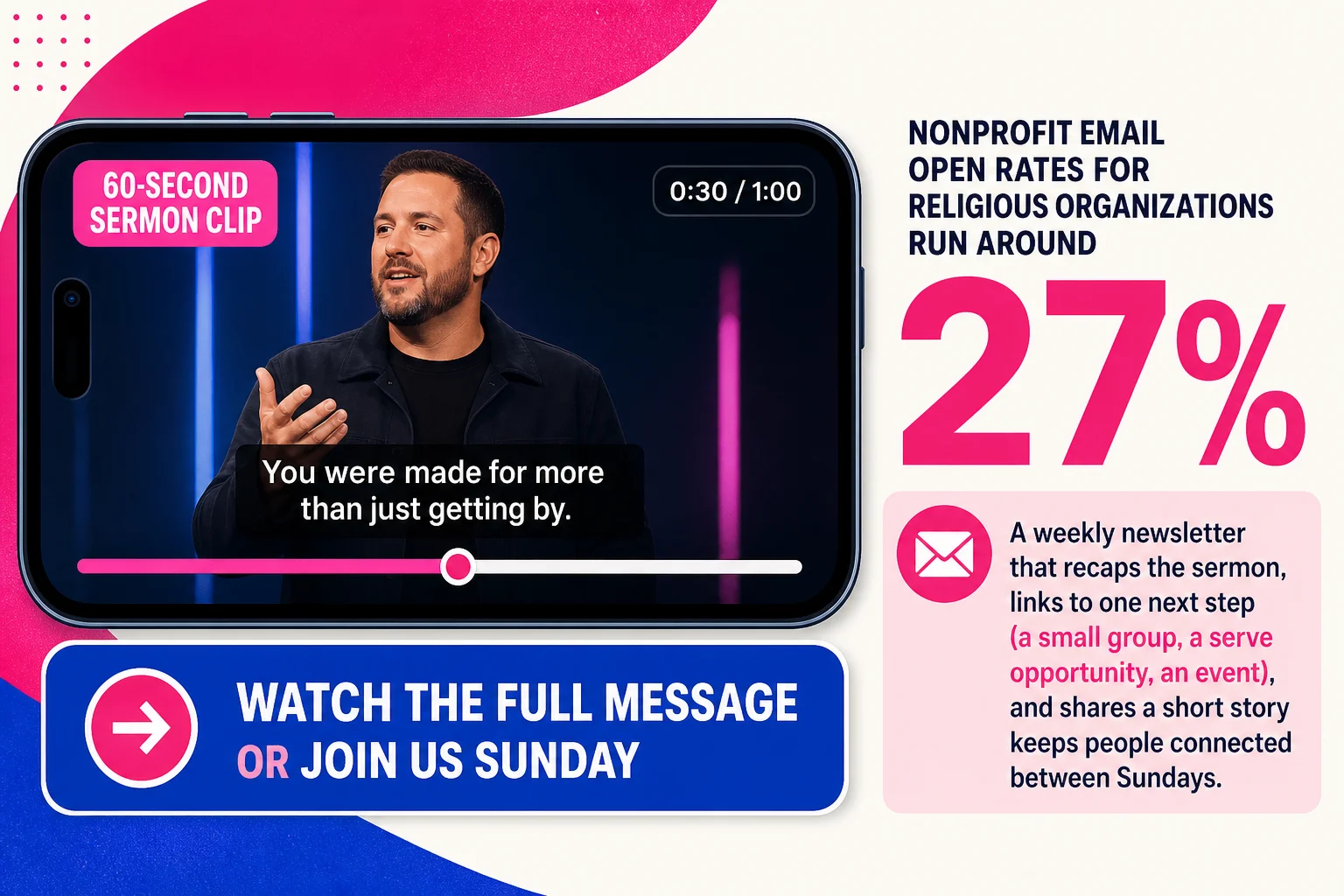
Nurture content keeps people connected between Sundays. Nonprofit email open rates for religious organizations run around 27%. A weekly newsletter that recaps the sermon, links to one next step (a small group, a serve opportunity, an event), and segments by campus or interest outperforms a broadcast blast with no clear action.
Community content is the most underused category. A page for your food pantry, a post about a neighborhood cleanup, a short story about the family your benevolence fund helped last winter — this builds trust with people who aren’t ready to attend anything yet, and signals to Google that your church is active in a specific place. Paid social can amplify any of these, but the ad is the megaphone, not the message.
Measure what actually tells you something
One question every month: is our communication helping people find us and stick around?
Tie your numbers to the four stages from earlier. For awareness, watch new versus returning visitors on your website. A healthy outreach mix tends to show 40 to 60% new sessions, though the three-month trend matters more than any single week. For first visits, count connection cards or greeter tallies weekly and follow up within 48 hours. For return visits, check how many first-time guests come back within four to six weeks. Reported benchmarks cluster around 20 to 30% retention, which means the welcome experience has at least as much influence on that number as your marketing does. For belonging, track next-step conversions: small group signups, volunteer sign-ons, and class enrollments divided by total first-time guests.
Impressions and likes aren’t useless, but they don’t measure movement toward actual connection. A post that reaches ten thousand people and produces zero first-time guests told you something. Act on it.
A simple monthly spreadsheet with these four numbers is enough to spot what’s working.
Good outreach is just good hospitality
Every tactic in this post serves the same purpose: making it easier for someone to walk through your door and feel like they were expected. That’s not marketing in the cynical sense. It’s what churches have always done when they’re at their best.
Clear messaging, a helpful website, accurate search listings, honest content, and a simple way to measure whether any of it moves people closer to belonging. None of that compromises your mission. It reflects it.
If you want to pull this into a single plan for your church, the strategy generator below can help you build one worth using.
For more on building a focused outreach plan, use the marketing strategy generator to sketch the broader plan. If email is part of your outreach and member communication plan, the church newsletter ideas guide is a useful next read.