
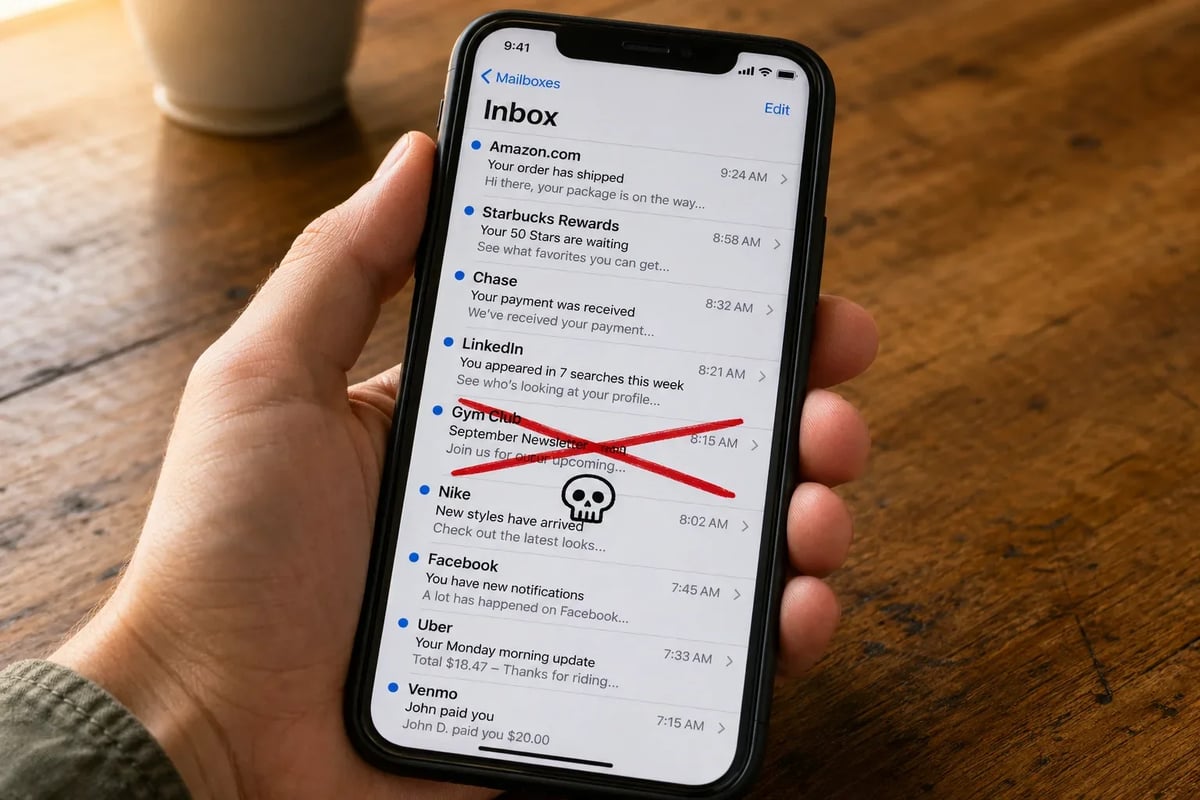
Imagine you own a gym and it’s the last Tuesday of the month. You open a blank email, type “Join us for our September Challenge!”, paste in the class schedule, drop a 10% discount code at the bottom, and hit send. Your members open it, see roughly what they expected, and close it. A few unsubscribe. Most just stop opening altogether.
That’s the standard gym newsletter, and it’s everywhere. Event announcement, schedule reminder, discount code, repeat. The problem isn’t the template. The problem is that there’s nothing in the email worth reading between visits. No reason to open it unless someone is already thinking about signing up or buying something.
A good gym newsletter doesn’t feel like a broadcast. It feels like something a member would forward to a friend, save to read later, or actually act on. Getting there isn’t about finding a better layout. It’s about knowing what you’re trying to do before you write a single word.
Below, you’ll find 30+ gym newsletter ideas organized by goal: keeping active members engaged, bringing back lapsed ones, and onboarding new members before they disappear in week three. (For the broader email playbook — automations, deliverability, segmentation — see our email marketing strategy guide.)
The Member You’re Losing Isn’t the One Who Complained
They’re the one you haven’t heard from. No cancellation email, no complaint at the front desk. They just stopped scanning in. Three weeks ago, maybe four. Their membership is still active, their payment is still processing, and they’re quietly deciding whether to bother coming back.
This is how most gym churn actually works: not a walkout, but a slow fade. Attendance frequency is the real warning sign — members who drop below two visits per week cancel at roughly double the rate of those who come in regularly. By the time someone asks to cancel, the decision was made a month ago.
A newsletter doesn’t fix this by selling harder. It fixes it by showing up in someone’s inbox on a Tuesday morning when they haven’t been to the gym in three weeks, with something worth reading. A coach tip. A member story. A reason to come back that isn’t a discount code.
Email is the right channel for this. According to newsletter engagement data, email conversion rates run roughly four times higher than social media. Your Instagram post reaches maybe 5% of your followers organically. Your email reaches your list. And unlike a social feed you’re constantly feeding with content, a monthly newsletter goes out while you’re coaching your 6am class and keeps working after you’ve moved on.
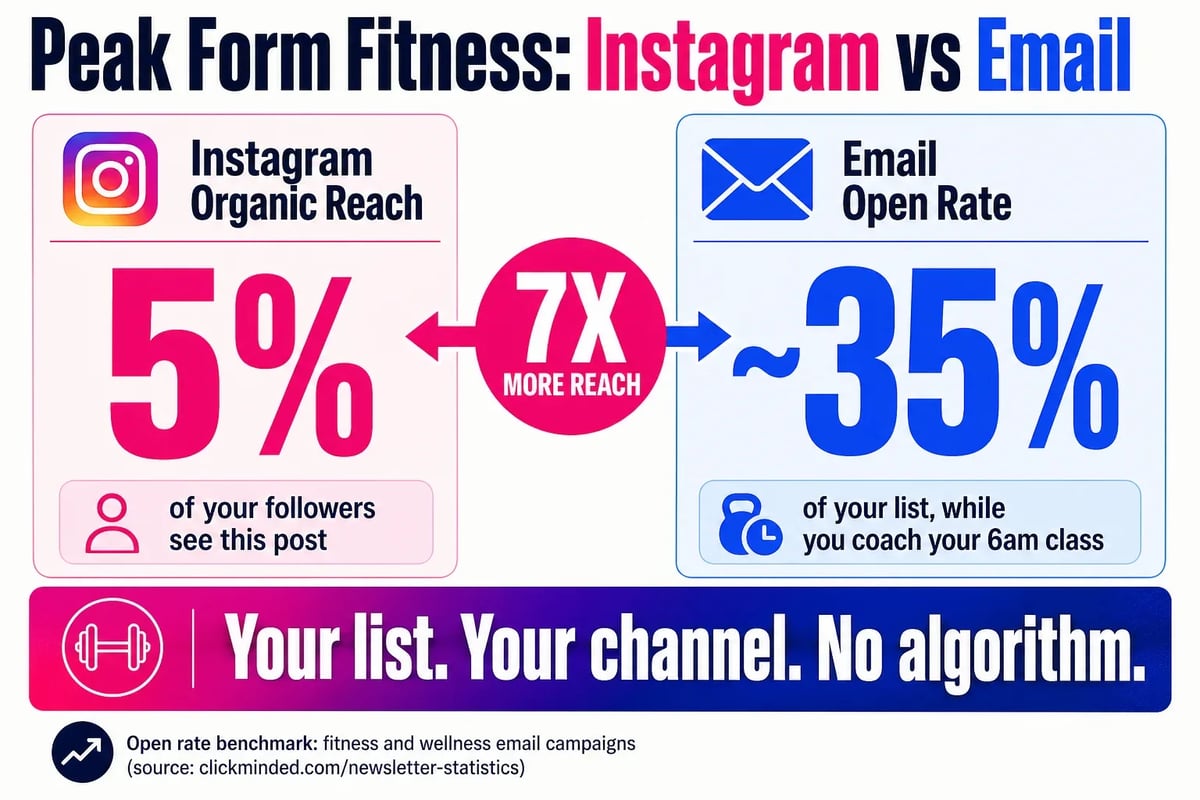
Your email list is yours. The algorithm doesn’t get a vote.
Gym newsletter ideas by goal
Retention: keep active members engaged
- The milestone email. Send a personalized note when a member hits one month, six months, or a year. Name them, name the milestone, and mean it.
- The coach spotlight. One coach per month: a photo, three things members don’t know about them, and a beginner tip. This builds the relationship that’s the real reason most people stay.
- The progress check-in. Every four to six weeks, reference recent activity and ask one question: “What’s feeling hard right now?” It’s a reason to reply, not automated wellness content.
- The community challenge. A 30-day attendance challenge with a leaderboard and a small prize pulls in members who are coasting. Friendly competition does the motivational work for you.
- The workout breakdown. Pick one movement from the past month, explain why you programmed it and what it builds. Members who understand your programming feel like insiders, and insiders don’t cancel.
- The member story. Ask one member each month for three sentences about their last six months. Real language, no polish. Works because it sounds nothing like marketing.
Reactivation: bring back lapsed members
- The no-pressure check-in. Your first email to a lapsed member should not mention their absence or offer a discount. Just ask if everything is okay. This one gets replies. The hard-sell version doesn’t.
- The “here’s what’s new” update. Tell them what changed: a new class format, a coach hire, new equipment. Give them a real reason to reconsider.
- The low-barrier invite. “Come in for one free session, no strings” removes every practical objection for someone who feels behind.
- The honest goodbye. If nothing worked, say you’ll stop writing soon and ask whether they’d like to pause or cancel properly. Some come back. Others refer a friend.
Sequences that open with a non-sales check-in before introducing any offer consistently outperform discount-first approaches. Three touches over roughly three weeks works well.
New member onboarding: the first four weeks
Members who visit four or more times in their first month are substantially more likely to still be active at six months. The sequence exists to manufacture those early visits.
Week one: the “you belong here” welcome, with one specific class recommendation based on what they said they wanted when they signed up. Week two: a facility walkthrough covering things members usually discover by accident. Week three: a goal-setting prompt asking what they want and what’s gotten in the way before. Week four: a habit email framing two visits per week as the actual threshold that produces results.
Seasonal and event hooks
New Year’s runs through January, but the smarter send is the February email for people already slipping. Summer spotlights outdoor programming or modified hours. Fall is back-to-routine territory. December’s best email is a reflection prompt, not a gift card push.
Event hooks worth building around: charity fitness events you’re hosting or sponsoring, a local 5K your members can train toward together, and your gym’s anniversary month, which is an easy reason to celebrate rather than sell.
Six subject lines your members will actually open
The content can be perfect and still die if the subject line reads like a gym system auto-generated it. Aim for under 50 characters when possible, and never write a subject line you could swap with any other gym’s email without changing a word.
- Curiosity. Leave a gap you don’t fill. “Why we stopped programming burpees” works because the reader needs to know the answer.
- Personalization. First name plus context beats first name alone. “Sarah, your 6-month mark is this week” reportedly lifts open rates 20–30% above non-personalized sends.
- Urgency. “2 spots left in Saturday’s mobility workshop” is honest scarcity. Use it only when it’s true.
- Community. “The 5am crew just broke a record” pulls every member who trains at 5am, and makes everyone else curious about what they missed.
- Result tease. “How Marcus dropped 18 lbs without a diet” leads with outcome, not process. Works especially well for personal training promotions.
- Direct value. “Your free training plan for November” asks nothing. It just delivers.
Send it once a month, or earn the right to send more
Monthly is the right starting point for most gyms. One issue, done well, keeps you present without wearing out the welcome.
Bi-weekly works if your studio runs a genuinely busy programming calendar with workshops, challenges, or seasonal events that give each send a reason to exist.
Weekly is only sustainable if the content is actually useful every single week. Most gyms don’t have that volume of genuinely new things to say, and sending too often is the leading driver of unsubscribes, with roughly 69% of people citing email volume as their reason for leaving a list. Fitness and wellness emails already benchmark around 20% open rates, below most industries. Frequency alone won’t fix that.
Here’s what a real one looks like
Subject line: Marcus hit a PR last Tuesday. Here’s why it matters for your training.
Preview text: Plus: what’s changing at the 6pm class, and why we’re running a throwdown in October.
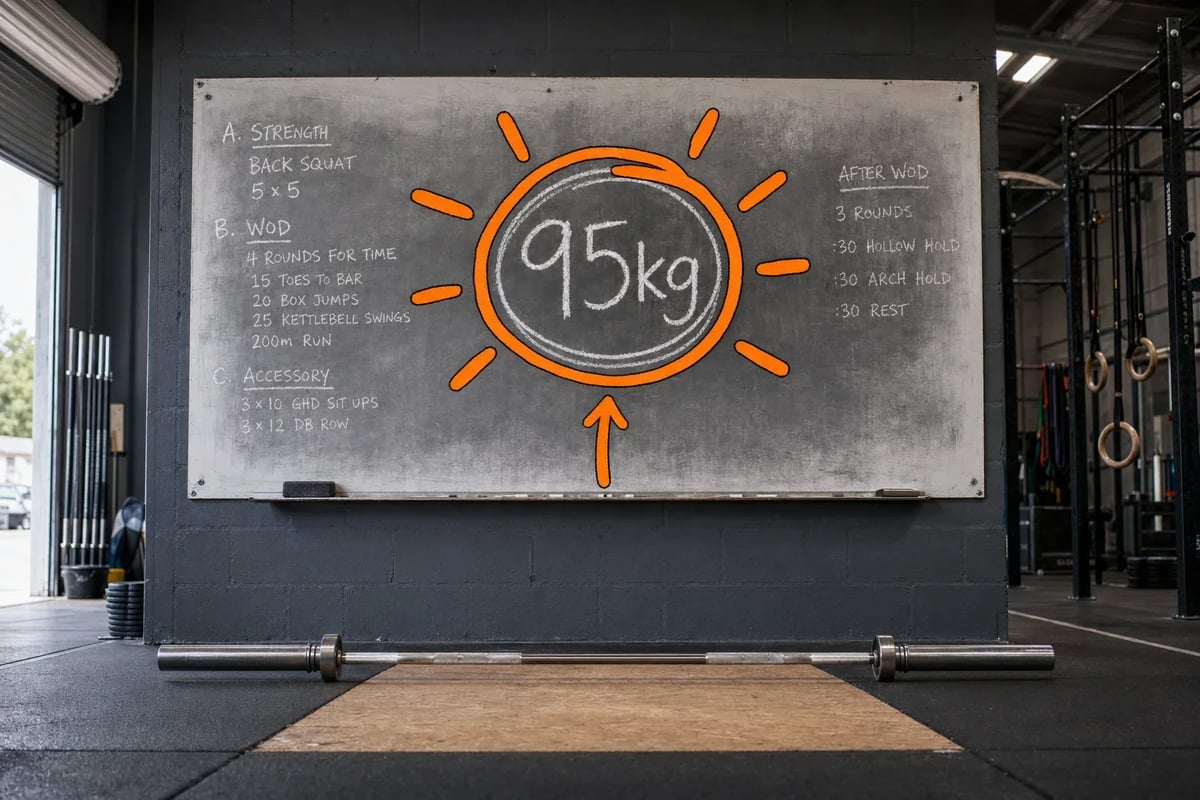
Sometime around week four of our squat cycle, Marcus walked up to the whiteboard, wrote “285,” and circled it three times. That’s 30 pounds over his previous back squat best. He’s been at the 6am class Monday, Wednesday, Friday for six months. Coach Dani has been quietly adjusting his stance width since August. Tuesday was just when it showed up.
The same cycle is still running. If you’ve been logging your lifts, you’re closer to your own circled number than you think.
What’s changing at 6pm. Starting November 4th, the first 20 minutes shift to Olympic lifting: snatches and clean pulls before the metcon, three days a week. This came directly from the September feedback form. Class is capped at 14, so register before Thursday if you’re not already in.
October throwdown. Teams of four, October 19th, $20 entry. Winning team gets a free month. Six spots left. Reply to this email with your team name and we’ll hold it.
Reply here to claim a spot. No form, no link.
Frequently asked questions
What should a gym newsletter include?
A gym newsletter should include member stories, coach tips, schedule changes, upcoming challenges, and practical content that gives members a reason to return. The strongest issues are built around retention, reactivation, or onboarding rather than generic announcements.
How often should a gym send a newsletter?
Monthly is the best starting cadence for most gyms. Bi-weekly can work if the gym has enough workshops, challenges, and seasonal updates to support it, while weekly only makes sense when every issue is genuinely useful.
What gym newsletter ideas help reduce churn?
The best churn-reduction ideas are milestone emails, progress check-ins, coach spotlights, member stories, and no-pressure reactivation notes for lapsed members. These keep the gym present before a member decides to cancel.
What subject lines work best for gym newsletters?
Specific subject lines work best: member milestones, coach notes, challenge updates, class changes, and concrete results. Avoid generic lines like monthly newsletter because they give members no reason to open.
If Writing It Still Feels Like Homework
If pulling together a monthly email still takes you three hours you don’t have, ClickMinded’s Newsletter Generator is worth a look. You describe your gym’s voice and audience once, and it researches, drafts, and formats a complete issue for you. The blank page problem goes away. What’s left is a quick review before you hit send, which is a much better use of a Tuesday morning than staring at a cursor.