Most newsletters don’t die at launch. They die at issue four.
You start strong. You buy the domain, pick the platform, write issue one with genuine enthusiasm, maybe issue two as well. Then a client fires off a 9pm Slack message, a project deadline moves up, and suddenly it’s Tuesday at 11pm and the blank draft is just sitting there, cursor blinking, mocking you. You close the laptop. You tell yourself you’ll get to it Thursday. You don’t.
This is not a failure of ideas or intention. It’s a scheduling problem dressed up as a creativity problem, and the newsletters that survive are the ones that solved the scheduling problem first.
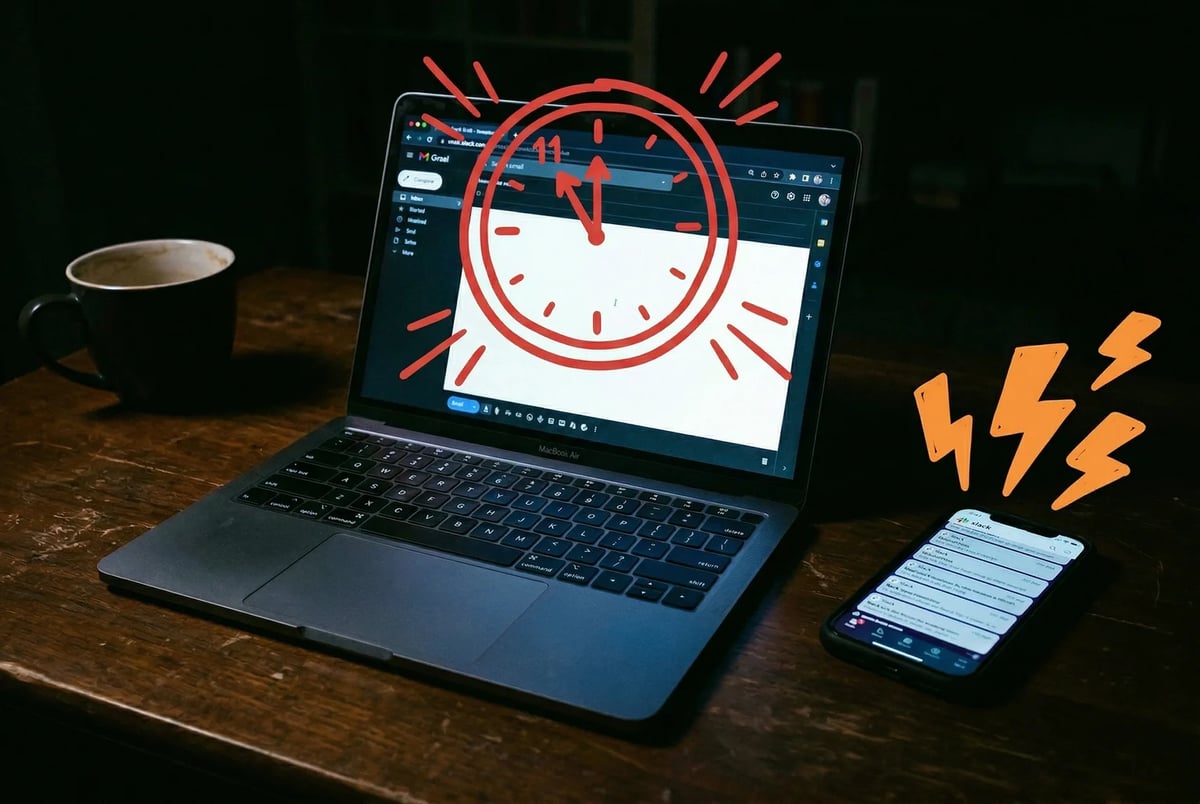
The pattern shows up constantly across practitioners who’ve watched newsletters fail: initial excitement, a few solid issues, then a quiet fade when client work crowds out anything with an indirect return. Nobody cancels the newsletter. They just stop sending it. The account sits there. The subscribers go cold. The idea gets added back to the “someday” list.
What makes this worse is that the first few issues are genuinely the lowest-effort part. You have ideas queued up, the topic feels fresh, and there’s no pressure yet. The grind starts around week four or five, when the backlog is empty and you’re generating from scratch while also running your actual business.
A realistic weekly newsletter takes four to ten hours to produce. That number surprises people. It shouldn’t.
This guide covers the mechanics of starting, but it spends more time on the harder problem: keeping the thing alive after the novelty wears off. That’s where most guides stop. That’s exactly where this one doesn’t.
The Niche Decision That Determines Everything Else
Before you pick a platform, before you write a single word, you need to answer one question honestly: who specifically is this for, and what specifically will they get from it?
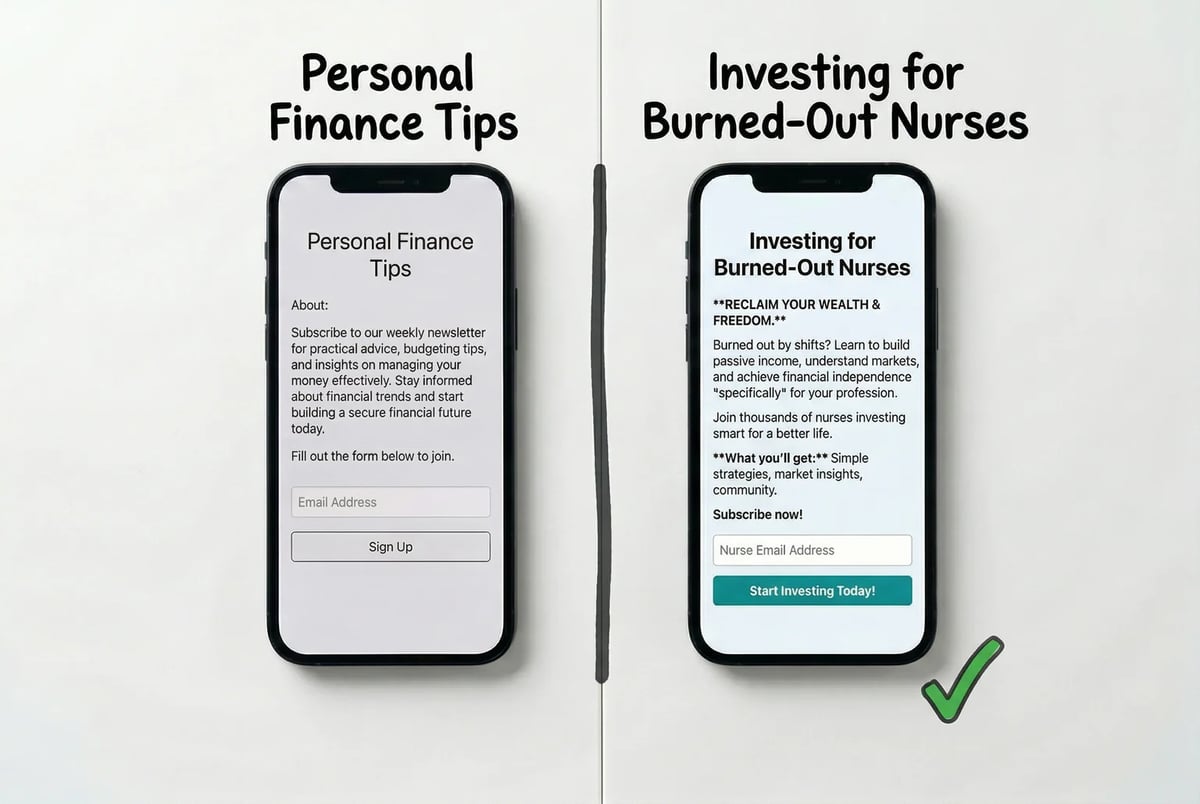
“Marketing tips for business owners” is not an answer. It’s a category. The newsletters that actually build audiences are much narrower: email marketing for e-commerce founders under $5M in revenue, or agency operations for shops with 5 to 15 employees. Specific enough that the right reader feels like you’re writing directly to them, and broad enough that you don’t run out of angles by issue six.
The instinct to stay broad is understandable. It feels safer. The problem is that broad topics produce forgettable content, attract disengaged subscribers, and make every issue harder to write because you’re never quite sure what belongs and what doesn’t. Narrow positioning actually makes the weekly grind more manageable, not less, because the scope is defined.
Before committing, run three quick checks. First, spend twenty minutes in relevant Reddit threads, Facebook groups, or Slack communities. If the same frustrations keep surfacing, that’s a real signal. Second, run your topic through Google Trends or a keyword tool. Consistent search volume and high cost-per-click queries around your subject suggest commercial interest. Third, look for existing newsletters covering adjacent ground. Competitors aren’t a warning sign. An active newsletter ecosystem in a niche typically confirms there’s a paying audience, not that the space is full.
If you want to go further, a simple landing page with a short waitlist and $50 in traffic can tell you more in a week than months of deliberating. A 2 to 3 percent signup rate from cold traffic is a reasonable threshold for proceeding.
The niche doesn’t need to be final forever. But you need something specific enough to write from before anything else gets decided.
Pick a Platform, Ship Something, Move On
Every platform does the core job: it stores your list, sends your emails, and tracks who opened what. The differences only matter once you know which tradeoffs are relevant to your situation.
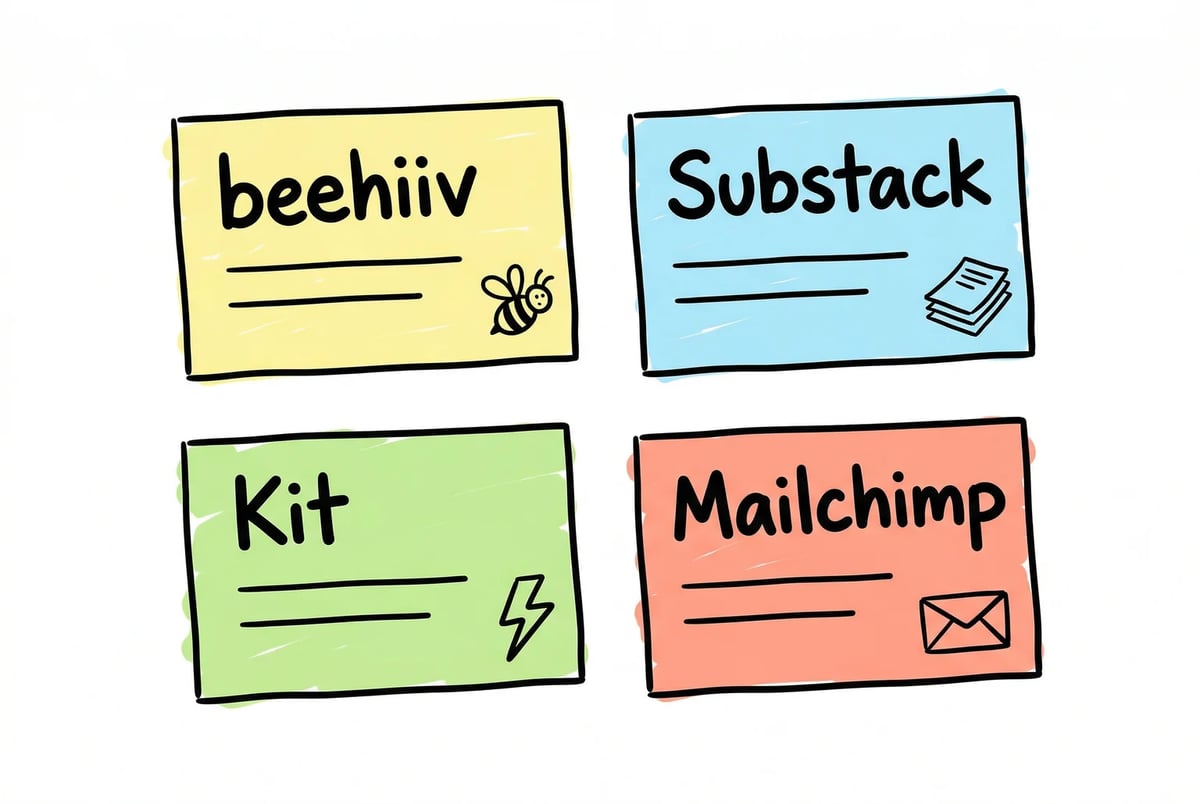
Substack is the fastest way to publish and has genuine discovery built in. It charges no monthly fee, taking a percentage of paid subscriptions instead. The tradeoff is real though: limited design control, no serious automation, and you’re building on someone else’s network with someone else’s payment infrastructure. Fine for a writer who wants frictionless publishing. Less ideal if you’re running a business and want to own the relationship fully.
Kit** (formerly ConvertKit)** is the strongest option if automation is the point. Complex sequences, built-in commerce, affiliate tracking. The transaction fees (around 3.5% plus $0.30 per transaction) add up if monetization is in the plan. If you’re already using Kit for other marketing automation, staying put makes sense.
Mailchimp has the best drag-and-drop design tools and connects cleanly to most CRMs. No native monetization, though, and the pricing can climb fast once your list grows. A reasonable choice if you’re inside an agency stack that already runs on it.
beehiiv starts free up to 2,500 subscribers and pairs a clean publishing interface with growth tools most platforms charge heavily for: referral programs, an ad network, segmentation, and subscriber analytics. The monetization features are gated to paid tiers, so you won’t need them on day one anyway.
For a marketer or agency owner starting from zero in 2026, beehiiv is the practical default. The free plan gives you real runway, and the toolset grows with you.
Pick one. Set it up this week. Platform debates are genuinely the most productive form of procrastination in this whole process, and they have killed more newsletters than bad writing ever has.
Your Format Is a Production System, Not a Personal Style Choice
Before you draft a single word of issue one, decide what the recurring structure of every issue will be.
Format is not about aesthetics. It’s about what you will do every week when you have 90 minutes and a half-formed idea. A fixed format means you’re filling a known container, not reinventing the newsletter from scratch each time. That distinction keeps more newsletters alive than any writing advice ever will.
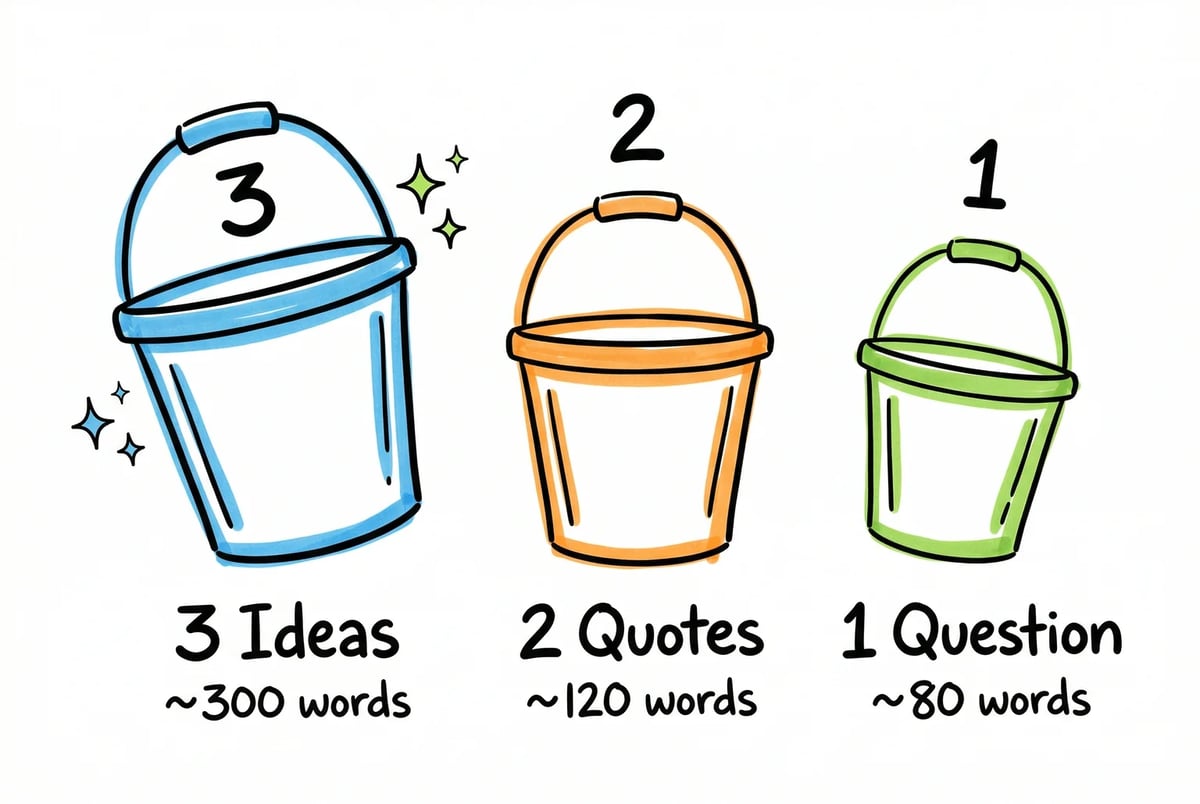
The clearest proof is James Clear’s 3-2-1 newsletter: 3 short original ideas, 2 curated quotes, 1 reflective question, all under 500 words, reportedly reaching over 3 million subscribers. Its staying power comes from what it removes: the weekly decision about structure, length, and scope. Clear sits down knowing exactly what the container looks like. He just fills it.
You don’t have to copy it. But you need your own version before you start.
Most effective newsletters run 3 to 5 scannable sections. More and readability drops; fewer and the issue feels thin. Pick a structure you could execute tired, on a deadline, with half your brain elsewhere.
Common format questions, answered briefly
What are the 8 basic parts of a newsletter?
Subject line, header, optional table of contents, section headlines, body copy, calls to action, footer, and an unsubscribe link. That’s the anatomy. Format is how you fill the body.
What makes a newsletter introduction work?
One or two sentences telling readers what’s in this issue and why it’s worth their time. No slow warm-up.
What are the 5 elements of an effective newsletter?
Differentiated content, a strong subject line, genuine personalization, a clear CTA, and sections that scan well on mobile.
Settle on your format now. Write it down. Your future self, staring at a blank doc at 10pm on a Tuesday, will thank you.
Consistency Beats Frequency. Every Time.
Once your format is locked, the next question is how often you’ll send. Get this wrong and you’ll either burn out in six weeks or disappear so long between issues that readers forget they signed up.
Weekly is the benchmark most serious newsletters aim for, and the data broadly supports it. Campaign Monitor’s guidance puts weekly open rates roughly 27% higher than monthly, and a frequency test documented by Newfangled found weekly sends drove approximately three times the site traffic versus monthly over a three-month period. Those numbers come from specific tests, not universal law, but the directional finding holds: showing up weekly keeps you in the habit and keeps readers in the habit of expecting you.
That said, a biweekly newsletter you actually send beats a weekly one you abandon after issue five. Start at the lowest cadence you’re genuinely confident you can hold for three months straight, not the cadence that sounds most impressive. If that’s every other week, commit to that. Predictable schedules protect your deliverability too, since inbox providers reward consistent sending patterns.
The rule is simple: prove the habit first, then increase frequency. Set a day, set a time, treat it like a client meeting you can’t reschedule.
The Unsent Newsletter Is Always the Worst Issue
Your first issue will not be your best one. That’s not a problem, it’s just math. Issue twelve will be sharper than issue one because you’ll have eleven more reps. The only way to get to twelve is to send one.
So here’s what issue one actually needs: a subject line that’s specific and honest, preview text that adds something the subject line didn’t, a short intro that tells the reader who you are and what they’ll get, the content itself in your chosen format, and one clear next step at the end. That’s it.
On subject lines: clarity beats cleverness, especially when you have zero brand recognition yet. Klaviyo’s subject line research and similar guidance from Drip consistently point toward specific, concrete subject lines over witty or vague ones. “The 3 SaaS pricing mistakes I see every week” will outperform “Thoughts on pricing” for a debut issue, nearly every time.
On preview text: treat it as a second subject line, not a repeat of the first. Keep it under 90 characters so it doesn’t get cut off in most clients, and lead with the useful information, not filler like “Issue #1.”
On intros: Inbox Collective’s guidance on first issues is direct — one or two sentences, a clear promise, no lengthy preamble. Readers granted you inbox access; don’t repay that with three paragraphs about yourself.
Send it. The version sitting in your drafts folder is already the worst newsletter you’ve ever published.
Sending Issue One Is the Fun Part
The week you launch, you have energy. You have a reason to tell people. You have the dopamine hit of something new. Issue two still has some of that. Issue three, maybe.
Then a client project blows up, you lose a Tuesday to back-to-back calls, and suddenly it’s 10pm Thursday and your draft is a headline and three bullet points that don’t connect to anything. That is the actual challenge. Not setup, not platform choice, not your content calendar. That moment, repeated weekly, forever.
The honest time cost surprises most people. Simon Owens has written candidly about what weekly publishing actually requires: a research-heavy issue can run close to 10 hours when you factor in sourcing, drafting, and editing. Lighter formats come in closer to 3-4 hours. Either way, that time has to come from somewhere, and for most agency owners and marketers, it comes from nights and weekends because client work always wins the daylight.
The failure mode isn’t laziness. It’s that nobody builds a production system before they start. They treat each issue as a fresh creative problem instead of a repeatable process. So every week they start from zero: what do I write about, what’s the angle, where do I find the examples. That’s how a 3-hour task becomes a 6-hour ordeal that eventually just… doesn’t happen.
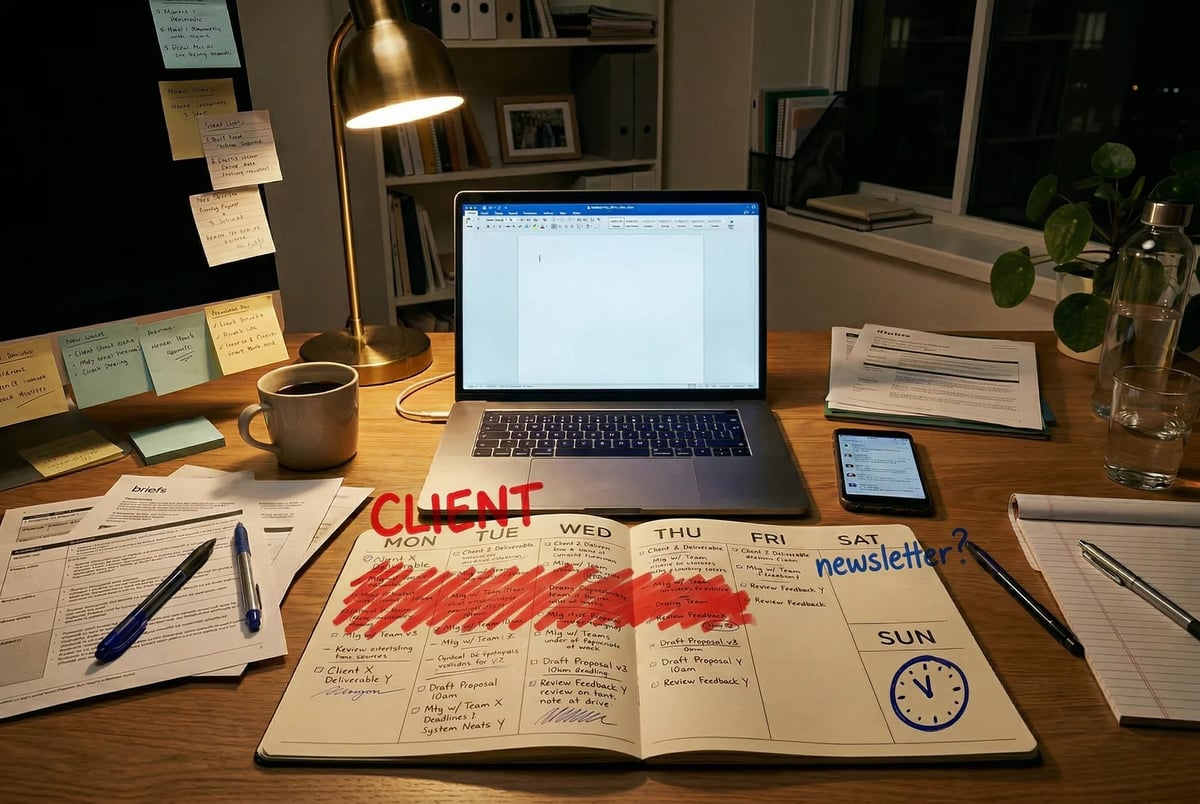
The fix isn’t willpower. It’s reducing how much the week-to-week execution asks of you. Batching your topic selection monthly, keeping a running ideas file, and using tools that handle the mechanical parts of research and drafting can cut production time significantly without cutting the quality that makes your newsletter worth reading.
If you want a purpose-built tool for exactly this problem, Newsletter Generator is worth a look. It’s built around the execution bottleneck, not just the launch moment.
100 Subscribers Who Actually Open Beats 2,000 Who Don’t
Start with the people already in your orbit. Email your professional contacts directly, tell them what you’re building and why, and ask them to subscribe. The conversion rate on a direct personal ask is higher than almost any other channel, because it’s a real relationship, not an ad. Ten responses to a personal email will outperform a week of social posts.
Once you’ve exhausted warm contacts, move to LinkedIn. Add a subscribe link to your profile, mention the newsletter in relevant posts, and pin a signup CTA to your featured section. If you’re already creating content on any platform, YouTube comments, Twitter threads, LinkedIn articles, put the link somewhere visible. Your existing audience is the lowest-friction source you have.
Cross-promotions with adjacent newsletters are underused at this stage. Find two or three newsletters serving a similar reader, reach out, and offer a mutual shoutout. The subscribers you pick up this way are already newsletter readers, which makes them significantly better prospects than a cold social follower.
A focused lead magnet, a one-page checklist or a template your reader would actually use, can push dedicated landing page conversions into the 30-40% range based on practitioner reports. The magnet has to be specific enough to attract the right person, not just anyone.
What none of this will do is pad your list with people who don’t care. Inactive subscribers damage your sender reputation and suppress inbox placement over time, which hurts the people who do open. A list of 100 subscribers with click rates in the 6-10% range is a real audience. A list of 2,000 ghosts is a liability.
Grow slowly. Grow right.